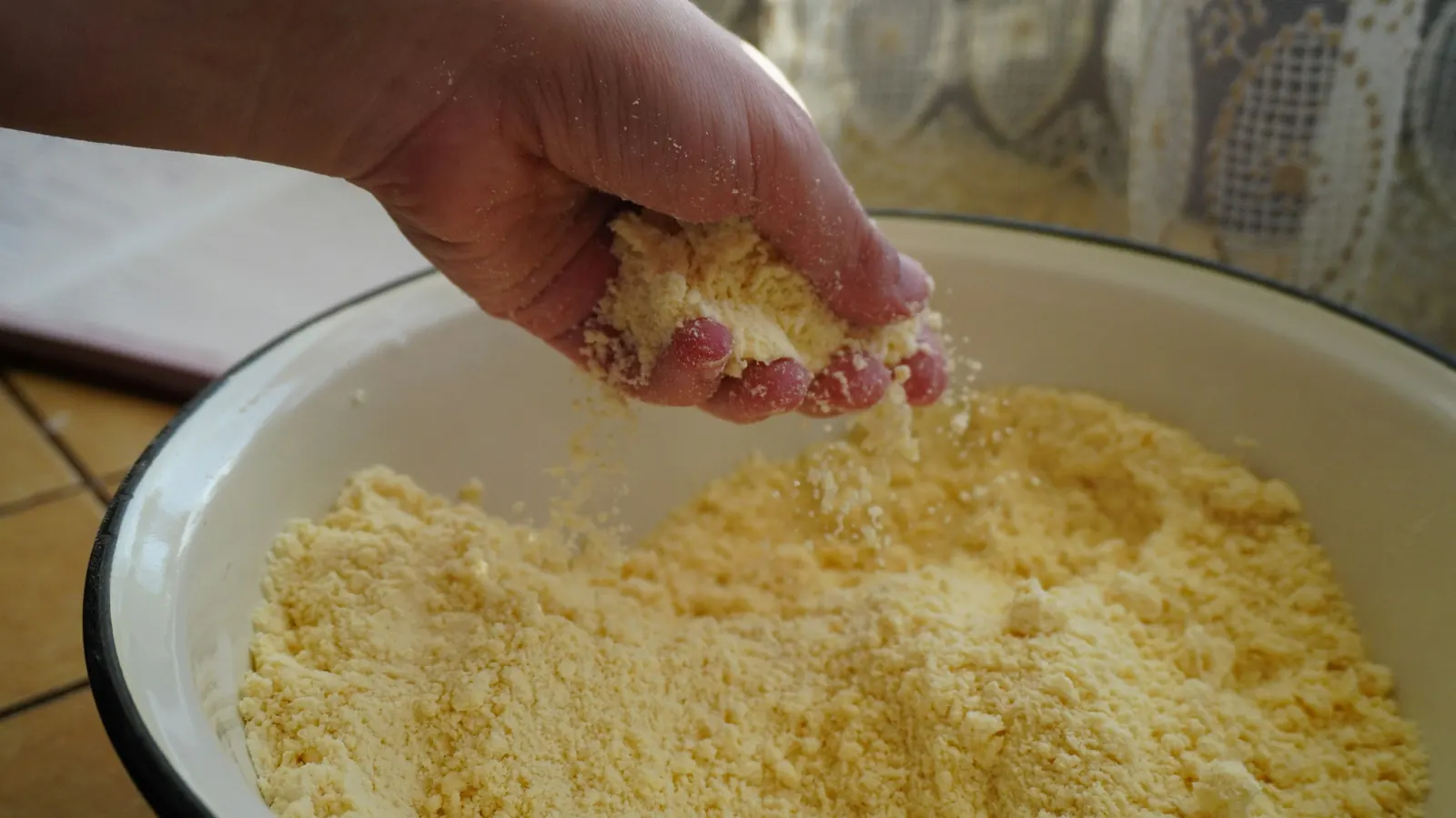
“Harina or masa?” sounds like a choice between two ingredients, but it is really a question about three. Harina is simply the Spanish word for flour, and on a Mexican grocery shelf it can mean wheat flour (harina de trigo) or masa harina, the dried corn flour used for corn tortillas. Masa means dough, and in a Mexican kitchen it usually means fresh corn dough made from corn cooked with lime and ground wet.
So the useful comparison is masa harina, fresh masa and wheat harina, side by side: what each one is, what it makes, how long it keeps and how you buy it. This guide sorts that out, explains the step that separates corn masa from ordinary cornmeal, and names the bags worth buying for corn and for flour tortillas.
Julia’s earns a commission on purchases made through links on this page, at no cost to you. Recommendations are based on what a Mexican kitchen looks for in tortilla flour and dough, the makers’ own specifications and published sources, which we name.
Quick verdict: harina or masa for what you cook
For corn tortillas, tamales, sopes and pupusas, you need masa: buy fresh masa from a tortillería if you will cook it within a day or two, or keep a bag of masa harina (such as Masienda or Maseca), which turns back into masa with warm water and stores for months. For flour tortillas, you need wheat harina, ordinary all-purpose flour, plus fat, salt and water. Wheat flour cannot make a corn tortilla, and masa harina cannot make a flour tortilla. Wheat flour contains gluten; masa harina is made from corn and is generally labeled gluten-free.
Harina vs masa side by side
The three products compared on what a home cook needs to know. Details come from America’s Test Kitchen, the University of Nebraska, the makers and their listings; where a point depends on the brand, we say so.
| Fresh masa | Masa harina | Wheat harina (harina de trigo) | |
|---|---|---|---|
| What it is | Moist dough of nixtamalized corn, ground wet | Masa dried and ground into flour | Milled wheat flour |
| Made from | Corn cooked and steeped in lime | Corn cooked and steeped in lime | Wheat; no lime |
| Makes | Corn tortillas, tamales, sopes, tlacoyos | The same, once mixed with water | Flour tortillas, bread, baked goods |
| Prep | Ready to press | Add warm water and salt, knead, rest | Add fat, salt, water (often baking powder), knead, rest, roll |
| Keeps | A short time; refrigerate and use quickly | Months in a cool, dry place | Months in a cool, dry place |
| Gluten | None from corn | Usually labeled gluten-free | Contains gluten; wheat is a major allergen |
| Where to buy | Tortillerías and some Mexican markets | Supermarkets and online | Everywhere |
What “harina” and “masa” mean in a Mexican kitchen
Harina means flour. America’s Test Kitchen, explaining corn flours, notes that “masa harina” therefore translates as “dough flour”. On its own, harina usually means wheat flour, which is why bags sold to Spanish-speaking shoppers are labeled harina de trigo, and why Goya’s wheat flour is sold as “Harina de Trigo”. Corn flours carry a qualifier: Maseca’s bags say masa instantánea de maíz, and Minsa labels its flour harina de maíz nixtamalizado, nixtamalized corn flour.
Masa means dough. In Mexican cooking it almost always means corn dough, made by grinding corn that has been cooked and soaked in limewater, which America’s Test Kitchen describes as a “moist dough” ground until it holds together. Cooks also talk about masa para tortillas and masa preparada, fresh masa already beaten with fat and salt for tamales. Wheat dough for flour tortillas is called masa too, but when a recipe says masa without more, it means corn.
That leaves the source of most confusion: masa harina is not a third grain. It is masa that has been dried and ground again into flour, as America’s Test Kitchen puts it, so that it keeps. Mix it with water and you have masa again.
Nixtamalization: the step that makes masa
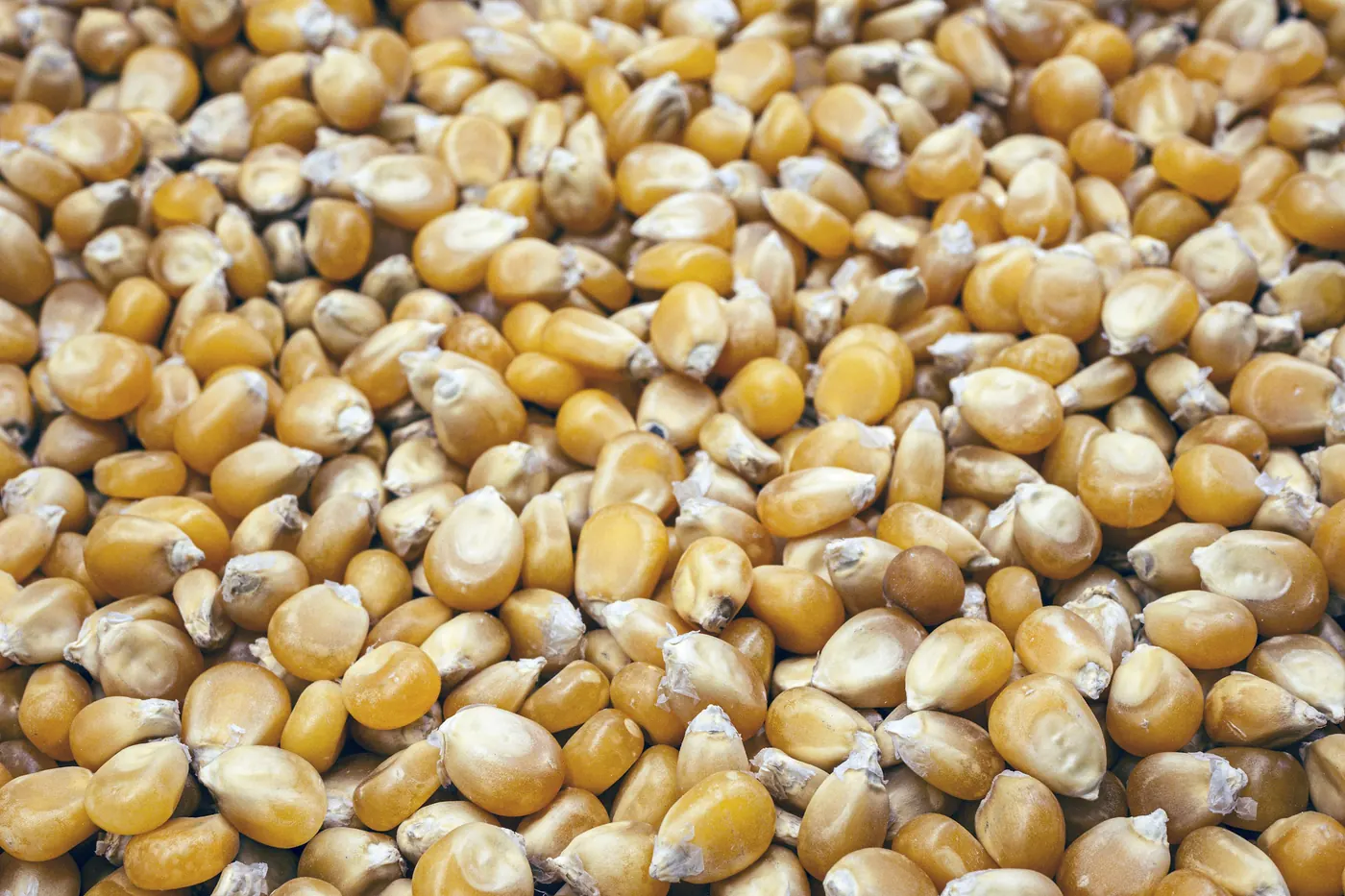
The difference between masa and plain ground corn is one ancient step. The University of Nebraska’s extension service defines nixtamalization, which originated in Mesoamerica, as “the alkaline (lime, Ca(OH)2) cooking of corn”: dried kernels are cooked and steeped in water with calcium hydroxide, often called cal or slaked lime, then rinsed and ground. The lime is a mineral, not the citrus fruit.
That step changes the corn in ways that matter in the kitchen and at the table. According to the same Nebraska publication, “the alkaline solution degrades and removes the pericarp”, the tough skin of the kernel, and softens its starchy interior, which is what lets the ground corn form a smooth, pliable dough. It also changes the nutrition: “As the calcium content is increased, niacin becomes available, and phytic acid levels are reduced.” Our guide to what nixtamalization is explains the history and the chemistry in more depth.
Both fresh masa and masa harina are nixtamalized. Wheat flour is not, and neither is cornmeal: America’s Test Kitchen notes that cornmeal is ground from uncooked dried corn, and that masarepa, the precooked corn flour sold for arepas, is not nixtamalized either. Neither will make a corn tortilla that holds together.
Fresh masa vs masa harina
Fresh masa and masa harina start the same way and make the same foods. The differences are freshness, texture and convenience.
Shelf life
Fresh masa is perishable. Gruma, the company behind Maseca, says its first mill opened in 1949 to solve exactly that problem: fresh nixtamal dough did not keep, while a dried nixtamal flour could be stored and “just had to be mixed with water to prepare the dough”. Buy fresh masa for the day you cook, keep it cold, and use it quickly. Masa harina, by contrast, is a pantry flour: Bob’s Red Mill gives its golden masa harina a 24-month shelf life, and Masienda says its bulk white flour keeps for up to a year in a cool, dry place.
Texture and flavor
Fresh masa is ground wet and never dried, and it is sold to be cooked within a day or two. Masa harina varies by brand: America’s Test Kitchen, in its guide to masa harina, described Maseca’s corn flavor as “very subtle” and found heirloom flours from makers such as Masienda “very corny” and “sweet and toasty”. If you cannot buy fresh masa, a good masa harina gets you most of the way. Our comparison of masa harina vs Maseca goes deeper on that choice.
Convenience
Fresh masa is ready to press. Masa harina takes ten minutes of mixing and resting, but you can make as much or as little as you need. Maseca’s bag directions, as reproduced by retailers, call for 2 cups of flour to 1½ cups of water for about 19 small tortillas; Masienda’s recipe uses 150 grams of flour to 257 grams of warm water for about ten.
Masa vs wheat harina: corn tortillas and flour tortillas
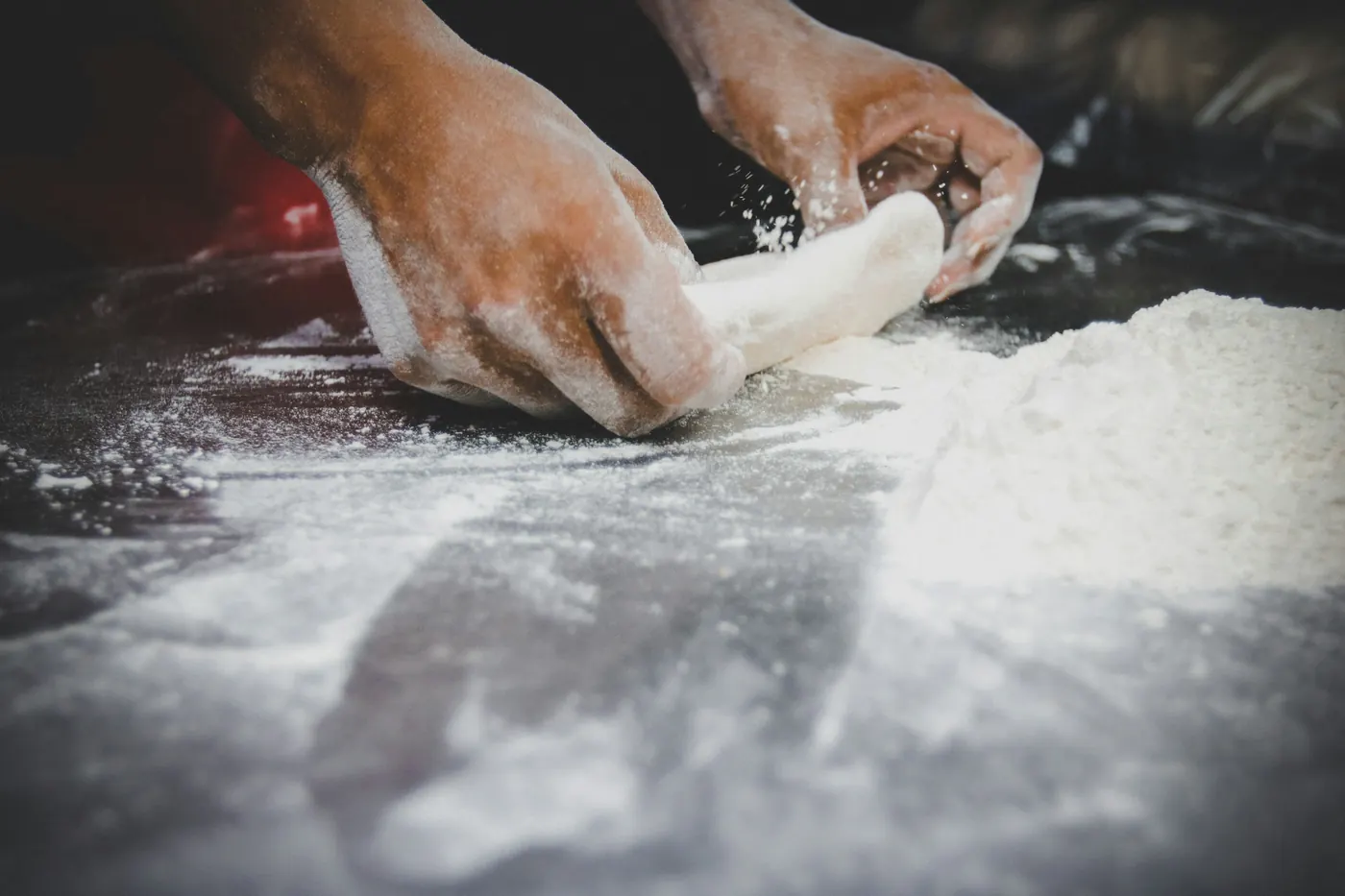
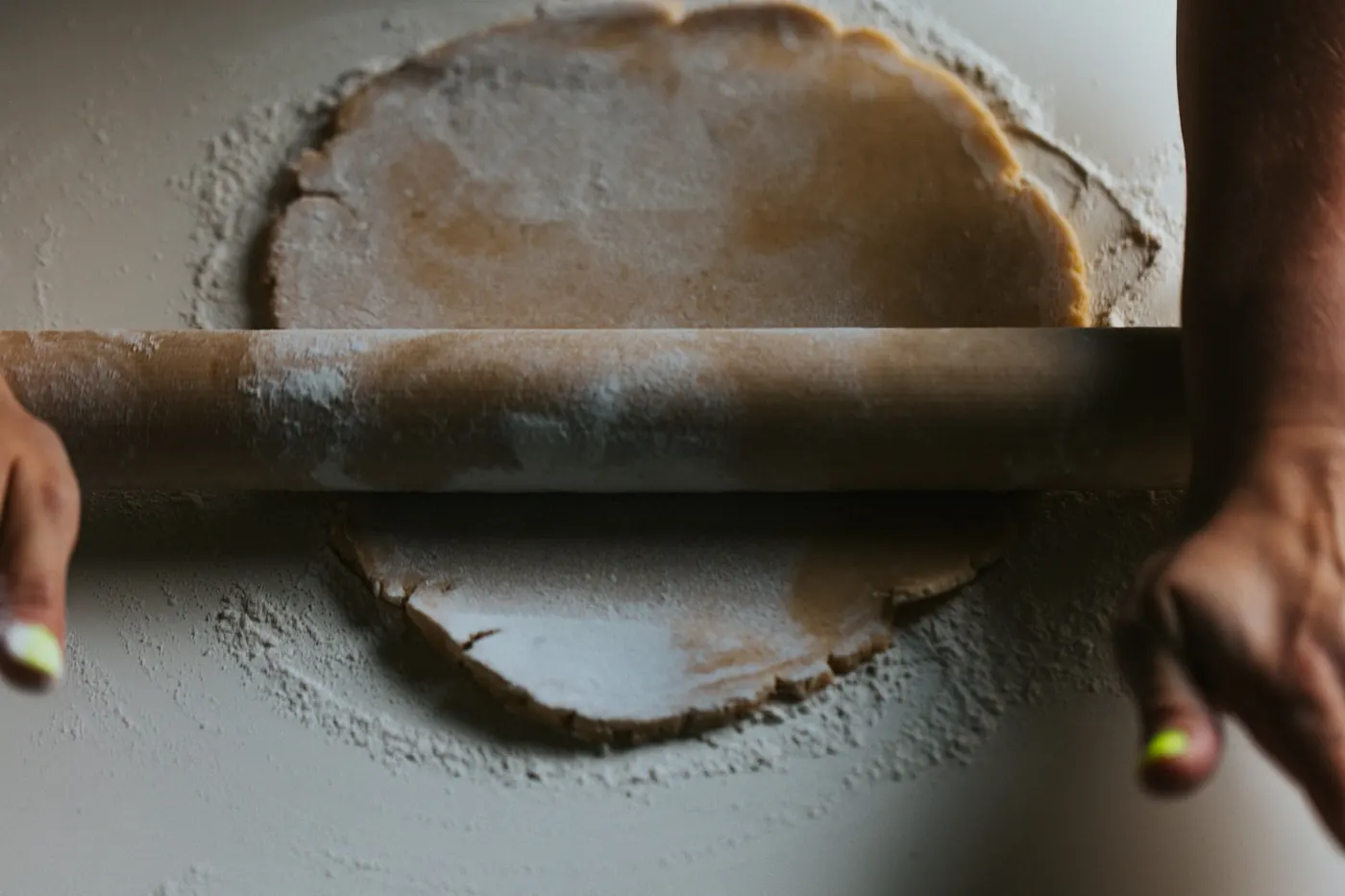
Corn and wheat tortillas are different breads, not variations on one recipe. Masa needs only water and salt, because nixtamalized corn binds on its own. Wheat flour needs fat to stay tender: King Arthur Baking’s tortilla recipe uses 2½ cups (300 grams) of all-purpose flour, a teaspoon of baking powder, half a teaspoon of salt, a quarter cup of lard, shortening, butter or oil, and hot water, and explains that coating most of the flour with fat “inhibits gluten formation, making the tortillas easier to roll out”. That gluten is the point of wheat: it gives flour tortillas their stretch, and it is why they are rolled with a pin while corn tortillas are pressed.
The cooking differs a little too. King Arthur cooks its flour tortillas on a dry, preheated griddle at about 400°F for roughly 30 seconds a side. Corn tortillas also go onto a dry, hot comal, and a fresh one often puffs on the last turn. Our guide to corn vs flour tortillas explains when each belongs on the table, and the best comal for tortillas covers the pan for both.
Allergens, gluten and fortification
Wheat is one of the major food allergens, and wheat flour contains gluten, so flour tortillas are out for anyone with celiac disease or a wheat allergy. Some wheat flours also contain malted barley flour, another source of gluten: retailer ingredient panels for King Arthur’s organic all-purpose flour list organic hard red wheat flour and organic malted barley flour, with a “contains wheat” statement.
Corn masa contains no gluten of its own. Masienda says its masa harina is “always gluten-free”, and retailers label Maseca’s instant corn masa flours gluten-free. Bob’s Red Mill’s organic masa harina page does not state gluten-free, so check the bag if that matters to you, and check any product labeled tortilla “mix”, which can contain other ingredients.
Some masa harinas carry one more ingredient: folic acid. In 2016 the U.S. Food and Drug Administration approved voluntary fortification of corn masa flour with folic acid, up to 0.7 milligrams per pound, to help reduce neural tube birth defects. Retailer panels list it on white Maseca; Masienda does not add it.
Choose fresh masa if… / Choose masa harina if… / Choose wheat harina if…
Choose fresh masa if…
- A tortillería or Mexican market near you sells it.
- You are cooking today or tomorrow, such as a tamalada or a batch of sopes.
- You want the freshest corn texture without mixing dough.
Choose masa harina if…
- You want corn tortillas whenever you like, from the pantry.
- You cannot buy fresh masa where you live.
- You need a gluten-free tortilla (check the label).
- You want to make a small batch, or a very large one.
Choose wheat harina if…
- You want soft, stretchy flour tortillas for burritos or quesadillas.
- You are cooking in the northern Mexican or Tex-Mex style, where flour tortillas are common.
- No one at the table needs to avoid wheat or gluten.
Our picks for each side of the harina vs masa question
Fresh masa does not ship well, so our picks are two masa harinas for corn tortillas and a wheat flour for flour tortillas. The masa harinas are also reviewed, with other brands, in our guide to the best masa harina for tortillas.
1. Masienda Heirloom Yellow Corn Masa Harina, 2.2 lb – Corn and Lime, Nothing Else

When you cannot get fresh masa, this is the masa harina that comes closest in spirit: heirloom corn from Mexico, nixtamalized, dried and finely ground. Masienda lists two ingredients, non-GMO heirloom corn and a trace of lime, and the Amazon listing labels it gluten-free, non-GMO and preservative-free.
It comes as a 2.2-pound bag, and Masienda says each bag makes 84 six-inch tortillas. Its recipe uses 150 grams of flour to 257 grams of warm water for about ten tortillas. The listing names tortillas, tamales, tostadas, pupusas and arepas as uses. Store it in a cool, dry place; Masienda gives up to a year for its bulk white flour, so treat that as a guide. Its white flour was out of stock on Amazon when we rechecked, so this is the yellow one.
Why we like it
- Two ingredients: heirloom corn and a trace of lime
- Labeled gluten-free, non-GMO, preservative-free
- About 84 six-inch tortillas per bag, per Masienda
- No added folic acid
Key specifications
| Size | 1 bag, 2.2 lb |
|---|---|
| Type | Masa harina (nixtamalized corn flour) |
| Ingredients | Non-GMO heirloom corn, trace of lime |
| Allergens | None of the major allergens listed |
| Diet claims | Gluten-free, non-GMO, preservative-free |
| Prep | Warm water; about 150 g flour to 257 g water |
| Storage | Cool, dry place |
Why we recommend it
Choose it for corn tortillas you want to taste on their own. It is the clearest example of what masa harina should be: nixtamalized corn and nothing else.
Skip it if you make tortillas every day for a family; the smaller bags and higher cost add up, and Maseca is the better everyday flour.
Pros and cons
Pros
- Corn and lime only
- Heirloom corn from Mexico
- Clear yield per bag
Cons
- Costs more per tortilla
- Mostly sold online
2. Maseca Instant Yellow Corn Masa Flour, 2-pack – The Everyday Masa Harina

Maseca is the masa harina most US shoppers know, and America’s Test Kitchen calls it the most widely available in the country. On Amazon, the classic white bag was out of stock or sold only through scarce reseller bundles when we checked, so our pick is the yellow corn flour, which is in stock. Retailer ingredient panels list one ingredient, corn treated with hydrated lime, and retailers label it gluten-free and kosher.
The listing title describes two 2.2-pound bags, but its size field says 17.6 ounces per pack of two and the part number belongs to a reseller, so check the quantity before you order. Maseca’s bag directions call for 2 cups of flour to 1½ cups of water for about 19 tortillas.
Why we like it
- One ingredient: corn treated with hydrated lime, per retailers
- Labeled gluten-free and kosher by retailers
- The same flour most supermarkets stock
Key specifications
| Size | 2 bags of 2.2 lb per title (size field says 17.6 oz) |
|---|---|
| Type | Masa harina (instant corn masa flour) |
| Ingredients | Corn treated with hydrated lime (retailers) |
| Allergens | None of the major allergens listed |
| Diet claims | Gluten-free, kosher (retailers) |
| Prep | 2 cups flour to 1½ cups water (bag directions) |
| Storage | Not stated |
Why we recommend it
Choose it for everyday corn tortillas, enchiladas and tostadas, where the fillings lead. It behaves the same from bag to bag and is easy to buy again.
Skip it if corn flavor is the point: America’s Test Kitchen found Maseca’s very subtle compared with heirloom flours.
Pros and cons
Pros
- Easy to restock
- Short ingredient list
- Consistent results
Cons
- Mild corn flavor
- Pack size unclear on the listing
- Reseller listing, not Gruma’s own
3. King Arthur Organic All-Purpose Flour, 2 lb – Wheat Harina for Flour Tortillas
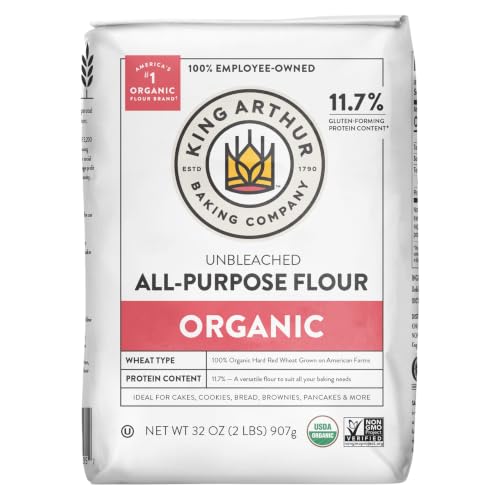
For flour tortillas you do not need a special tortilla flour, just a good all-purpose one. King Arthur’s organic flour is unbleached and, according to the listing, milled from 100% organic hard red winter and spring wheats, malted, and never bleached or bromated. King Arthur’s own tortilla recipe calls for its unbleached all-purpose flour, and this is the organic version of the same kind of flour.
Read the label if you cook for anyone with allergies. Retailer ingredient panels list organic hard red wheat flour and organic malted barley flour, with a “contains wheat” statement, and King Arthur’s shop marks it as not gluten-free. It is certified organic, Non-GMO Project Verified and kosher pareve, according to King Arthur and the listing.
Why we like it
- Unbleached organic wheat flour, per the listing
- Never bleached or bromated, per the listing
- King Arthur publishes a tortilla recipe for it
- Organic, Non-GMO Project Verified, kosher pareve
Key specifications
| Size | 2 lb bag |
|---|---|
| Type | Wheat flour (harina de trigo), all-purpose |
| Ingredients | Organic hard red wheat flour, organic malted barley flour (retailers) |
| Allergens | Contains wheat; contains gluten |
| Diet claims | Organic, non-GMO, kosher pareve; not gluten-free |
| Prep | 300 g flour, fat, salt, baking powder, hot water (King Arthur recipe) |
| Storage | Not stated |
Why we recommend it
Choose it if flour tortillas are what you want: soft, stretchy rounds for burritos, breakfast tacos and quesadillas. The small 2 lb bag suits a few batches of tortillas; buy a bigger one if you bake often.
Skip it if anyone at the table avoids wheat or gluten; make corn tortillas from masa harina instead.
Pros and cons
Pros
- Organic, unbleached
- Maker’s own tortilla recipe
- Useful for all baking
Cons
- Contains wheat and gluten
- Not a ready tortilla mix
How we compared harina and masa
We compared fresh masa, masa harina and wheat flour on what a kitchen asks of each: what it is made from, what it makes, how it is prepared, how long it keeps and what is in the bag. Definitions come from America’s Test Kitchen’s guide to masa, masa harina and masarepa; the science of nixtamalization from the University of Nebraska–Lincoln Extension; product details from the Amazon listings (checked for stock on the day we wrote this), the makers and retailer ingredient panels. We have not cooked with these products for this guide, and we say whose finding each description is.
Harina and masa questions, answered
Can I use regular flour instead of masa harina?
No. Wheat flour is not nixtamalized corn, so it makes a different dough with a different flavor and texture. Use it for flour tortillas, and masa harina or fresh masa for corn tortillas, tamales and pupusas.
Is masa harina the same as cornmeal or corn flour?
No. Cornmeal is ground from uncooked dried corn, and masarepa is precooked corn flour for arepas; neither is nixtamalized, according to America’s Test Kitchen, and neither forms a masa dough. Look for “masa harina”, “instant corn masa flour” or “nixtamalized” on the bag.
How do I turn masa harina into masa?
Mix it with warm water and a pinch of salt, knead into a soft dough and rest it, covered, before pressing. If the edges crack when you press a ball, add a little more water.
Is fresh masa better than masa harina?
Fresh masa is fresher, but it must be used quickly. A good masa harina makes fine tortillas and keeps for months, which is why it is the practical choice for most home cooks.
Is harina de maíz the same as masa harina?
Sometimes. Harina de maíz just means corn flour, which can be nixtamalized or not. Brands that are nixtamalized say so, as in Minsa’s “harina de maíz nixtamalizado”.
Which bag to bring home
Keep a bag of masa harina in the pantry for corn tortillas, and buy fresh masa when you can cook it the same day. If flour tortillas are what your family asks for, a good all-purpose wheat flour, some lard or butter and King Arthur’s recipe are all you need. A press, a comal and a warmer finish the job; our guide to tortilla making tools covers each one.
And if you would rather someone else made the tortillas tonight, see our menu or call to order.