
The recipe for café de olla, capirotada or a pot of ponche calls for a cone of piloncillo, and there is none in the cupboard. Piloncillo is easy to find in a Mexican grocery and surprisingly hard to find anywhere else, so most cooks meet this problem sooner or later. The good news is that several sugars on an ordinary shelf can do the job, some of them very well.
This guide is about what to use instead. It explains what you are replacing, which substitute comes closest and why, how much to use from published ratios, where each one falls short, and which dishes forgive a swap. Every sugar below is sold on Amazon, and each listing states what is in the bag or jar.
Julia’s earns a commission on purchases made through links on this page, at no cost to you. Recommendations are based on what a restaurant kitchen looks for, product specifications and verified buyer reports.
Why cooks go looking for a stand-in
The reasons are usually practical, and the right substitute depends on which one applies.
- The store does not carry it. Supermarkets outside the Southwest and big cities often have no piloncillo at all, while dark brown sugar is on every baking aisle.
- The cone ran out mid-recipe. The coffee or the syrup is already on the stove, and you need something now.
- You want something easier to measure. A hard cone has to be grated, chopped or melted before it can be measured, and a granulated sugar can be spooned.
- You already keep another unrefined sugar, such as jaggery from an Indian grocery or coconut sugar, and want to know whether it will do.
It helps to know what is being replaced. Piloncillo is unrefined cane sugar: Mama Maggie’s Kitchen describes it as raw, pure sugar cane, made by boiling the cane juice and pouring it into cone-shaped molds, where it hardens and cools. The molasses is never taken out. Chowhound, quoting the Oaxacan chef Alam Mendez, describes its flavor as much more intense and layered than commercial brown sugar. A good substitute therefore needs two things: plenty of molasses flavor, and the ability to melt into a syrup.
Quick verdict: the piloncillo substitute to reach for
For most cooks, use dark brown sugar, with a spoonful of molasses if you have it. Mama Maggie’s Kitchen gives 1 cup of dark brown sugar plus 1 tablespoon of molasses for one 8-ounce cone, and Chowhound names dark brown sugar and muscovado as the better stand-ins because they carry more molasses. Wholesome Organic Dark Brown Sugar is our pick. If you can get it, granulated panela such as Yupik’s is not really a substitute at all but the same kind of unrefined cane sugar in loose form. For the real thing in cones and blocks, see our best piloncillo brand guide.
Five piloncillo swaps side by side
| Substitute | Best for | Type | How close | Buy on Amazon |
|---|---|---|---|---|

Wholesome Organic Dark Brown Sugar, 24 ozBest overall
|
Café de olla, capirotada, baking | Cane sugar with molasses | Close, closer with molasses | View on Amazon |

Yupik Organic Panela Whole Cane Sugar, 2.2 lbClosest in kind
|
Any piloncillo recipe | Unrefined whole cane sugar | Same sugar, loose form | View on Amazon |

India Tree Light Muscovado Sugar, 2.8 lbBest muscovado
|
Baking and lighter syrups | Unrefined cane sugar | Close, milder than dark | View on Amazon |

Rani Punjabi Shakkar Jaggery Powder, 17.5 ozBest jaggery
|
Syrups, ponche, café de olla | Unrefined raw cane sugar | Same family, its own flavor | View on Amazon |

Grandma’s Robust Unsulphured Molasses, 12 ozBest add-in
|
Deepening brown or white sugar | Cane molasses | Only mixed with sugar | View on Amazon |
Our picks for a piloncillo substitute
The seven sugars below run from the closest swap to the last resort. Each listing states what the sugar is made from, and each pick says how well it does the job and where it falls short. We have not cooked with or tasted these sugars for this guide; flavor descriptions are the makers’ or the named sources’ own.
1. Wholesome Organic Dark Brown Sugar, 24 oz – The Easiest Close Swap
Dark brown sugar is the substitute every source we read points to first, and it is the one you can buy almost anywhere. Chowhound says regular brown sugar works in a pinch, but that dark brown sugar or muscovado is better because it has more molasses. University of Illinois Extension explains why: brown sugar starts as white sugar with molasses added back, about 3.5 percent by weight for light and about 6.5 percent for dark.
Wholesome’s version is organic. The listing says it is made from fine-grained organic cane sugar and organic molasses, from cane grown in Central and South America, and that it can replace refined brown sugar one for one. For piloncillo, Mama Maggie’s Kitchen gives the ratio to use: 1 cup of dark brown sugar plus 1 tablespoon of molasses for one 8-ounce cone. Without the molasses it still works, just with a milder flavor.
Because it is soft and loose, it dissolves quickly in hot coffee or water, so café de olla and the syrup for capirotada come together faster than with a hard cone. Chowhound also passes on Mendez’s suggestion of a dark brown sugar syrup simmered with cinnamon or allspice to get closer to piloncillo’s flavor. Keep the bag closed: brown sugar dries out and hardens in the air, and Illinois Extension suggests a slice of bread on top for a day to soften it.
Why we like it
- Dark brown sugar is the stand-in Chowhound and Mama Maggie’s Kitchen name
- Listing states organic cane sugar and organic molasses
- Soft and loose, so it dissolves quickly
- Sold and shipped by Amazon.com
Key specifications
| Type | Dark brown sugar |
|---|---|
| Size | 24 oz bag |
| Ingredients | Organic cane sugar, organic molasses (listing) |
| Form | Soft, moist granules |
| Allergens/diet | Gluten free, vegan (listing) |
| Certifications | USDA Organic, Fair Trade, Non-GMO Project Verified, kosher (listing) |
| Swap for an 8-oz cone | 1 cup plus 1 tbsp molasses (Mama Maggie’s Kitchen) |
| Origin | Cane from Central and South America (listing) |
Why we recommend it
Choose it if you want one sugar that stands in for piloncillo when you need it and handles everyday baking the rest of the time.
Skip it if you want piloncillo’s flavor exactly: even with added molasses, brown sugar is a mix of refined sugar and molasses, and Chowhound calls its flavor milder and more straightforward.
Pros and cons
Pros
- Closest common swap
- Published ratio for a cone
- Organic and Fair Trade
Cons
- Milder than piloncillo
- Hardens if left open
- Bag packaging may vary, per the listing
2. Yupik Organic Panela Whole Cane Sugar, 2.2 lb – The Same Sugar, Loose
Panela is the name used across much of Latin America for the same kind of sugar as piloncillo. Chowhound notes that piloncillo is also known as panela, and Wikipedia’s entry on non-centrifugal cane sugar, the technical name for traditional raw sugar made by evaporating water from cane juice, lists panela and jaggery among its many local names. So granulated panela is less a substitute than piloncillo in another shape.
Yupik’s listing describes its organic panela as a traditional whole cane sugar that keeps its natural molasses and is never centrifuged, with a deeper caramel flavor than refined sugar. Because it is loose, there is nothing to grate: spoon it into the pot of coffee or the syrup and it dissolves. For a recipe that gives piloncillo by the cone, weigh it. CooksInfo puts cones at anywhere from under an ounce to about nine ounces, so an 8-ounce cone means about 8 ounces of panela.
The listing gives a shelf life of up to 48 months stored cool and dry, away from sunlight. The listing does not state where the cane is grown.
Why we like it
- Same unrefined cane sugar as piloncillo, in loose form
- Listing states it keeps its natural molasses
- No grating or chopping
- Sold and shipped by Amazon.com
Key specifications
| Type | Granulated panela |
|---|---|
| Size | 2.2 lb (35.3 oz) bag |
| Ingredients | Organic unrefined whole cane sugar (listing) |
| Form | Loose granules |
| Allergens/diet | Gluten free (listing) |
| Certifications | USDA Organic, non-GMO, kosher (listing) |
| Swap for an 8-oz cone | About 8 oz by weight (same sugar) |
| Origin | Not stated |
Why we recommend it
Choose it if you cook from Mexican recipes often and want piloncillo’s character in a form that measures like ordinary sugar.
Skip it if you only need sugar for tonight: dark brown sugar from the corner store gets you most of the way, and a 2.2-pound bag is a lot of panela for one pot of coffee.
Pros and cons
Pros
- Genuinely the same kind of sugar
- Measures and dissolves easily
- Long stated shelf life
Cons
- Origin of the cane not stated
- Recent listing with little history
- Loose granules are not the cone some recipes picture
3. India Tree Light Muscovado Sugar, 2.8 lb – Molasses Left in the Crystal
Muscovado is the other sugar Chowhound names alongside dark brown sugar as a better piloncillo substitute, and it is made the opposite way from most brown sugar. India Tree’s listing puts it plainly: the molasses stays in the crystal rather than being added back in, the way most brown sugar is made. Wikipedia’s entry on non-centrifugal cane sugar adds that some varieties of muscovado are non-centrifugal, the same family as piloncillo.
The listing states one ingredient, unrefined cane sugar, grown and processed in Mauritius. This is the light version, with less molasses than dark muscovado, which India Tree describes as enough to stay sticky and full-flavored without taking over a recipe. That makes it a gentle stand-in: good in baked goods and in a syrup for buñuelos or fruit, a little soft for a dark, strong café de olla. Dark muscovado would be closer to piloncillo, but the dark listings we found were sold by resellers or did not state their ingredients, so we left them out.
Muscovado is moist and sticky, so it clumps; press out lumps with a spoon before measuring. India Tree says to store it tightly sealed.
Why we like it
- Muscovado is a stand-in Chowhound names
- One ingredient: unrefined cane sugar (listing)
- Molasses kept in the crystal, per India Tree
- Sold and shipped by Amazon.com
Key specifications
| Type | Light muscovado |
|---|---|
| Size | 2.8 lb canister |
| Ingredients | Unrefined cane sugar (listing) |
| Form | Moist, sticky granules |
| Allergens/diet | No allergen statement on the listing |
| Certifications | Non-GMO Project Verified, Fair Trade, cRc kosher (listing) |
| Swap for an 8-oz cone | No published ratio; weigh about 8 oz |
| Origin | Mauritius (listing) |
Why we recommend it
Choose it if you bake a lot and want one less refined brown sugar that also covers for piloncillo in sweets and syrups.
Skip it if you want the dark, almost burnt-caramel taste of dark piloncillo: this is the light version, and a 2.8-pound canister is sized, in India Tree’s words, for kitchens that bake with it every day.
Pros and cons
Pros
- Unrefined, single ingredient
- Good in baking as well as syrups
- Resealable canister
Cons
- Lighter than dark piloncillo
- Clumps when moist
- Large canister
4. Rani Punjabi Shakkar Jaggery Powder, 17.5 oz – India’s Cousin of Piloncillo
Jaggery, or gur, is the South Asian relative of piloncillo. Wikipedia’s entry on non-centrifugal cane sugar names jaggery alongside panela as a local name for the same traditional raw sugar boiled down from cane juice. If you shop at an Indian grocery, you may already have some, and it does the same job in a pot: it melts into a dark, sweet syrup.
Rani’s version is shakkar, jaggery ground to a powder. The listing describes it as Indian unrefined raw cane sugar, with no salt or sugar added and no fillers, and says it is kosher, non-GMO and vegan. Rani says it is a US-based company that has sold Indian foods for over 40 years, and the lead offer comes from the brand itself. As a powder it skips the grating step, and the plastic jar keeps it sealed.
The limit is flavor. No source we read compares the taste of jaggery and piloncillo directly, so this is our own kitchen sense: it comes from different cane grown in a different country, so expect a related molasses depth rather than an exact match, and taste as you go. Weigh it for a recipe that gives piloncillo by the cone.
Why we like it
- Same family of unrefined cane sugar as piloncillo
- Listing states unrefined raw cane sugar, no fillers
- Powdered, so it needs no grating
- Sold by the brand owner
Key specifications
| Type | Jaggery powder (shakkar) |
|---|---|
| Size | 17.5 oz (500 g) jar |
| Ingredients | Unrefined raw cane sugar; no salt, sugar or fillers added (listing) |
| Form | Powder |
| Allergens/diet | Vegan; “gluten friendly” (listing) |
| Certifications | Kosher, non-GMO (listing) |
| Swap for an 8-oz cone | No published ratio; weigh about 8 oz |
| Origin | India (listing) |
Why we recommend it
Choose it if you want an unrefined cane sugar that melts like piloncillo and you are happy with a flavor that is related rather than identical.
Skip it if you avoid gluten strictly: the listing says only “gluten friendly”, not gluten free.
Pros and cons
Pros
- Unrefined, like piloncillo
- Ready to spoon
- Sold directly by the brand
Cons
- Flavor differs from Mexican piloncillo
- Small jar
- “Gluten friendly” is not a gluten-free claim
5. Grandma’s Robust Unsulphured Molasses, 12 oz – Turn Any Sugar Darker
Molasses on its own is not a piloncillo substitute; it is too liquid and too strong. Stirred into sugar, though, it is the cheapest way to get piloncillo’s depth from what is already in the cupboard, and it is the “plus” in the most widely cited swap: Mama Maggie’s Kitchen’s 1 cup of dark brown sugar plus 1 tablespoon of molasses for an 8-ounce cone.
If all you have is white sugar, molasses still gets you there. America’s Test Kitchen gives 1 cup of granulated sugar plus 2 tablespoons of molasses for 1 cup of dark brown sugar, pulsed in a food processor, or simply added with the other wet ingredients. For a syrup, the second route is easier: put white sugar, water and molasses in the pot together and let them melt.
Grandma’s listing says this robust molasses has a single ingredient, made from sugarcane with no artificial preservatives, flavors or colors, and that it is kosher, gluten free and Non-GMO Project Verified. None of the sources we read use blackstrap molasses for this swap, so we would stick to an ordinary baking molasses like this one.
Why we like it
- The molasses in Mama Maggie’s Kitchen’s swap
- Turns white sugar into dark brown sugar, per America’s Test Kitchen
- Single ingredient, per the listing
- Sold and shipped by Amazon.com
Key specifications
| Type | Robust unsulphured molasses |
|---|---|
| Size | 12 fl oz jar |
| Ingredients | Single ingredient, from sugarcane (listing) |
| Form | Thick syrup |
| Allergens/diet | Gluten free (listing) |
| Certifications | Kosher, Non-GMO Project Verified (listing) |
| Swap for an 8-oz cone | 1 tbsp with 1 cup dark brown sugar (Mama Maggie’s Kitchen) |
| Origin | Not stated |
Why we recommend it
Choose it if you keep white or light brown sugar and want to darken it into a better piloncillo stand-in, or if you bake gingerbread and want a jar on hand anyway.
Skip it if you want a single bag that does the job alone: molasses only works mixed with sugar.
Pros and cons
Pros
- Upgrades sugar you already own
- Published ratios for both uses
- Small jar, long use
Cons
- Not a substitute on its own
- Sticky to measure
6. MADHAVA Organic Coconut Sugar, 3 lb – A Different Plant, a Similar Use

Coconut sugar comes up often as a piloncillo substitute, and it is worth being clear about what it is: not cane sugar at all, but sugar made from the nectar of coconut palm blossoms. None of the sources we read for this guide name it as a piloncillo swap, so the advice here is our own kitchen sense, labeled as such. It is brown, it dissolves in hot liquid, and it brings its own caramel-like sweetness, so it can sweeten café de olla or a fruit syrup. It will not bring the molasses depth that comes from cane, so the result will taste different.
Madhava’s listing describes this as pure, unrefined organic coconut sugar harvested on family farms in Indonesia, and says it replaces white sugar, brown sugar and raw sugars one for one with no recipe changes. It is USDA Organic, Non-GMO Project Verified, kosher, gluten free and vegan, per the listing, in a 3-pound bag.
The fair reason to choose it is preference: if you already bake with coconut sugar, or simply want a sweetener that is not from cane, it does the practical job. If the aim is a dish that tastes the way the recipe intends, a cane sugar from higher on this list is the better bet. The listing makes nutrition claims we have not checked and do not repeat here.
Why we like it
- Single ingredient: organic coconut sugar (listing)
- One-for-one swap for brown sugar, per Madhava
- Dissolves in hot liquid like a granulated sugar
- Sold and shipped by Amazon.com
Key specifications
| Type | Coconut sugar |
|---|---|
| Size | 3 lb (48 oz) bag |
| Ingredients | Organic coconut sugar (listing) |
| Form | Granules |
| Allergens/diet | Gluten free, vegan (listing) |
| Certifications | USDA Organic, Non-GMO Project Verified, kosher (listing) |
| Swap for an 8-oz cone | One for one by the maker’s guidance; weigh about 8 oz |
| Origin | Indonesia (listing) |
Why we recommend it
Choose it if you already cook with coconut sugar or want a sweetener that is not from cane.
Skip it if flavor is the point: coconut sugar is a different plant, and no source we read recommends it as a piloncillo match.
Pros and cons
Pros
- Single, organic ingredient
- Measures like ordinary sugar
- Large bag
Cons
- Not cane, so no molasses depth
- Not a sourced piloncillo swap
- Listing leans on health claims
7. Sugar In The Raw Turbinado Cane Sugar, 2 lb – A Last-Resort Swap
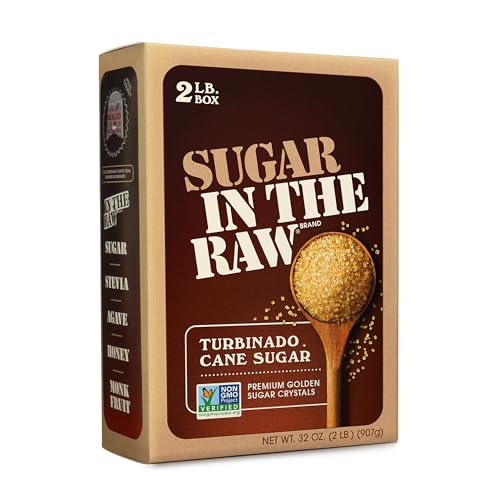
Turbinado is the golden “raw” sugar sold in boxes and packets, and it is the substitute to use only when nothing darker is around. University of Illinois Extension notes that raw sugar, also labeled natural or turbinado, keeps some of its molasses because it skips part of the refining. Sugar In The Raw’s listing says the same in its own words: never bleached, it keeps its golden color and natural molasses flavor.
“Some molasses” is the catch. Turbinado is far lighter than piloncillo, dark brown sugar or muscovado, and its large crystals stay crunchy in a cold mix. In a hot liquid such as café de olla or a syrup they dissolve, and a tablespoon of molasses per cup, from pick 5, darkens it toward the target. Without the molasses, expect a sweeter, plainer result.
The listing calls it pure cane sugar, grown in the tropics, and says it is Non-GMO Project Verified, vegan, kosher and gluten free. The 2-pound box is the everyday size.
Why we like it
- Keeps some molasses, per Illinois Extension and the listing
- Single ingredient: cane sugar (listing)
- Easy to find
- Sold and shipped by Amazon.com
Key specifications
| Type | Turbinado (raw) cane sugar |
|---|---|
| Size | 2 lb box |
| Ingredients | Turbinado cane sugar (listing) |
| Form | Large golden crystals |
| Allergens/diet | Vegan, gluten free (listing) |
| Certifications | Non-GMO Project Verified, kosher (listing) |
| Swap for an 8-oz cone | No published ratio; add molasses for depth |
| Origin | “Grown in the tropics” (listing) |
Why we recommend it
Choose it if it is the only less refined sugar in the house and the dish is a hot drink or syrup where the crystals will melt.
Skip it if you can get dark brown sugar, which is closer to piloncillo with no extra steps.
Pros and cons
Pros
- In most kitchens already
- Melts into hot drinks
- Simple ingredient list
Cons
- Much lighter flavor than piloncillo
- Crunchy in cold mixes
- Works best with added molasses
How to swap piloncillo without changing the dish
The sugar is only half of the swap. How you measure it and which dish it goes into decide whether anyone notices.
Measure by weight
Recipes often say “one cone”, but cones vary widely: CooksInfo puts them at anything from about three-quarters of an ounce to nine ounces. The Mama Maggie’s Kitchen ratio assumes an 8-ounce cone, and CooksInfo gives a similar swap: 1 cup (6 ounces) of dark brown sugar and 2 teaspoons of molasses per 7 to 9 ounces of piloncillo. If a recipe gives a weight, weigh the substitute. If it gives cones, find out what size the writer meant, or start with 8 ounces and adjust to taste. Going the other way, Chowhound suggests about 75 percent of a recipe’s brown sugar weight in piloncillo.
Match the swap to the dish
- Café de olla. The coffee is brewed with cinnamon and piloncillo, as our guide to Mexican desserts describes. Dark brown sugar with molasses, panela or jaggery all dissolve well here. A cinnamon stick in the pot covers for small differences.
- Capirotada and other syrups. The sugar is melted into a syrup with water and spice, so any of the cane sugars above work. Granulated forms melt faster than a cone.
- Ponche and calabaza en tacha. The Christmas fruit punch and pumpkin in syrup, both covered in our guide to Mexican Christmas food, simmer long enough for any granulated sugar to dissolve. Use the darkest sugar you have.
- Baked goods. Soft sugars such as dark brown sugar and muscovado are easiest, because they cream with butter. Grate or skip the hard ones.
Add spice to close the gap
Chowhound passes on chef Alam Mendez’s suggestion: make a syrup of dark brown sugar with spices such as cinnamon or allspice to mimic piloncillo. It is a simple trick for café de olla and capirotada, where cinnamon is already part of the dish.
What these swaps cannot do
None of them gives you a cone. A few traditional uses depend on the shape: a cone dropped whole into a pot to melt slowly, or shaved over a dessert at the table. A granulated sugar does the first job faster and the second not at all. And no substitute matches the range of flavors piloncillo itself comes in; Mama Maggie’s Kitchen notes that light piloncillo tastes milder than dark, which has an almost burnt caramel taste. If a recipe is built around piloncillo and you make it often, it is worth buying the real thing; our comparison of piloncillo vs brown sugar goes into the differences in detail.
Piloncillo substitute questions, answered
What is the best substitute for piloncillo?
Dark brown sugar, ideally with a little molasses. Mama Maggie’s Kitchen gives 1 cup of dark brown sugar plus 1 tablespoon of molasses for one 8-ounce cone. Chowhound names dark brown sugar and muscovado as the better stand-ins because they carry more molasses.
Is panela the same as piloncillo?
Essentially, yes. Both are unrefined cane sugar boiled down from the juice; Chowhound notes that piloncillo is also known as panela. Granulated panela is the easiest form to measure.
Can I use jaggery instead of piloncillo?
Yes. Jaggery is a South Asian name for the same family of traditional raw cane sugar, per Wikipedia’s entry on non-centrifugal cane sugar. It melts the same way; the flavor is related rather than identical, so taste as you go.
Can I use white sugar instead of piloncillo?
Only with molasses. America’s Test Kitchen gives 1 cup of granulated sugar plus 2 tablespoons of molasses for 1 cup of dark brown sugar; use that as your piloncillo stand-in.
Is coconut sugar a good substitute for piloncillo?
It works as a sweetener but is not a close match. It is made from coconut palm nectar, not cane, so it lacks the molasses depth, and none of the sources we read recommend it for piloncillo.
Where to go from here
Keep a bag of dark brown sugar and a jar of molasses in the cupboard and you can stand in for piloncillo whenever a recipe asks. If Mexican sweets and café de olla are regulars at your table, granulated panela or a pack of cones is worth buying; our best piloncillo brand guide covers cones, blocks and granules. Piloncillo sits on the sweet shelf of a Mexican pantry beside chocolate and canela, and our guide to Mexican pantry staples covers that shelf and the rest.
And if you would rather leave the cooking to someone else tonight, look through the menu or call to order.