A rolling pin does one simple thing: it presses dough into an even sheet while you move it. That makes it easy to replace for some jobs and hard to replace for others. A pasta sheet, a small tortilla, a tart shell or a tray of cookies can all be made without a pin, often faster. A full 12-inch pie crust or a big sheet of cut-out cookie dough is a different story, and there the honest answer is usually to buy a pin.
This guide sorts out which jobs have a real alternative, which tools are made for them, and what each one can and cannot do. We also cover the bottle-and-glass tricks people reach for in a pinch, and where they stop working.
Julia’s earns a commission on purchases made through links on this page, at no cost to you. Recommendations are based on what a restaurant kitchen looks for, product specifications and verified buyer reports.
Why people look for a rolling pin alternative
Most people asking this question fall into one of a few groups, and the right tool depends on which one you are in.
- The dough is ready and there is no pin. You need something tonight, from the cupboard if possible.
- You only ever make one thing. If the only dough you flatten is pasta, tortillas or tart shells, a tool built for that job will do it more evenly than a pin.
- Space. A long French pin or a handled pin takes up a drawer. A small roller or a tamper does not.
- Hands and wrists. Rolling a stiff dough takes steady pressure. A press, a crank or a cookie gun moves some of that work to a lever or a gear.
- Consistency. Getting the same thickness every time takes practice with a pin. A press or a pasta machine sets the thickness for you.
Quick verdict: the best rolling pin alternative
If you roll pie crust or cut-out cookies often, buy a rolling pin; nothing on this page does a large round sheet as well, and our best rolling pin guide covers them. For everything else there is a better tool. The best all-round rolling pin alternative is the small Norpro Wood Pastry/Pizza Roller, which rolls pie, tart, cookie and pizza dough in a pan or on a board. For small rounds such as tortillas and mini tart shells, use a 6-inch tortilla press like the HIC. For tart shells, press the dough in with a tart tamper. For pasta, a Marcato Atlas 150 rolls thinner and more evenly than most cooks can by hand. For cookies, skip rolling altogether with a cookie press or cookie stamps.
Five no-pin tools side by side
Our five standout picks, one for each kind of dough, with what each maker or listing states. All six products are reviewed in full below.
| Alternative | Best for | Dough it suits | How close to a pin | Buy on Amazon |
|---|---|---|---|---|

Norpro Wood Pastry/Pizza Roller, 4.25-inchBest overall alternative
|
Dough in the pan, small sheets | Pie, tart, cookie, pizza (listing) | Closest; slow on big sheets | View on Amazon |

HIC Kitchen 6-inch Aluminum Tortilla PressBest for small rounds
|
Tortillas, roti, mini shells | Corn, flour, gluten-free (listing) | Better than a pin up to 6 inches | View on Amazon |

Mrs. Anderson’s Dual-Sided Tart TamperBest for tart shells
|
Tarts, mini pies, mini quiche | Press-in pastry | Replaces rolling for small pans only | View on Amazon |
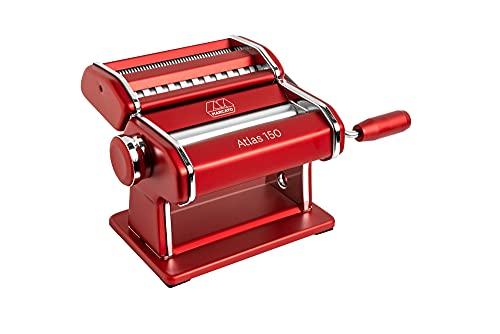
Marcato Atlas 150 Pasta Machine, RedBest for pasta sheets
|
Thin, even pasta sheets | Pasta dough | Beats a pin for pasta; narrow strips only | View on Amazon |

Marcato Biscuit Cookie Press, GreenBest for no-roll cookies
|
Shaped cookies by the tray | Soft press-cookie dough | No rolling at all; different cookie | View on Amazon |
What each kind of alternative actually does
A rolling pin works by moving. It flattens a little strip of dough at a time and pushes it outward, so you can make a sheet of almost any size and shape. Every alternative gives up some of that freedom in exchange for something else, usually speed or a fixed thickness.
Small rollers
A handheld pastry roller is a rolling pin cut down to a few inches. It still moves, so it still makes sheets, but it covers less ground per pass. Its real strength is working inside a pan, pushing pizza dough to the corners of a sheet pan or evening out a crust in a pie plate, where a long pin cannot reach.
Presses
A tortilla press squeezes a ball of dough between two flat plates. It cannot make anything bigger than its plates, but within that size it is quicker and more even than a pin, and it needs no skill. Our tortilla press vs rolling pin comparison explains why a press wins for corn masa and why a pin still suits stretchy flour dough.
Tampers
A tart tamper skips the sheet entirely. You drop a ball of dough into a small tart or muffin pan and push it up the sides with the tamper. Mrs. Anderson’s describes this method in its listing: dust the end with flour and press the dough evenly into the bottom and sides of the pan. It only works for small pans, but for a tray of tartlets it is faster than rolling and cutting rounds.
Rollers with gears
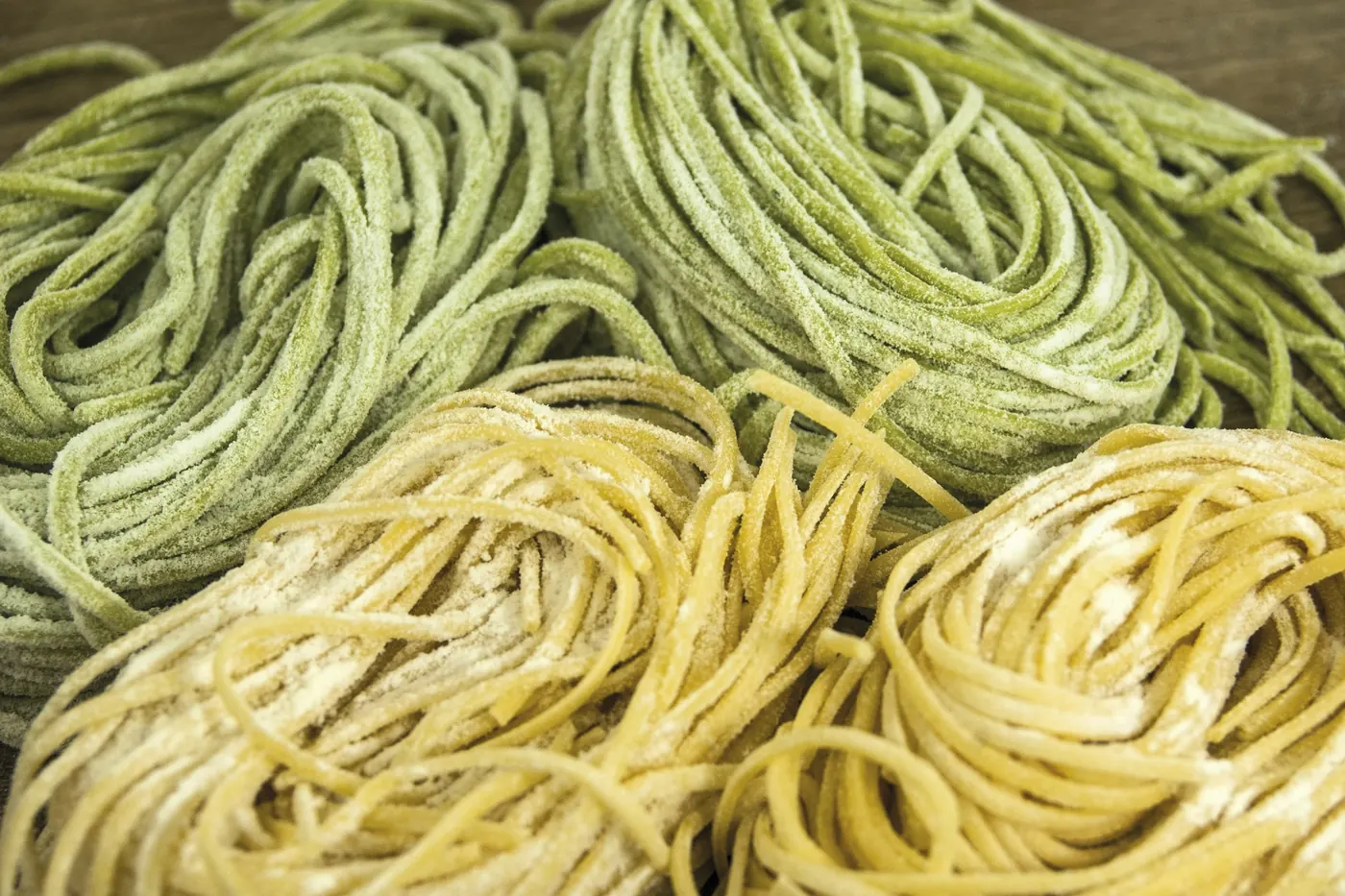
A pasta machine is a pair of steel rollers set a fixed distance apart. You feed dough through, close the gap a notch and feed it again. It makes thinner, more even sheets than most cooks manage with a pin, but only as wide as the rollers, and it is designed for pasta dough.
No sheet at all
Cookie presses and cookie stamps change the recipe instead of the tool. A press pushes soft dough through a shaped disc straight onto the sheet; Marcato’s listing for its press says “No Rolling dough”. Stamps flatten and decorate a ball of dough in one push. Neither one makes a cut-out sugar cookie; they make a different cookie that needs no rolling.
Household stand-ins, and where they stop working
This section is general kitchen sense rather than maker guidance. A straight-sided wine bottle is the classic stand-in: dust it with flour or wrap it in plastic, and roll as you would with a pin. A tall drinking glass or a straight-sided jar works for small pieces. For a small ball of masa or dumpling dough, the flat bottom of a heavy pan or a glass pie plate, pressed down between two sheets of plastic, does the job of a press; our tortilla press alternative guide walks through that method.
The limits are the same every time. Bottles are shorter than a pin, have a neck that gets in the way, and are slippery, and glass can break if it is dropped or knocked against the counter. They are fine for one crust in an emergency. If you find yourself doing it every month, a basic pin costs little and does the job better.
Our picks for the best rolling pin alternative
Every pick was in stock with a new lead offer when we checked, and none appears as the same listing on our other pages. Two are other versions of products we cover elsewhere, as noted in their sections.
1. Norpro Wood Pastry/Pizza Roller, 4.25-inch – Two Rollers for Pans and Edges
This is the closest thing to a rolling pin on the page, cut down to drawer size. The listing describes two hardwood rollers on a zinc alloy frame: a wide 4.25-inch roller for open dough and a narrow 2.5-inch one for edges and the inside rim of a pan. The whole tool measures 9 by 4.75 by 1.25 inches, according to the listing.
Norpro lists it for pie crust, tart, cookie and pizza dough, rolled on a board or directly in the baking pan. That second use is where it beats a full-size pin. Pushing pizza dough into the corners of a sheet pan, or evening out a pressed crust in a pie plate, is awkward with an 18-inch pin and easy with a small roller.
The trade-off is coverage. A 4.25-inch roller makes many more passes than a pin to cover a 12-inch round, and it is harder to keep a big sheet even. Use it for pan pizza, small batches and press-in crusts, not for a double-crust pie every week. The listing recommends hand washing, which is the usual care for wood.
Why we like it
- Two roller widths, 4.25 and 2.5 inches (listing)
- Works inside baking pans as well as on a board (listing)
- Compact, 9 x 4.75 x 1.25 inches (listing)
- Listed for pie, tart, cookie and pizza dough
Key specifications
| Model | 3078 |
|---|---|
| Type | Handheld double-ended roller |
| Material | Hardwood rollers, zinc alloy frame |
| Size | 9 x 4.75 x 1.25 in; rollers 4.25 and 2.5 in |
| What it makes | Pie, tart, cookie and pizza dough |
| Made in | Not stated |
| Care | Hand wash recommended |
| Warranty | Not stated |
Why we recommend it
It suits a cook who rolls small amounts of dough now and then, makes pan pizza, or wants something for the corners of a pie plate that a long pin cannot reach.
Skip it if you roll large pie crusts or sheets of cookie dough often; a full-size pin will be faster and more even.
Pros and cons
Pros
- Reaches into pans and corners
- Two widths in one tool
- Takes up little drawer space
Cons
- Slow on large sheets
- Hand wash only
- Origin and warranty not stated
2. HIC Kitchen 6-inch Aluminum Tortilla Press – Even Small Rounds Without Rolling
For anything round and up to 6 inches across, a press does a rolling pin’s job faster and more evenly. HIC’s listing says this heavyweight aluminum press makes 6-inch tortillas of uniform thickness, with “no need to roll by hand”, and measures 8.5 by 6.375 by 2.125 inches.
The listing names a wider range of doughs than most presses: flour, corn, whole grain, low-carb and gluten-free tortillas, plus pita, Caribbean roti, moo shu pancakes and mini pie or tart shells. That last use makes it a real rolling pin alternative for bakers, not only for taco night. Line the plates with plastic wrap or parchment, as HIC says, so the dough releases cleanly.
Two limits matter. The size is fixed at 6 inches, so it will not make a pie crust or a large flour tortilla. And flour dough springs back more than corn masa, so a pressed flour round will be thicker than a rolled one; for big flour tortillas, a slim pin still wins. HIC asks for hand washing in warm, soapy water and thorough drying. Our best tortilla press guide compares larger and cast iron presses.
Why we like it
- Uniform 6-inch rounds with no rolling (listing)
- Listed for flour, corn and gluten-free dough
- Also listed for mini pie and tart shells
- Aluminum, lighter than cast iron
Key specifications
| Model | 43172 |
|---|---|
| Type | Lever tortilla press |
| Material | Heavyweight aluminum |
| Size | 8.5 x 6.375 x 2.125 in; 6-inch rounds |
| What it makes | Tortillas, pita, roti, mini pie and tart shells |
| Made in | Not stated |
| Care | Hand wash in warm, soapy water; dry thoroughly |
| Warranty | Not stated |
Why we recommend it
It suits a cook who flattens small rounds of dough often, from corn tortillas to tartlet bases, and wants the same thickness every time.
Skip it if you need rounds larger than 6 inches; an 8- or 10-inch press or a pin is the better tool.
Pros and cons
Pros
- Fast and even within its size
- No technique to learn
- Wide range of listed doughs
Cons
- Fixed 6-inch size
- Flour dough springs back thicker
- Needs plastic or parchment liners
3. Mrs. Anderson’s Dual-Sided Tart Tamper – Press Shells Instead of Rolling
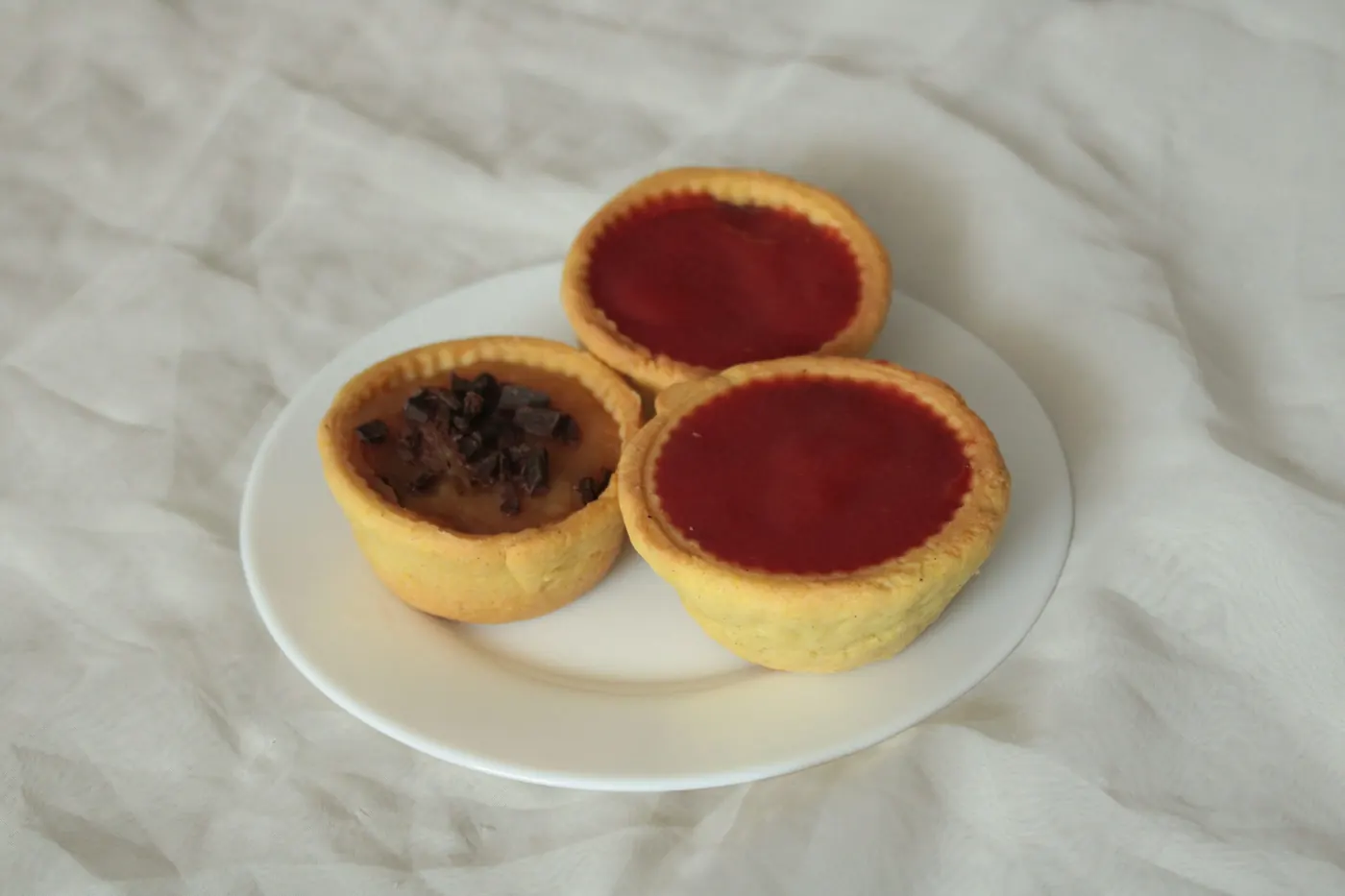
A tart tamper is a short wooden plunger, and it replaces the whole roll-and-cut routine for small tarts. Mrs. Anderson’s makes this one from hardwood with two ends, 1.75 inches and 1.375 inches across according to the listing, to fit larger and smaller pans.
The method on the listing is simple: put a ball of dough in the pan, dust the end of the tamper with flour, and press the dough evenly into the bottom and up the sides, then neaten the edges before baking. It is listed for tarts, mini pies, mini quiche and cookies. For a muffin tin of tartlets or empanada-style hand pies baked in cups, it is quicker than rolling a sheet and cutting rounds, and there are no scraps to re-roll.
It only works for small pans. A 9-inch tart or pie needs a sheet of dough, a pressed-in crust done by hand, or the small roller above. The listing says it will not scratch nonstick bakeware, wipes clean with a dry cloth and can be hand washed in warm, soapy water when needed. For the pans themselves, see our best tart pan guide.
Why we like it
- Two end sizes for different pans (listing)
- No sheet to roll and no scraps
- Will not scratch nonstick pans (listing)
- Small enough for any drawer
Key specifications
| Model | 43118 |
|---|---|
| Type | Dual-sided tart tamper |
| Material | Hardwood |
| Size | 6 in long; ends 1.75 and 1.375 in |
| What it makes | Tarts, mini pies, mini quiche, cookies |
| Made in | Not stated |
| Care | Wipe with a dry cloth; hand wash as needed |
| Warranty | Not stated |
Why we recommend it
It suits a baker who makes trays of small tarts or mini pies and would rather press the dough than roll and cut it.
Skip it if your tarts and pies are full size; it cannot shape a 9-inch crust.
Pros and cons
Pros
- Fast for tartlets and mini pies
- Even shells with no scraps
- Safe on nonstick (listing)
Cons
- Small pans only
- Does nothing for a flat sheet
4. Marcato Atlas 150 Pasta Machine, Red – Thinner Pasta Than a Pin
If the dough you roll is pasta, a pasta machine is not a compromise; it is the better tool. The Marcato Atlas 150 rolls and cuts pasta dough, according to the listing, and this version comes with a pasta cutter, hand crank and instructions. It is made in Italy of anodized aluminum, and the listing gives a 10-year warranty.
Reviewed.com named the Atlas its best overall pasta maker in an April 2025 roundup by Lindsay D. Mattison and Ceara Perez-Murphy, calling it well constructed and easy to operate. The reviewers noted a wide clamp that held the machine steady on a thick table, a thickness knob that can be turned with one hand between passes, and a “0” setting they did not find on other machines.
What you give up is width and range. The sheet is only as wide as the rollers, so it makes long strips rather than rounds, and it is designed for pasta dough rather than butter-rich pastry. Marcato’s listing says to wipe it clean with a dry cloth. This red Atlas 150 is a different color of the machine in our best pasta maker guide, included because it is the in-stock Marcato manual machine not already listed on our other pages.
Why we like it
- Best overall pasta maker at Reviewed.com (2025)
- One-hand thickness knob and a “0” setting (Reviewed.com)
- Made in Italy, 10-year warranty (listing)
- Cutter and hand crank included (listing)
Key specifications
| Model | AT-150-RSO |
|---|---|
| Type | Hand-crank pasta machine with cutter |
| Material | Anodized aluminum (listing) |
| Size | Not stated |
| What it makes | Pasta sheets and cut pasta |
| Made in | Italy |
| Care | Wipe clean with a dry cloth |
| Warranty | 10 years (listing) |
Why we recommend it
It suits a cook who rolls pasta, or other lean doughs into long thin sheets, and wants an even thickness without hours of practice with a pin.
Skip it if you mostly roll pie crust or cookie dough; it is the wrong shape and the wrong tool for those.
Pros and cons
Pros
- Thin, repeatable sheets
- Strong independent review
- Long stated warranty
Cons
- Narrow strips, not rounds
- Dry-cloth cleaning only (listing)
- Needs a table edge to clamp to
5. Marcato Biscuit Cookie Press, Green – Shaped Cookies With No Rolling
Rolled cookies need a pin. Pressed cookies do not, and if what you want is a tray of shaped butter cookies for the holidays, a cookie press is the quickest route. Marcato’s listing for this Design Line press puts it plainly: “No Rolling dough”. It makes 20 shapes in two cookie sizes and is made in Italy of anodized aluminum.
A press works by pushing a soft dough through a shaped disc directly onto the baking sheet, one cookie per squeeze. The cookware retailer Fante’s lists the classic version of the same press with an anodized aluminum barrel about 2 inches round and 8.75 inches long, a plated steel piston and handle, and a thickness regulator.
Be clear on the limit: this is a different cookie, not a substitute way to make sugar cookie cut-outs. Press dough has to be soft enough to push through the disc, so a stiff roll-out dough will not work in it. The listing says to wash it in warm, soapy water. Our best cookie press guide compares other presses.
Why we like it
- “No Rolling dough” (listing)
- 20 shapes, two cookie sizes (listing)
- Made in Italy, anodized aluminum
- Thickness regulator (Fante’s, classic version)
Key specifications
| Model | BI-DES-VER |
|---|---|
| Type | Cookie press |
| Material | Anodized aluminum |
| Size | Not stated on listing |
| What it makes | Pressed cookies, 20 shapes, 2 sizes |
| Made in | Italy |
| Care | Warm, soapy water |
| Warranty | Not stated |
Why we recommend it
It suits a baker who makes batches of holiday butter cookies and would rather press them out than roll and cut.
Skip it if you want cut-out sugar cookies for icing; those still need a rolled sheet.
Pros and cons
Pros
- No rolling and no scraps
- Many shapes in one tool
- Metal barrel, made in Italy
Cons
- Needs a soft press-cookie dough
- Does not replace cut-outs
6. Nordic Ware Holiday Cookie Stamps, Set of 3 – Flatten and Decorate in One Push
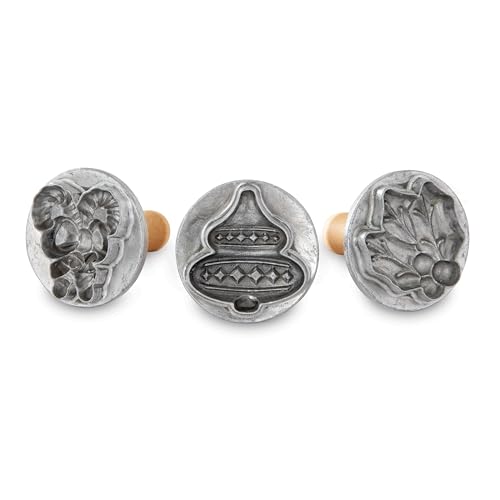
Cookie stamps are the other no-roll route. Nordic Ware’s listing describes the method: roll the dough into balls in your hands, then press each one with a stamp to flatten it and leave a raised holiday design. The set has three cast aluminum stamps with wooden handles, made in America of domestic and imported materials, and the listing gives a lifetime warranty.
The listing gives the rules that make stamps work: chill the stamps, always use cold dough, and dip the stamp in flour or sugar or brush it with oil if it sticks. Nordic Ware also suggests dough made from scratch, because impressions are less defined with packaged mixes or refrigerated dough. Hand wash only, and do not soak the wooden handles.
Like the press, stamps make a particular cookie: a round, embossed one about the size of the stamp. They will not give you a sheet of dough. This set is another design in the Nordic Ware stamp line covered in our best cookie stamp guide, chosen because a seasonal set suits the holiday baking most people do without a pin.
Why we like it
- Flattens and decorates in one push
- Cast aluminum with wooden handles (listing)
- Made in America of domestic and imported materials
- Lifetime warranty (listing)
Key specifications
| Model | 01233 |
|---|---|
| Type | Cookie stamps, set of 3 |
| Material | Cast aluminum, wooden handles |
| Size | Not stated on listing |
| What it makes | Embossed round cookies |
| Made in | USA, domestic and imported materials |
| Care | Hand wash; do not submerge handles |
| Warranty | Lifetime (listing) |
Why we recommend it
It suits a baker who wants pretty cookies for gifts or a holiday tray with no rolling and no cutters.
Skip it if you plan to use refrigerated or boxed dough; Nordic Ware says the designs come out less defined.
Pros and cons
Pros
- No sheet to roll
- Clear maker instructions
- Lifetime warranty
Cons
- Needs cold, from-scratch dough
- Hand wash only
- Stamp size not stated
Match the alternative to the dough
| Dough | Best tool without a pin | What to expect |
|---|---|---|
| Pasta | Pasta machine | Thinner and more even than most hand rolling |
| Corn masa, small flour rounds | Tortilla press | Even rounds up to the plate size |
| Tartlets, mini pies | Tart tamper | Pressed shells, no scraps |
| Pan pizza, press-in crust | Small pastry roller | Good in the pan; slow on a counter |
| Butter cookies | Cookie press or stamps | A different cookie, no rolling |
| Full pie crust, cut-out cookies | A rolling pin | Nothing here does it as well |
What we left out
We did not include fondant pins, marble pins, adjustable pins with rings or “dough rollers” that are simply short pins. They are rolling pins, and our best rolling pin guide covers them. We also left out heavy pizza dough presses sold for cafes and pizzerias, which are built for restaurant counters, and pizza dockers, which pierce dough but do not flatten it. Bottles and jars are covered above as household stand-ins rather than as products, because none is sold for the job.
Questions about rolling without a pin
What can I use if I don’t have a rolling pin?
For tonight, a straight-sided wine bottle or a tall glass, dusted with flour or wrapped in plastic, will roll a small sheet. For small rounds, press the dough between two sheets of plastic under a heavy flat pan. If you need a pin regularly, buy one; it is cheap and works better than any stand-in.
What is the best rolling pin alternative for pie crust?
For a full-size crust, honestly, a rolling pin. Without one, press the dough into the pie plate by hand and even it out with a small pastry roller such as the Norpro. For tartlets and mini pies, a tart tamper is faster than rolling.
Can I use a tortilla press instead of a rolling pin?
Yes, for small rounds. HIC lists its 6-inch press for tortillas, pita, roti and mini pie or tart shells. It cannot make anything wider than its plates, and flour dough springs back thicker than it would under a pin.
Can a pasta machine roll other doughs?
It is designed for pasta, and Marcato lists the Atlas 150 for rolling and cutting pasta dough. It gives narrow strips only, so it is no help for rounds such as pie crust or tortillas.
How do I make cookies without a rolling pin?
Choose a cookie that does not need rolling. A cookie press pushes soft dough into shapes, and cookie stamps flatten and decorate balls of cold dough. Drop cookies need nothing at all; our best cookie scoop guide covers the tool that portions them.
When to stop looking and buy the pin
Most kitchens end up with both. The alternatives on this page are better than a rolling pin at the one job each was built for: pasta, small rounds, tart shells or no-roll cookies. A pin is better at everything else, and it is one of the cheapest tools in a kitchen. If you roll a pie crust more than a couple of times a year, start with our best rolling pin guide, and keep the press or the tamper for the jobs it does best.
And when you would rather someone else made the tortillas, see the menu or call to order.