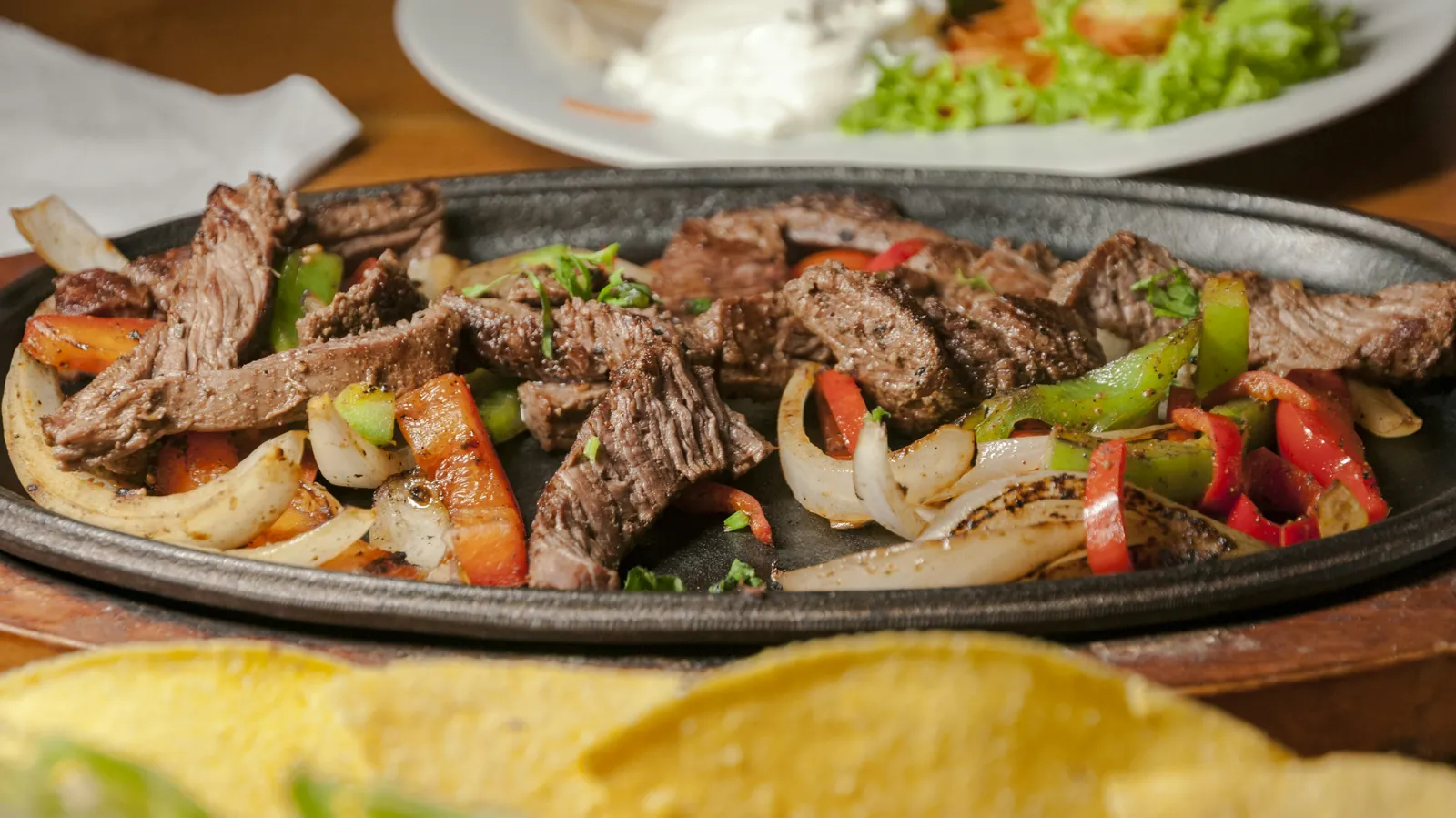
Tacos and fajitas turn up on the same menu, often made from the same grilled beef, and plenty of people order one when they actually wanted the other. The difference is less about ingredients than about how the food reaches your table.
Here is what separates them, and how to tell which one suits the meal you are in the mood for.
The short answer
Tacos arrive already assembled: a filling folded into a tortilla, ready to pick up. Fajitas arrive as separate parts — grilled meat and vegetables on one plate, tortillas and toppings alongside — and you build each one yourself at the table. Tacos are a finished dish; fajitas are a kit.
That single distinction explains almost everything else: portion sizes, how long the meal takes, how well each one shares, and which is easier if you are eating with one hand.
What makes a taco a taco
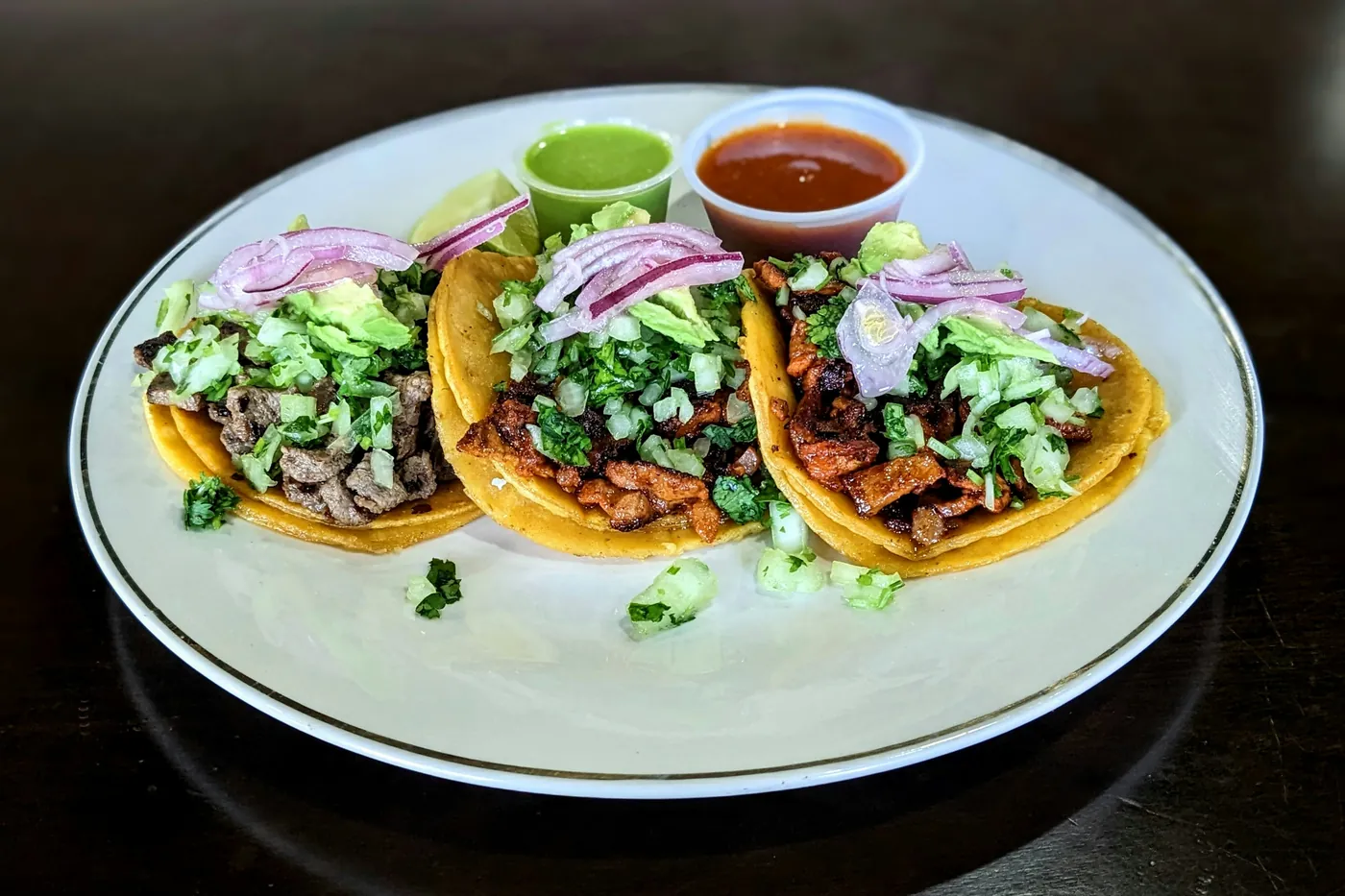
A taco is a tortilla with something in it. That is genuinely the whole definition, which is why the category is so wide. The filling can be grilled, braised, stewed, fried or simply spooned in.
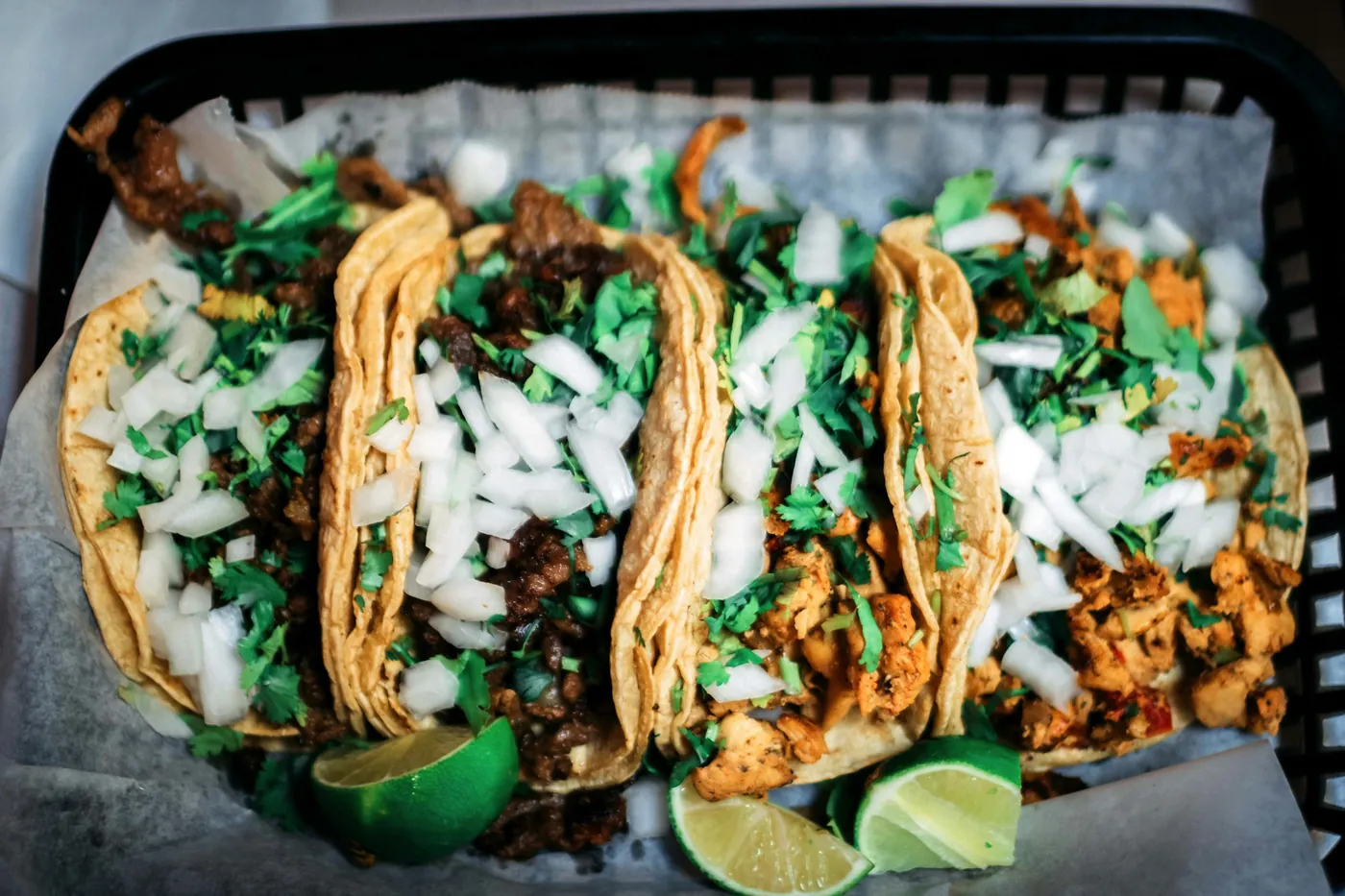
Because “taco” describes a format rather than a recipe, one kitchen’s tacos look nothing like another’s. Street tacos are the most stripped-back version: a small corn tortilla, chopped meat, raw onion, cilantro, and a squeeze of lime. No lettuce, no shredded cheese, no sour cream.
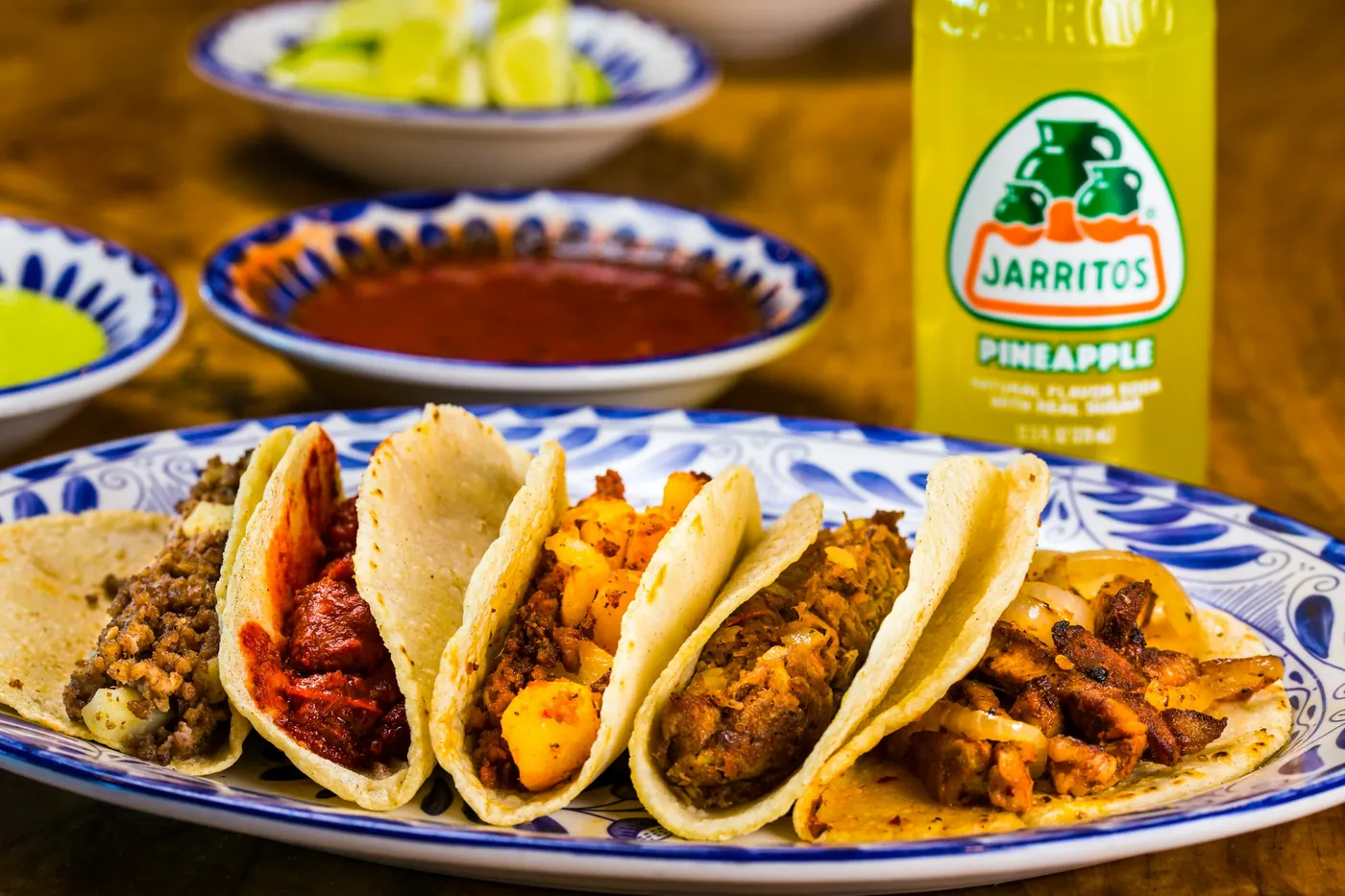
Tacos are also portioned individually. You order two, three or four, and each one is a self-contained thing. That makes them a good way to try more than one filling without committing to a full plate of any of them.
What makes fajitas fajitas
Fajitas are a Tex-Mex dish rather than an interior Mexican one. The Handbook of Texas describes Tex-Mex cooking as a blend of Native American and Spanish influences, and lists fajitas among the folk dishes of South Texas that became restaurant staples.
The meat is grilled, and cut into strips
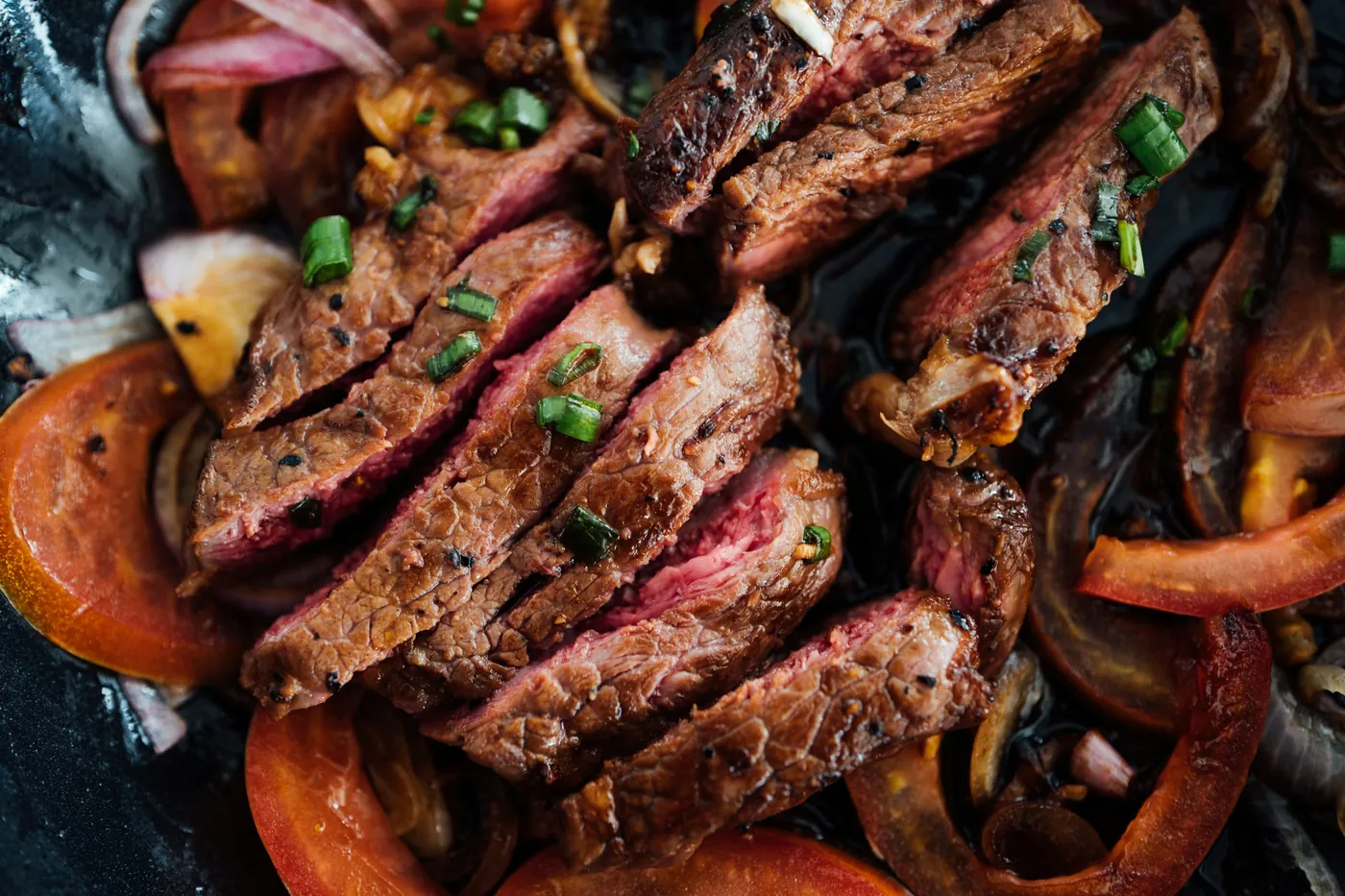
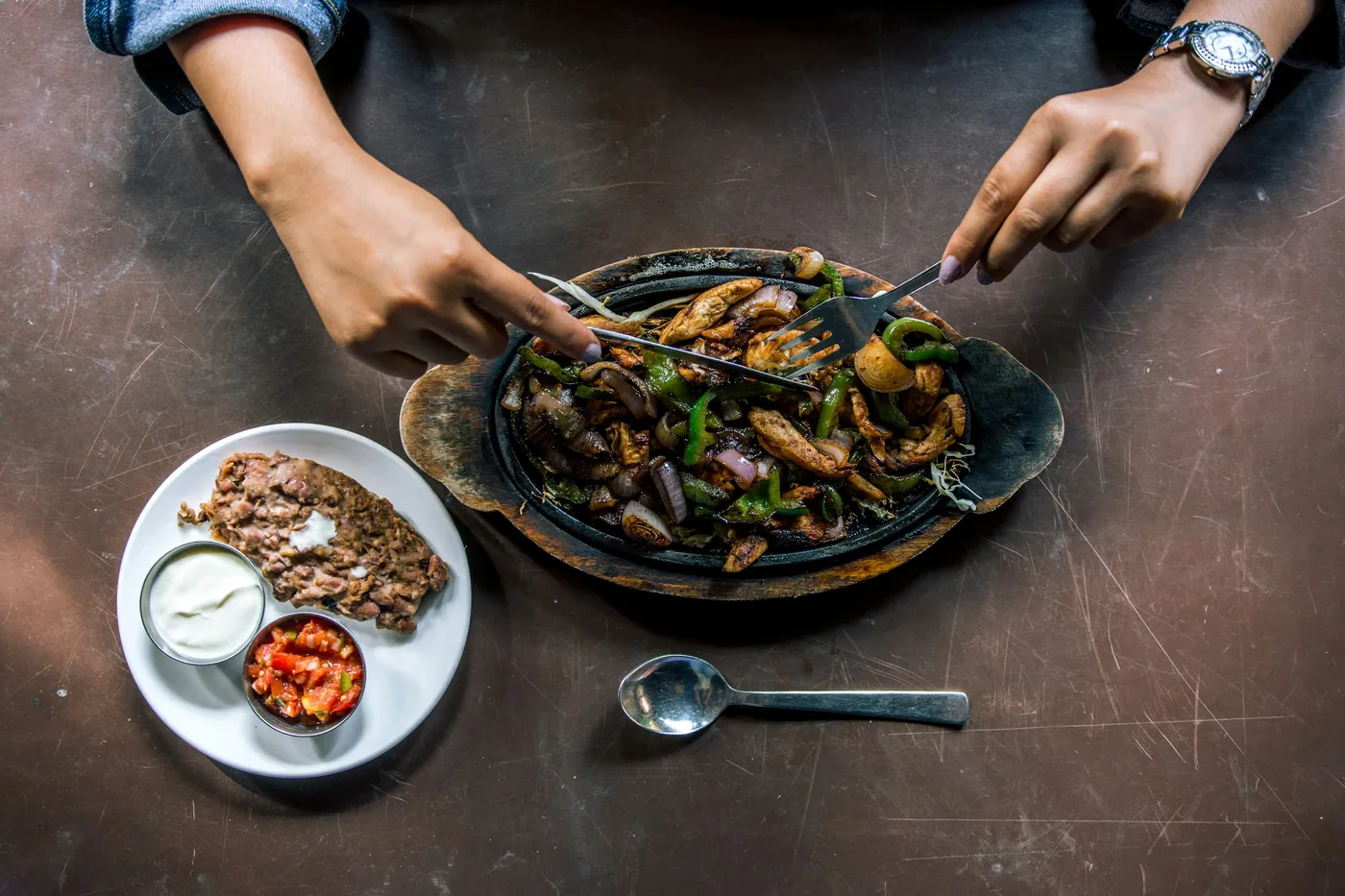
Fajita meat is always grilled — not stewed, not fried — and it is served in strips rather than chopped. It is usually cooked with sliced peppers and onions, so the vegetables pick up the same char as the meat.
This is where the sizzle comes from: a hot cast iron platter keeps the meat hot while you work through the plate. Our guide to eating fajitas covers the build order.
They arrive as a build-your-own plate
A fajita order is really several things at once: the meat and vegetables, a stack of warm tortillas, and a set of toppings. Nothing is assembled for you.
That makes fajitas slower to eat and much easier to share. A single order can feed two people who are also ordering other things, because everyone can build a tortilla from the same platter.
Tacos vs fajitas at a glance
| Tacos | Fajitas | |
|---|---|---|
| Origin | Mexican, with countless regional versions | Tex-Mex, rooted in South Texas |
| How it arrives | Assembled and ready to eat | Components you combine yourself |
| Cooking method | Anything — grilled, braised, stewed, fried | Grilled, almost without exception |
| Cut of meat | Usually chopped or shredded | Sliced into strips |
| Vegetables | Toppings added at the end | Peppers and onions grilled with the meat |
| Portioning | Individual, ordered by the piece | One platter, often enough to share |
| Eating style | Handheld and quick | Slower, more hands-on |
| Best for | Trying several fillings | Sharing and customizing |
Which one should you order?
Neither is the better dish. They solve different problems.
Order tacos if
- You want to try more than one filling in a single meal.
- You are eating lunch and do not want a long, involved plate.
- You prefer a lighter order, or want to leave room for an appetizer.
- You like the food decided for you rather than assembled at the table.
Order fajitas if
- You are sharing, or feeding a table with mixed preferences.
- You want control over how much of each topping ends up in every bite.
- You specifically want grilled meat with peppers and onions.
- You are settling in for a longer meal rather than eating quickly.
How this looks on a real menu
At Julia’s, the two dishes sit in different parts of the menu, which is a useful clue in itself.
The street tacos are listed with the appetizers — beef fajita, diced onion and cilantro, ordered two or four at a time. They are deliberately simple, and they work either as a starter for the table or as a light plate of your own.
The charbroiled fajitas sit among the entrées, in chicken, beef, shrimp, combination and mixed. They come with guacamole, pico de gallo, Mexican rice, charro beans and your choice of corn or flour tortillas, with lunch and dinner portions sized differently.
Notice that the fajita order includes the tortillas and the toppings as part of the plate, while the tacos already have theirs. That is the same distinction as above, just written into how the menu is priced and portioned.
Where the two overlap
The line blurs in one specific place: fajita meat served in taco form.
Plenty of Tex-Mex kitchens use the same grilled, sliced beef for both dishes. Julia’s street tacos are built on beef fajita meat, with nothing on top but diced onion and cilantro. Order those and you are eating fajita meat in a taco — which is an entirely ordinary thing to do, and is how most people eat a fajita platter anyway.
So the comparison is not really one meat against another. It is a finished plate against a set of components. The moment the kitchen assembles that meat into a tortilla for you, it stops being a fajita order and becomes a taco.
Frequently asked questions
Are fajitas just tacos you make yourself?
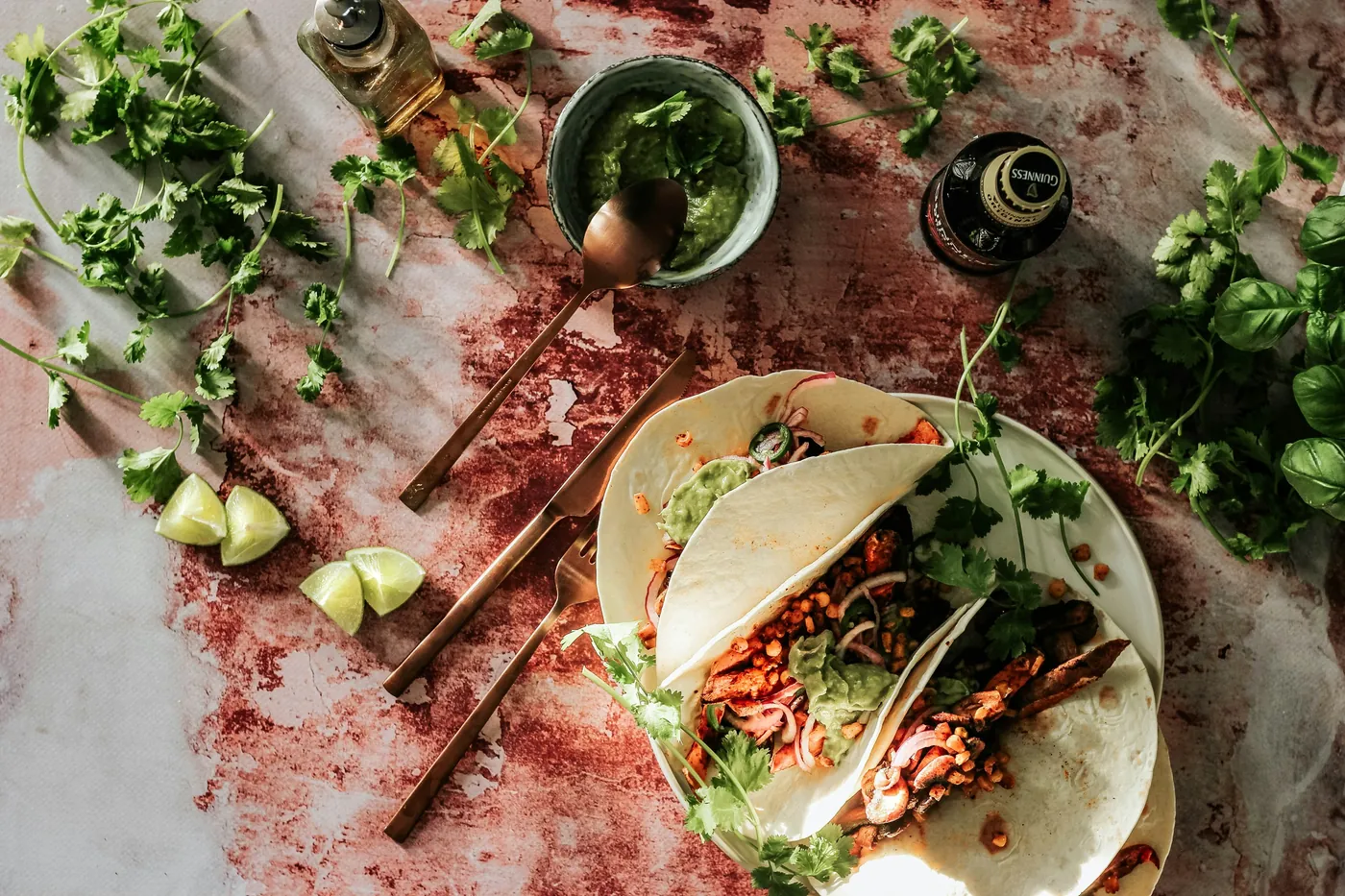
Close, but not quite. You can absolutely fold fajita meat into a tortilla and eat it like a taco — that is how most people eat them. The difference is that fajitas specify the cooking method (grilled strips with peppers and onions), while tacos specify only the format.
Are fajitas Mexican or Tex-Mex?
Tex-Mex. They developed in South Texas rather than in Mexico, and they are far more common on Texan menus than on menus in Mexico. Tacos, by contrast, are Mexican and considerably older.
Do fajitas come with corn or flour tortillas?
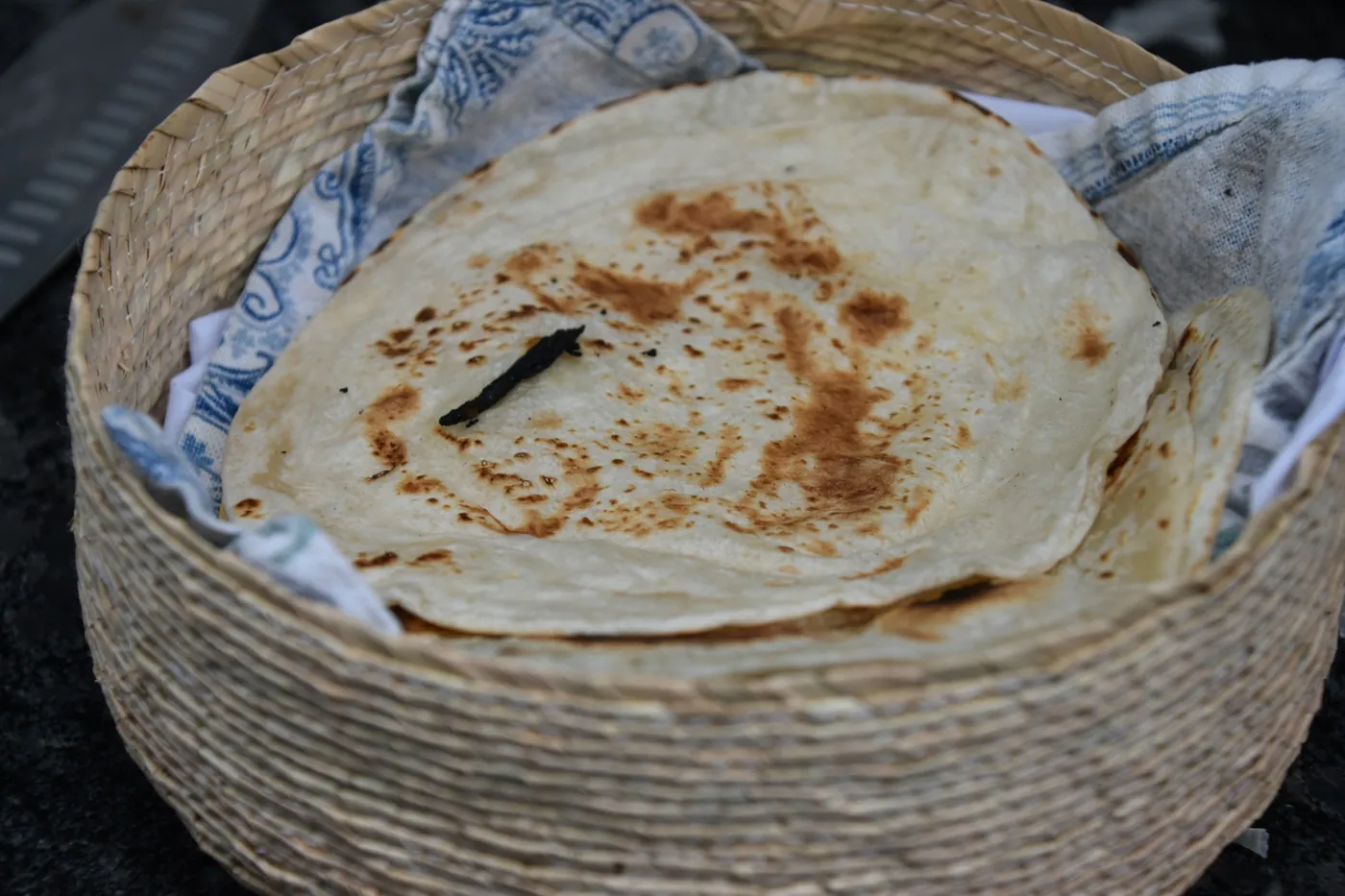
It varies by restaurant, and many let you choose. Flour is the more common pairing for fajitas because the tortillas are larger and stretchier, which suits a loaded build. Julia’s offers a choice of corn or flour with its fajita plates. If you are unsure which way to go, it is worth knowing how corn and flour tortillas actually differ.
How many tacos should one person order?
Three small street tacos is a reasonable single serving for most people if nothing else is coming. Two is right if you are also sharing appetizers. Because tacos are sold individually, it is easy to adjust once you see how big they are.
Which is better for a group?
Fajitas, usually. One platter puts the meat, tortillas and toppings in the middle of the table where everyone can reach, and people build them to their own taste. Tacos are easier when everyone wants their own separate plate.
The short version
If you want your food handed to you finished, order tacos. If you want to build it yourself and share it around, order fajitas. Both can be made from the same grilled beef, and the choice is really about how you want to eat rather than what you want to taste.
You can see how both are served on the full food menu, or plan a visit to the Highway 6 dining room if you would rather work it out at the table.
Still deciding on the rest of the order? Our guide to reading a Mexican menu covers what to share, how much to order, and what to ask before you commit.