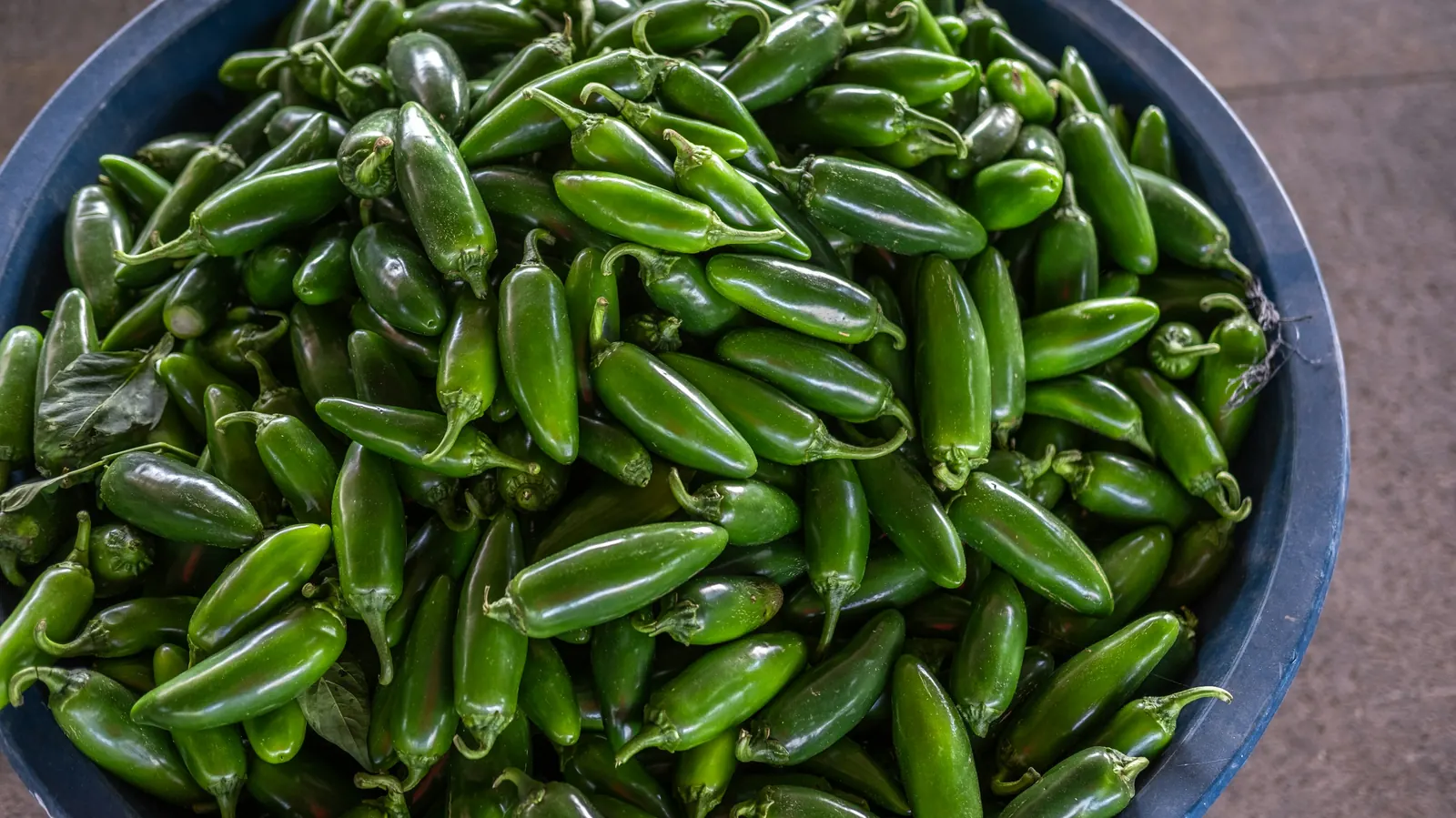
The jalapeño is the chile most Americans have actually eaten, and the one they are most often wrong about.
It is not very hot. It is also wildly inconsistent, which is why two people can order the same dish and disagree completely.
The short answer
A jalapeño is a medium-sized fresh green chile, thick-walled and blunt-tipped, running roughly 2,000 to 8,000 on the Scoville scale. That is hotter than a poblano and much milder than a serrano. Nearly all its heat sits in the pale ribs inside. Left to ripen it turns red and sweetens, and smoke-dried it becomes a chipotle.
What it is
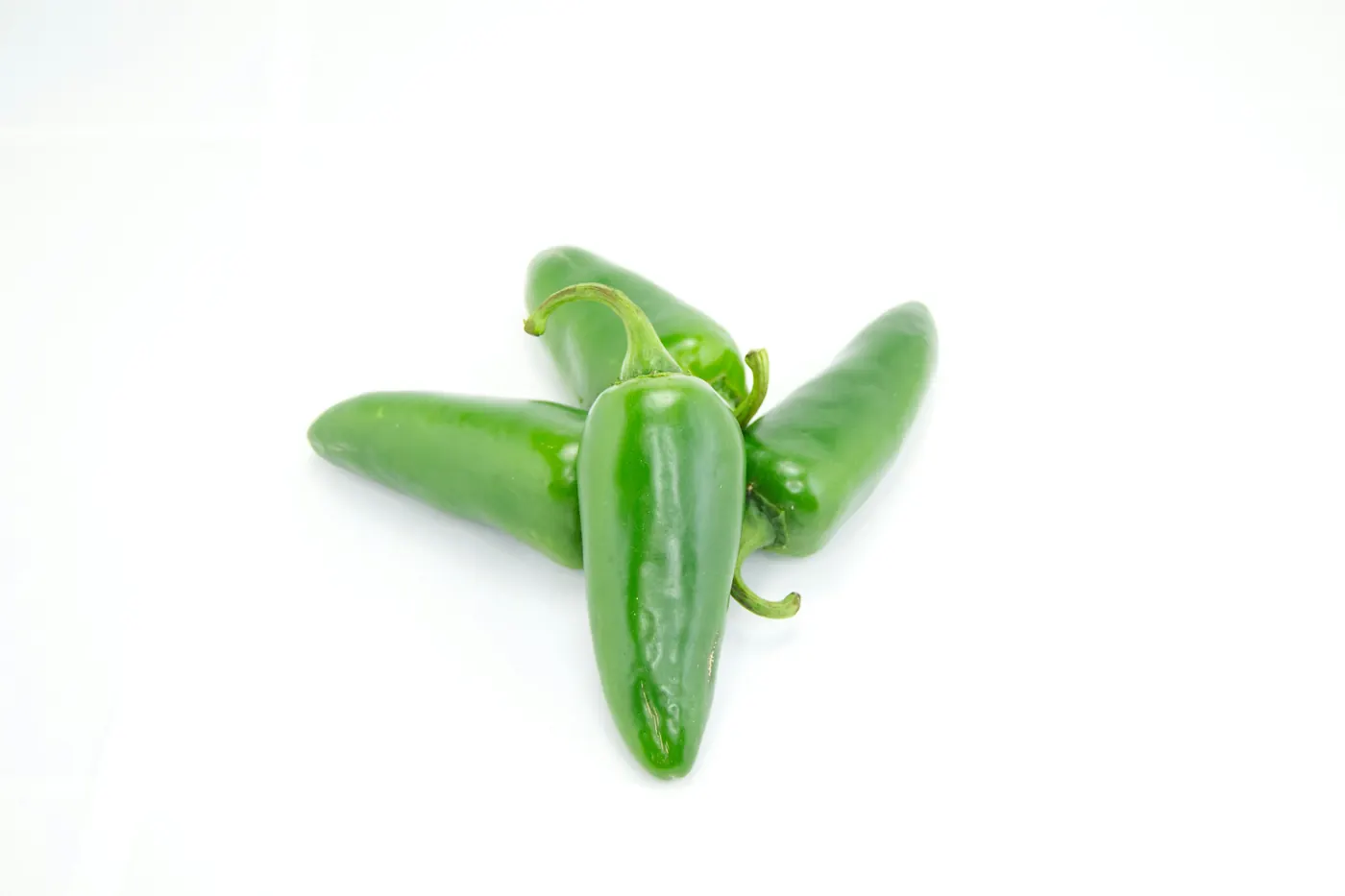
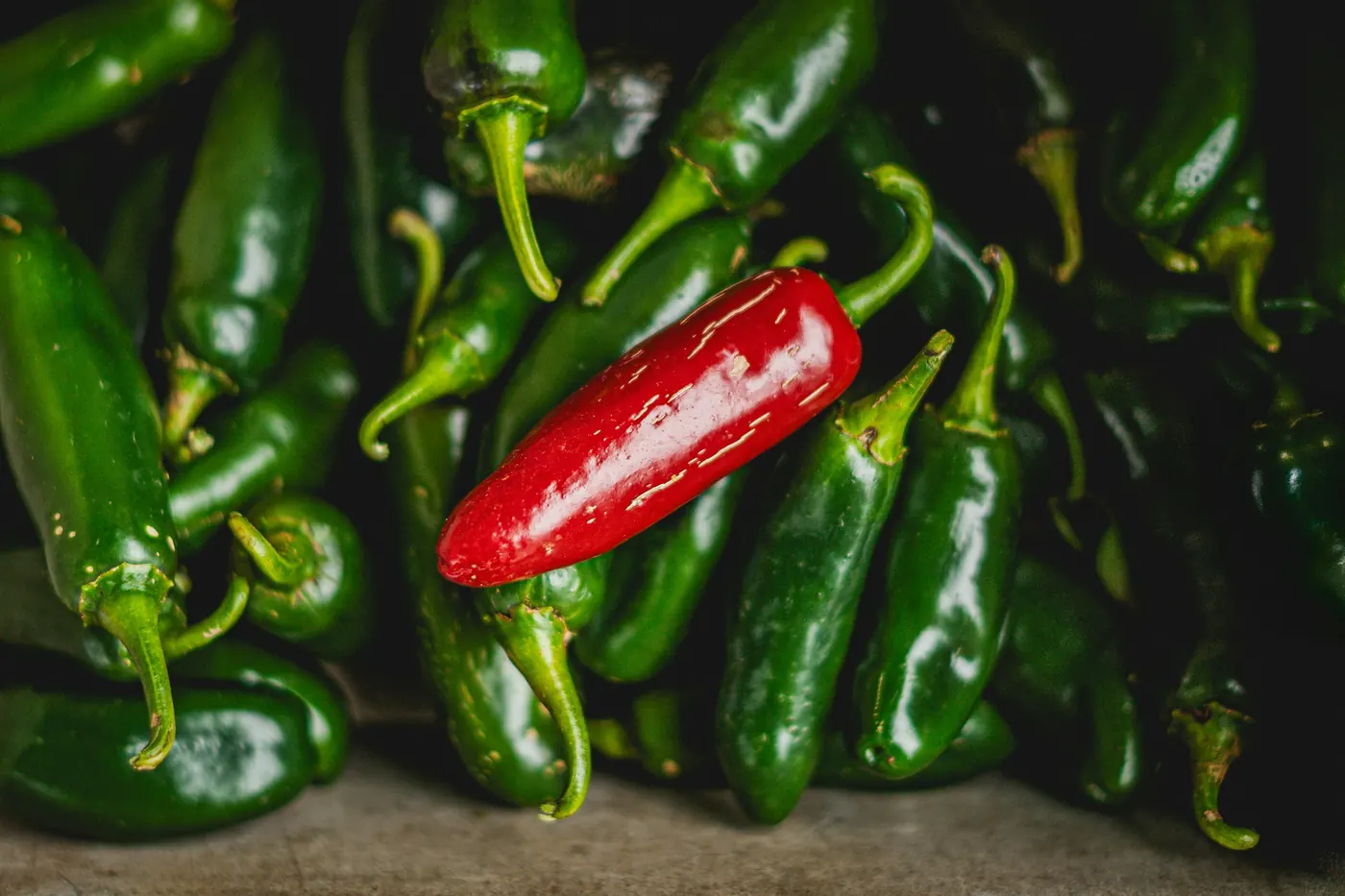
Two to three inches long, glossy dark green, thick-walled, and rounded rather than pointed at the tip. That blunt tip is the quickest way to tell a jalapeño from a serrano, which is narrower and comes to a point.
Pepper Geek, in its guide to how hot jalapeños are, puts the range at 2,000 to 8,000 Scoville heat units and places it between the poblano and the serrano — medium heat for most people.
The name is from Xalapa, the capital of Veracruz, where the pepper was historically grown and traded.
Why yours was mild and theirs was not
The four-fold spread in that Scoville range is not sloppy measurement. Jalapeños genuinely vary that much.
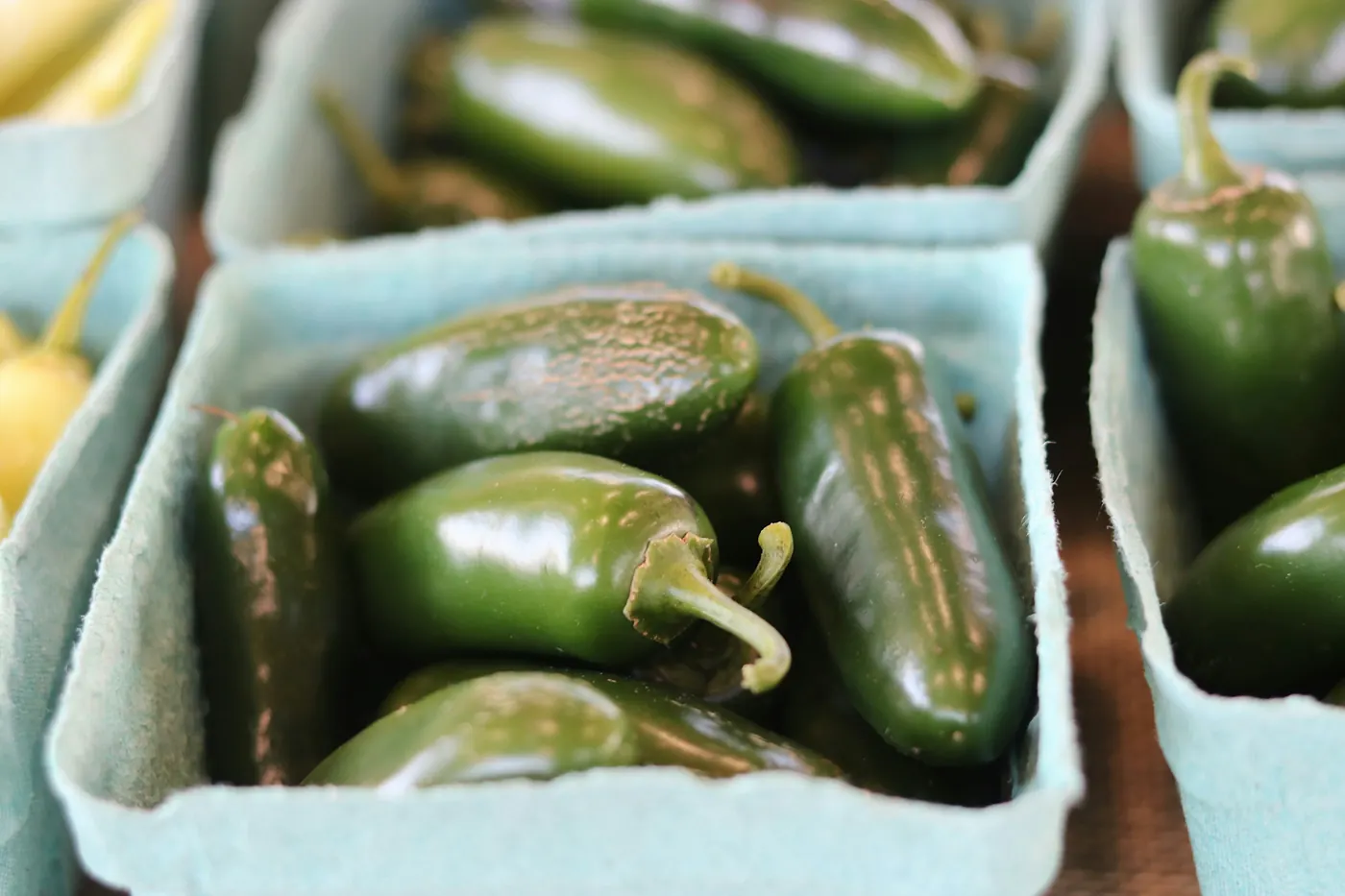
Pepper Geek makes a point that explains a lot of restaurant experience: grocery stores often stock less-spicy hybrid jalapeños to appeal to a broad audience, and homegrown peppers are often hotter than store-bought. There are named cultivars at both ends — the TAM jalapeño and the nadapeño bred for mildness, the jalafuego for heat.
Growing conditions matter too. A stressed plant — less water, more sun — produces hotter fruit. So does leaving the pepper on the plant longer.
Which means “is it spicy?” has no general answer for this particular chile. It has an answer for the pepper in front of you.
Where the heat is
Not in the seeds, whatever you were told.
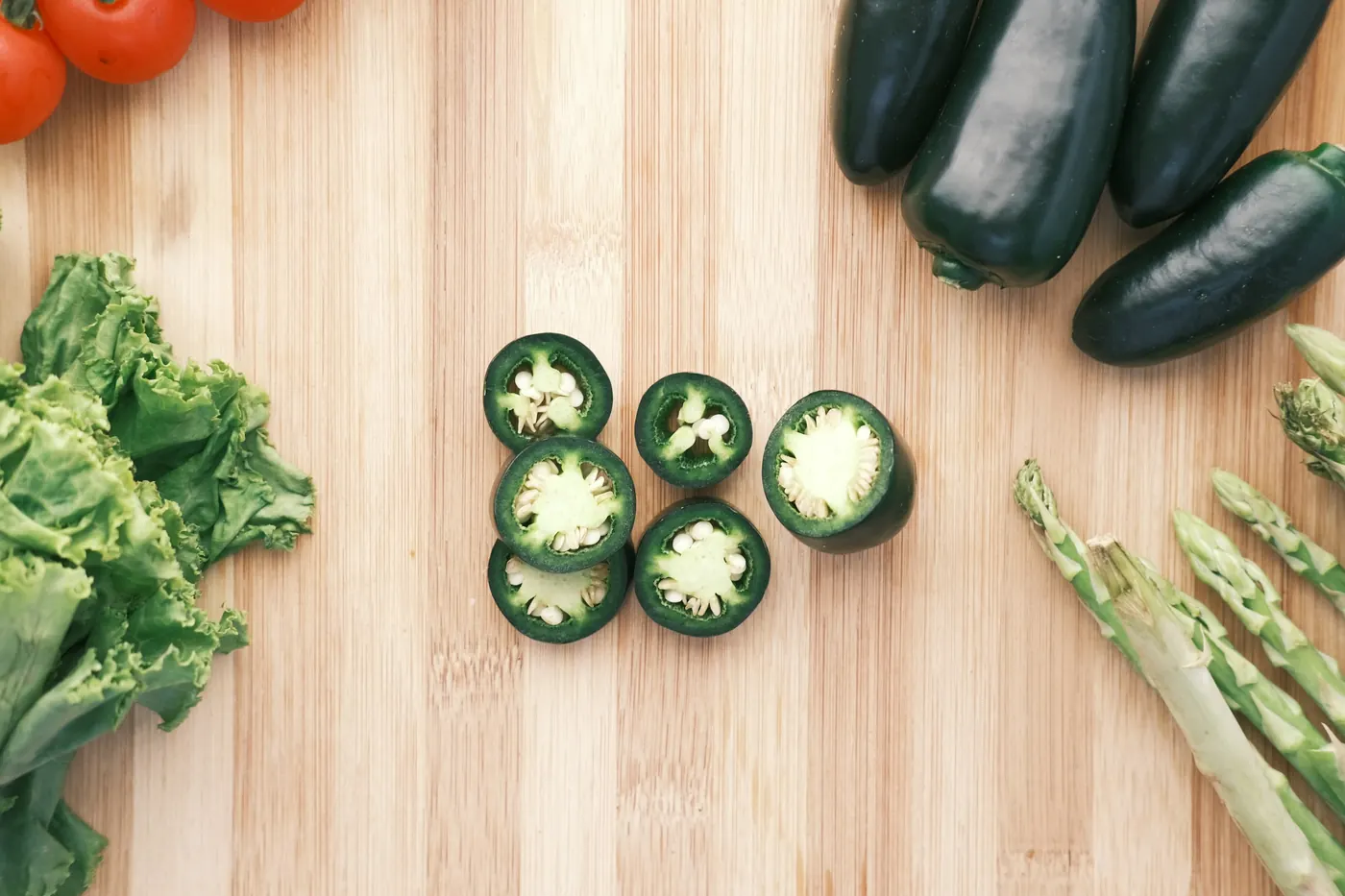
Pepper Geek locates it precisely: most of the spice is in the white, spongy material in the center — the placenta or pith, where the seeds attach. Seeds taste hot only because they have been sitting against it.
That is genuinely useful. Scraping out the ribs takes most of the heat out of a jalapeño while leaving the flavor, and it is why a dish can contain a whole pepper and still be mild.
It also explains a common cooking mistake. People remove the seeds, leave the ribs, and wonder why nothing changed.
Green, red, and smoked
| Form | What it is | Tastes like |
|---|---|---|
| Green | Picked unripe, the default | Bright, grassy, sharp |
| Red | Left to ripen on the plant | Sweeter, fruitier, no milder |
| Chipotle | Ripe red, smoke-dried for days | Woodsmoke, deep, same heat |
| Pickled | Sliced, brined with carrot and onion | Sour, softened heat |
| Jalapeño popper | Halved, stuffed with cheese, fried | An American invention |
The red row catches people out. Red does not mean hotter or milder here — it means riper. The sugars have developed, so it tastes fruitier, but the capsaicin is still there.
The chipotle row is the significant one. A chipotle is not a different pepper; it is this one, ripened and smoked.
Pickled changes it
Pickled jalapeños are common enough on American menus to deserve their own note, because they behave differently from fresh.
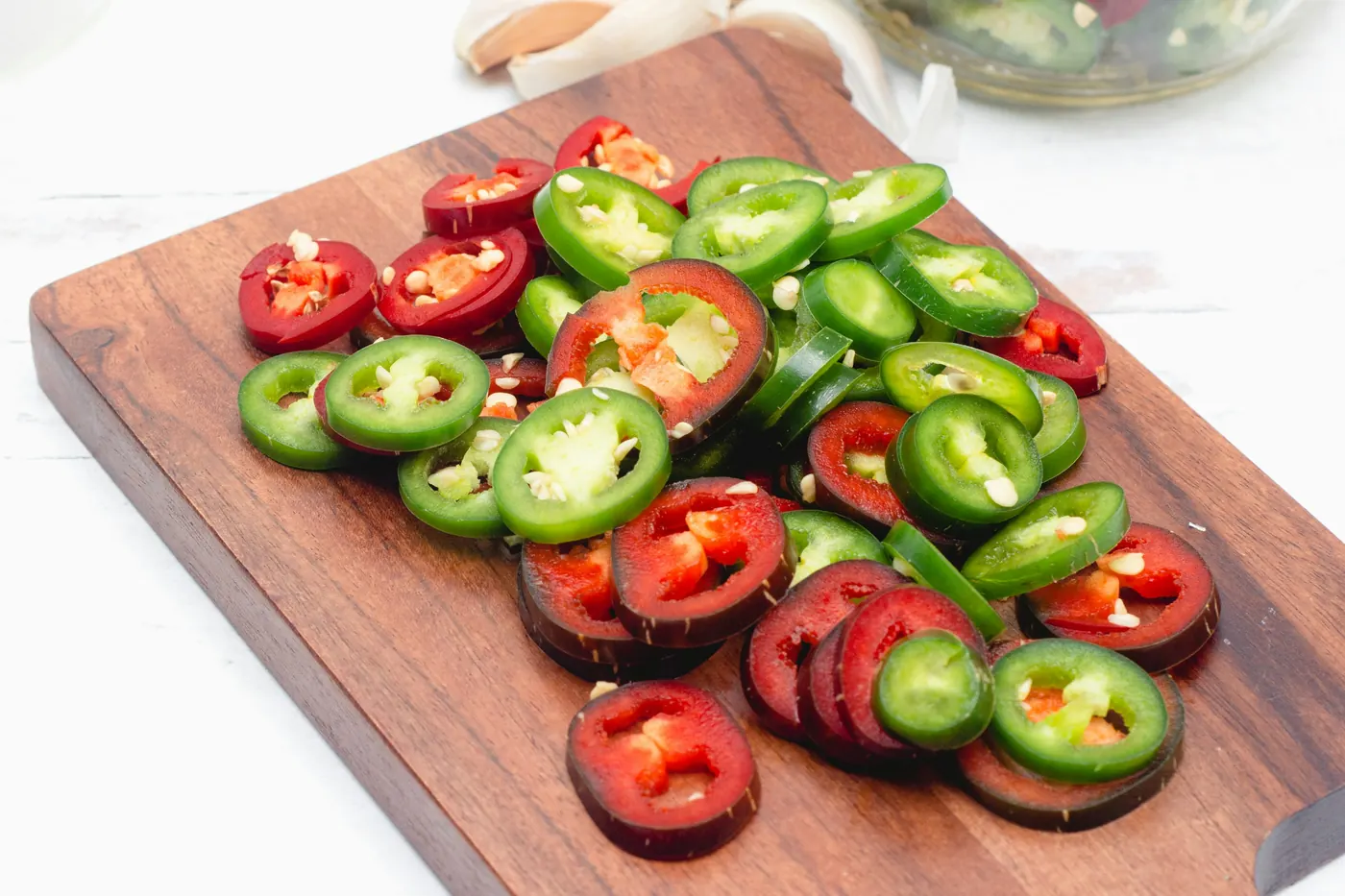
Brining softens the flesh and mutes the raw sharpness, and the vinegar adds an acidity the fresh pepper does not have. The heat is still present but rounder — it arrives with sourness rather than alone.
They come sliced into rings, usually brined alongside carrot and onion. That is why a jar of them contains vegetables you did not order.
Their job on a plate is cutting fat. A pickled jalapeño on nachos is doing the same work a squeeze of lime does elsewhere.
Reading it on a menu
Jalapeño is one of the ambiguous names — it can signal heat or not, depending entirely on what surrounds it.
Expect some heat when it is raw and named directly: fresh jalapeño in a salsa, sliced jalapeño on top.
Expect little when it is in a cream sauce, pickled, or one ingredient among several. Dairy blunts capsaicin, and a creamy jalapeño sauce is usually gentle.
If heat is the concern, the words worth watching are habanero and serrano rather than this one — the distinction our guide to mild dishes is built around, and one our chile guide sets in context.
On Julia’s menu
Jalapeño appears in six places on Julia’s menu, in three different forms.
As a cream sauce. The sopes — topped with picadillo or carne guisada, refried beans, lettuce and queso fresco — come with a creamy jalapeño sauce. Dairy is the moderating factor described above.
As a plain sauce. The empanadas, filled with picadillo or shrimp, are offered with either a jalapeño sauce or a creamy chipotle one. The jalapeño option is the sharper of the two.
Pickled. The nachos, the Nachos Tejanos and the sampler platter all arrive with pickled jalapeños, doing the fat-cutting job described above.
And one whole slice: the camarones rellenos are bacon-wrapped shrimp stuffed with Oaxaca cheese and a slice of jalapeño, basted with adobo. Cheese on one side, bacon on the other — the pepper is well insulated.
Handling and cooking
The jalapeño is mild enough that people get careless with it, and the carelessness has consequences.
Capsaicin is an oil. It does not rinse off with water, and it transfers from your fingers to whatever you touch for hours afterward. Gloves solve it; dish soap and warm water is the fallback.
In cooking, the main thing to know is that heat does not destroy capsaicin. Roasting or frying a jalapeño changes its flavor but not its heat, so a cooked one is not a milder one. What does reduce heat is removing the ribs, or diluting with dairy or fat.
Frequently asked questions
How hot is a jalapeño?
Roughly 2,000 to 8,000 Scoville heat units — medium. Hotter than a poblano, several times milder than a serrano.
Why do some jalapeños have no heat at all?
Variety and growing conditions. Supermarkets often stock mild hybrids, and a well-watered plant produces milder fruit than a stressed one.
Are the seeds the hot part?
No. The heat is in the pale ribs the seeds attach to. Removing the ribs is what actually reduces it.
Are red jalapeños hotter than green?
Not reliably. Red means riper, so it tastes sweeter and fruitier, but the heat is comparable.
What is the difference between a jalapeño and a chipotle?
None, botanically. A chipotle is a ripe red jalapeño that has been smoke-dried for several days.
The short version
Medium heat, thick-walled, blunt-tipped, and much more variable than its reputation suggests. The heat lives in the ribs, red means riper rather than hotter, and smoked it becomes a chipotle.
Julia’s uses it in six places on the menu — as a cream sauce, as a plain one, pickled, and once as a whole slice.