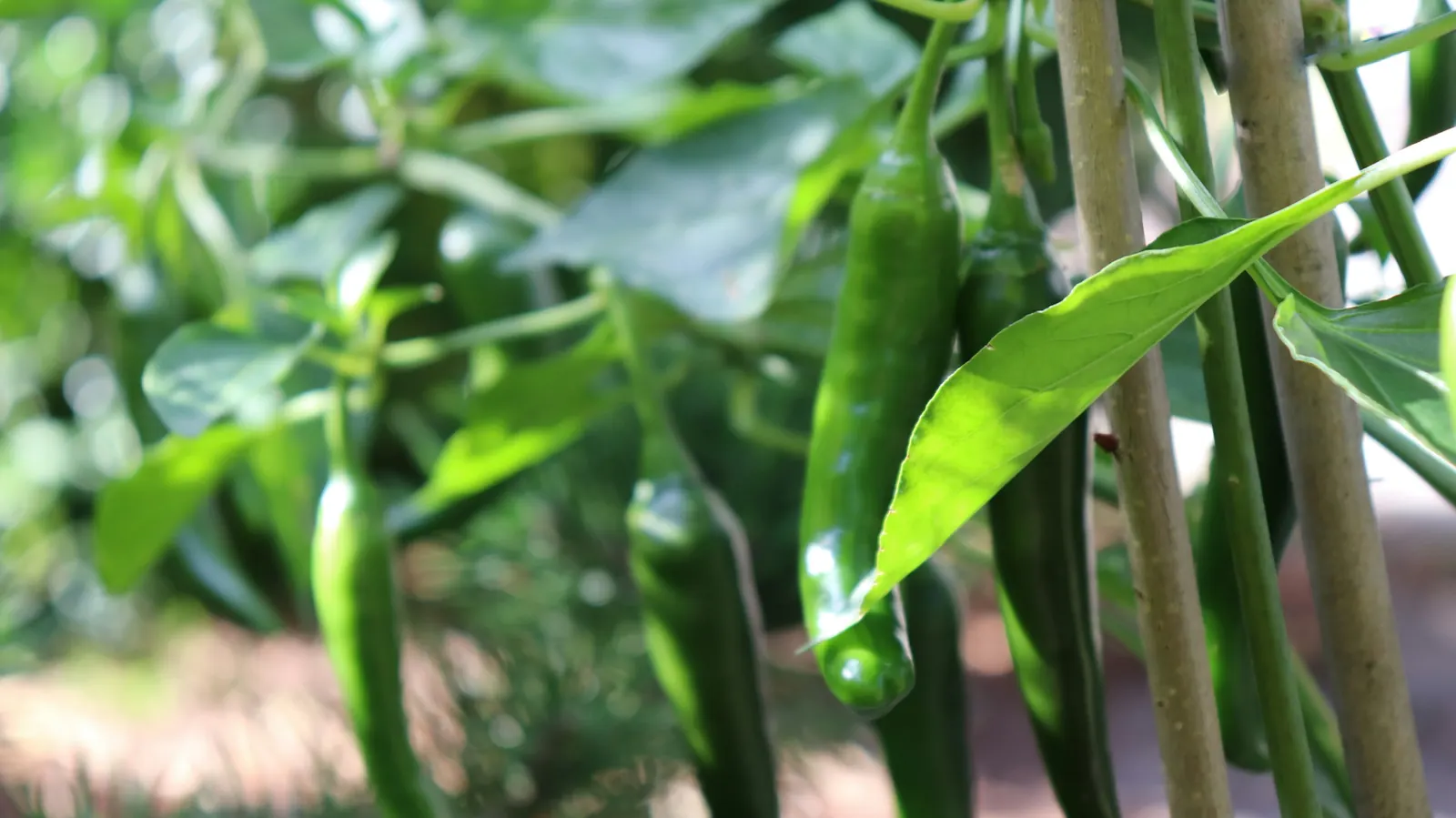
These two are the everyday green chiles of Mexican cooking, they taste almost identical, and one is several times hotter than the other.
Most people cannot tell them apart on sight, which is how the surprise happens.
The short answer
Serranos are smaller, thinner and pointed; jalapeños are larger, thicker-walled and blunt at the tip. Serrano runs roughly 10,000 to 25,000 Scoville units against the jalapeño’s 2,000 to 8,000 — three or four times hotter on average. The flavor is nearly the same. Size and shape are how you tell, and the shape is the reliable tell.
Telling them apart
Three differences, in order of usefulness.
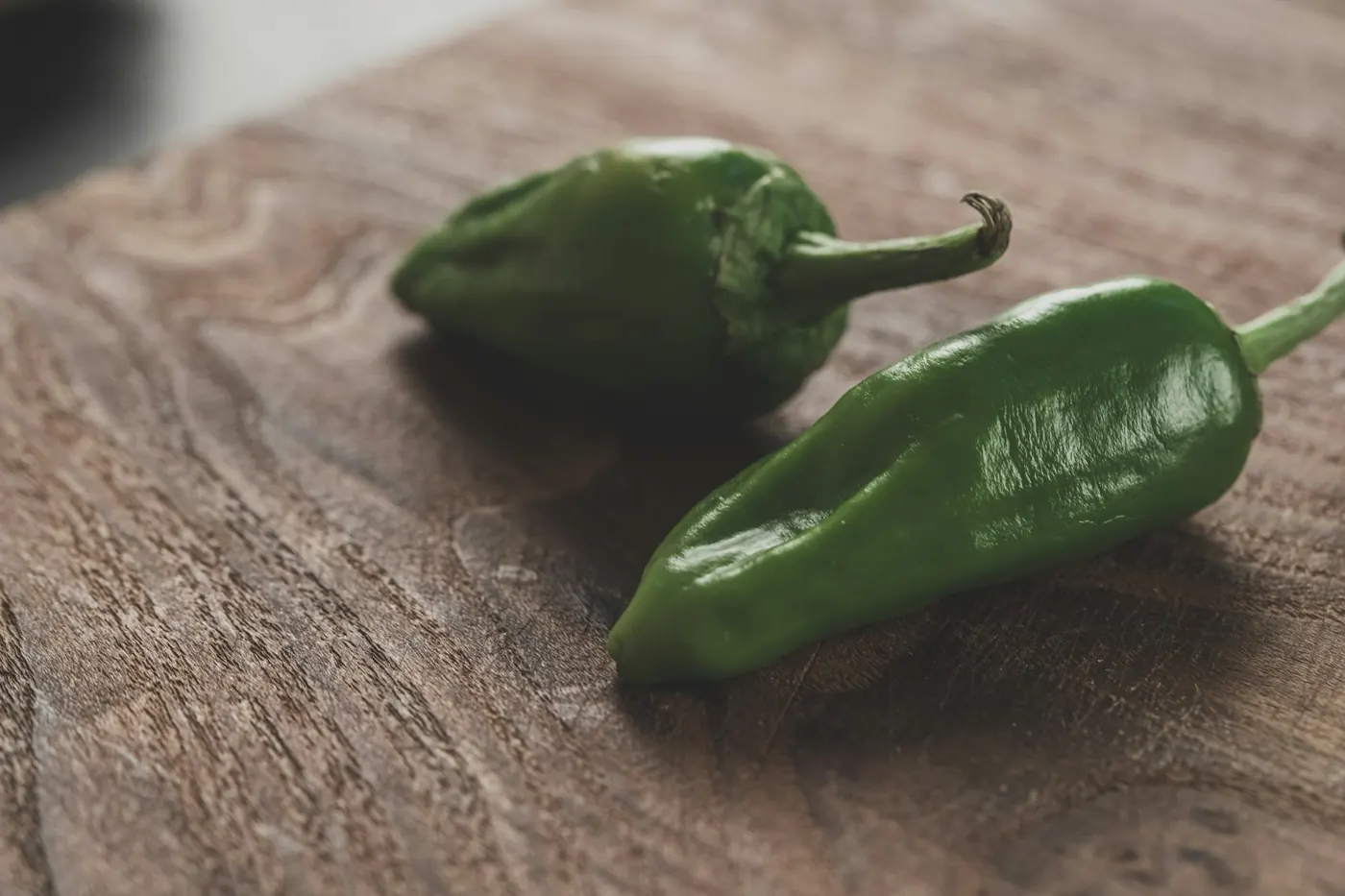
Shape. A jalapeño is broad at the shoulders and rounded at the tip. A serrano is narrow all the way down and comes to a point. This holds even when the sizes overlap.
Size. Serranos run one to two inches; jalapeños two to three. Not decisive on its own, since both vary.
Wall thickness. Cut them open. A jalapeño has thick, fleshy walls — enough to stuff. A serrano is thin-walled and mostly seed cavity, which is why nobody makes serrano poppers.
The heat gap
| Jalapeño | Serrano | |
|---|---|---|
| Scoville | 2,000–8,000 | 10,000–25,000 |
| Length | 2–3 inches | 1–2 inches |
| Tip | Blunt, rounded | Pointed |
| Walls | Thick, stuffable | Thin |
| Usually | Pickled, stuffed, sliced | Raw in salsa, minced |
| Flavor | Bright, grassy | Bright, grassy |
Mexican Please, comparing serranos and jalapeños, puts the serrano at about three to four times the jalapeño’s Scoville rating. The bottom of the serrano range sits above the top of the jalapeño range, which is the practical point: the mildest serrano is hotter than the hottest jalapeño.
Note the Flavor row. They taste the same. This is not a case where the hotter one is also more interesting — you are trading heat for heat.
Why the ranges are so wide
The same source makes a point worth repeating: the exact heat of a chile depends on growing conditions, which is why every pepper gets a range rather than a number.
A water-stressed plant in strong sun produces hotter fruit than a well-watered one. Peppers left longer on the plant get hotter. Commercial growers select for consistency and often for mildness, which our jalapeño guide covers.
So “how hot is a serrano” has no general answer, only an answer for the one in front of you. Two from the same bag can differ noticeably.
Where the heat sits
In the pith, not the seeds — the pale ribs the seeds attach to.
Mexican Please puts the highest concentrations of capsaicin in the pith and seeds, and notes this is why recipes so often tell you to scrape the seeds out. The seeds come out because they are attached to the ribs; removing both is what actually reduces the heat.
This matters more for a serrano than a jalapeño. A serrano is so thin-walled that the ribs are a large proportion of it, so deseeding removes a bigger share of the total heat — and leaves you with very little pepper.
How each gets used
The physical differences push them into different roles, and Mexican kitchens use them accordingly.
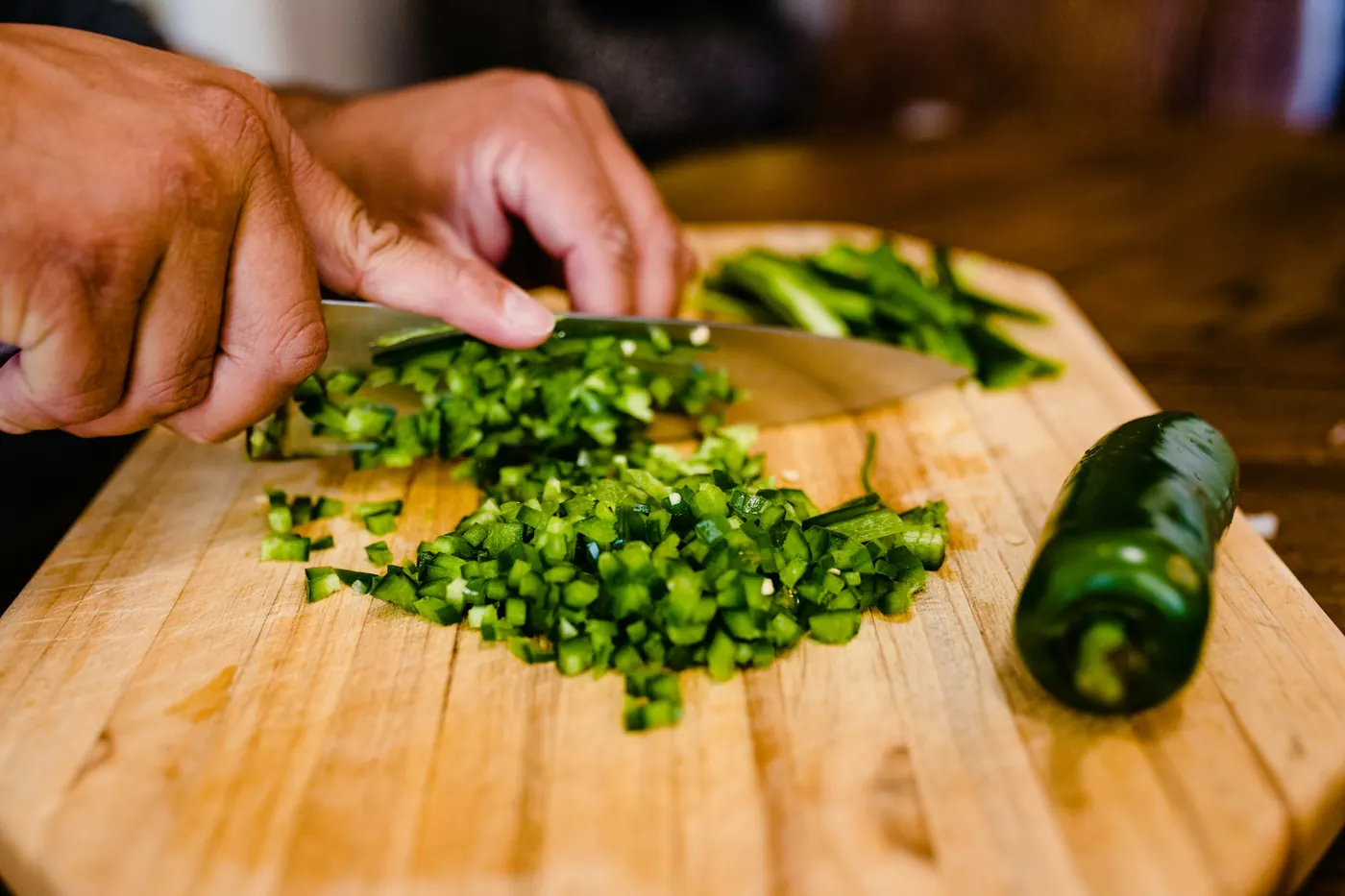
Serrano goes in raw and minced. Pico de gallo, guacamole, ceviche, table salsas. It is thin enough to chop very fine and disappear into a mixture, and its job is heat rather than substance.
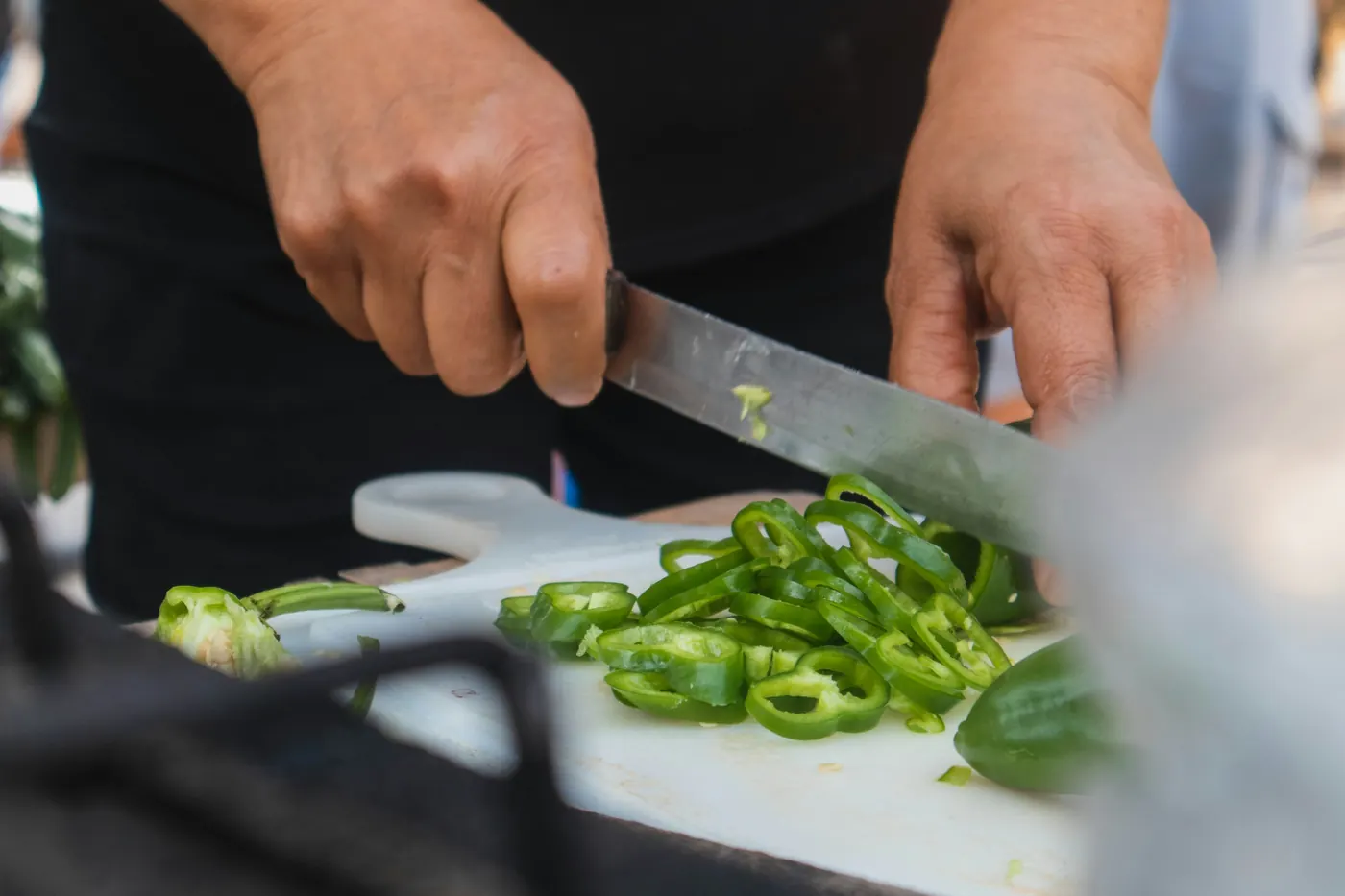
Jalapeño is more often cooked, pickled or stuffed. It has enough flesh to be an ingredient rather than a seasoning, and it is the one that gets smoked into chipotle.
Substituting one for the other works if you adjust quantity. A rough rule: one serrano for every two or three jalapeños, or the reverse.
Reading them on a menu
Both are named on menus, and the names carry different weight.
Serrano is a warning. It appears almost exclusively in raw preparations where it is not diluted, and if a kitchen bothers to name it, there is heat in the dish.
Jalapeño is ambiguous. Pickled or in a cream sauce, it is mild. Raw and sliced on top, it is not.
Neither is close to habanero. Our chile guide sets the whole range side by side, and our guide to mild dishes covers ordering around heat.
On Julia’s menu
Serrano appears three times on Julia’s menu, and every instance follows the pattern above — it is doing heat, in something wet.
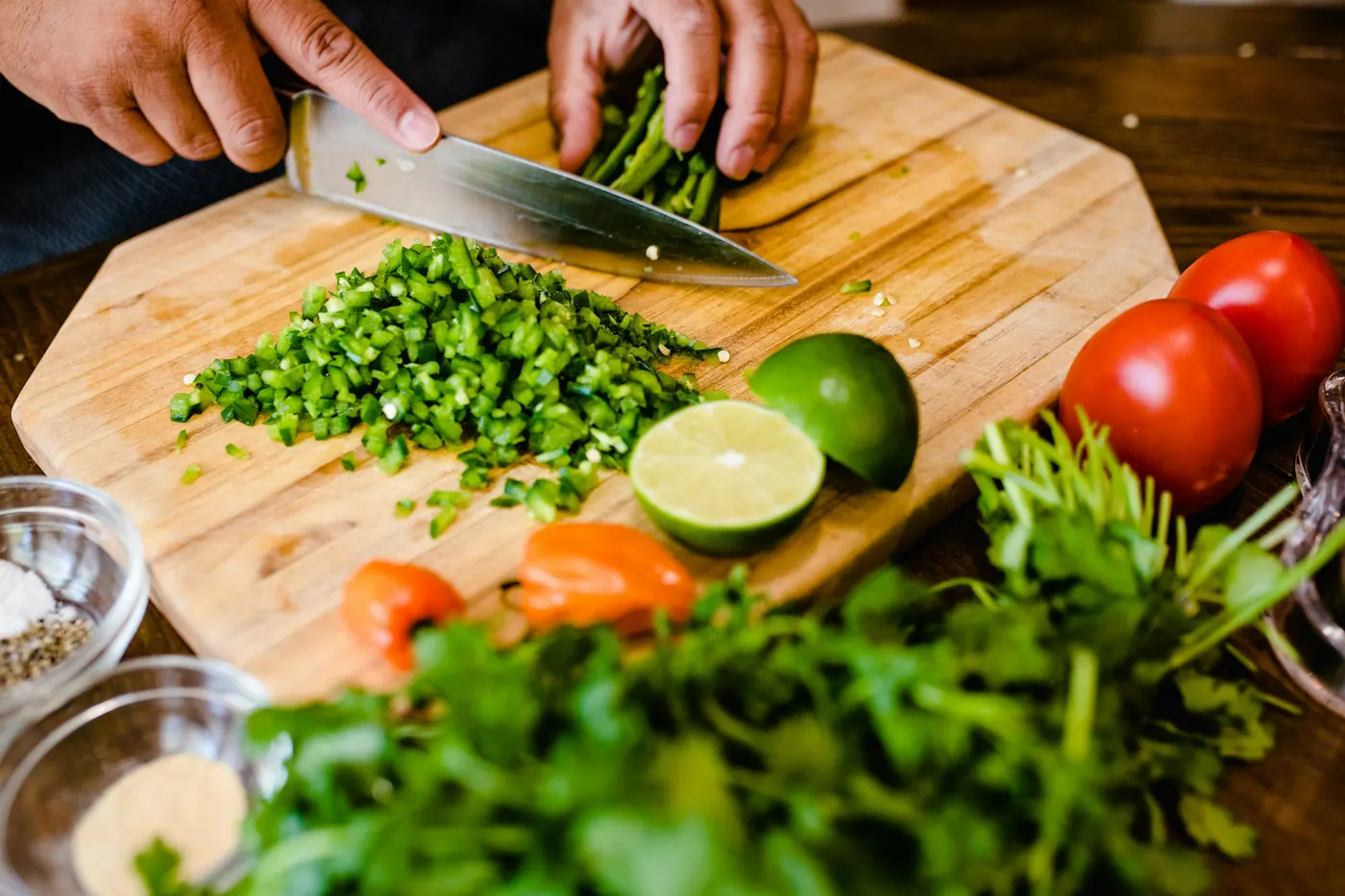
The ceviche is lemon-lime cured gulf shrimp with avocado, tomato, serrano, onion and cilantro. That is serrano in its classic role: raw, minced, in a cold mixture.
The carne guisada is beef seared and braised in a tomato-serrano sauce. Here it is cooked, which does not reduce the heat but does spread it through the sauce.
And the aporreadillo on the brunch menu is shredded meat stirred with egg and braised with a serrano-tomato salsa.
Jalapeño appears in six places by contrast, mostly pickled or in cream sauces. The split is exactly what you would predict: the milder, fleshier pepper is used as an ingredient, and the hotter, thinner one is used as a seasoning.
What happens when they ripen
Both are picked green, and both keep going if left alone.
A jalapeño left on the plant turns red, sweetens, and eventually gets smoke-dried into chipotle. A serrano left on the plant turns red or orange and also sweetens, but almost nothing is done with it commercially — there is no famous dried serrano the way there is a dried poblano or a smoked jalapeño.
That asymmetry is worth noticing. The jalapeño has a second life as a different named ingredient; the serrano does not. It is a fresh chile and stays one.
Red versions of either turn up occasionally in markets and are worth buying. They are fruitier and no milder, and in a salsa they change the color as much as the flavor — which our salsa guide covers.
Frequently asked questions
Is a serrano hotter than a jalapeño?
Yes, by three to four times on average. Serrano runs 10,000 to 25,000 Scoville units; jalapeño 2,000 to 8,000.
Do they taste different?
Barely. Both are bright and grassy. The difference is heat, not flavor.
How do I tell them apart?
Shape. Serranos are narrow and pointed; jalapeños are broad-shouldered and blunt at the tip. Serranos are also thinner-walled inside.
Can I substitute one for the other?
Yes, adjusting quantity. Roughly one serrano in place of two or three jalapeños.
Which is used in pico de gallo?
Traditionally serrano, minced fine and raw. Many American versions use jalapeño for a milder result.
The short version
Same flavor, different heat. Thin and pointed is the hot one; thick and blunt is the mild one. The mildest serrano beats the hottest jalapeño.
Julia’s uses serrano in three dishes on the menu, all of them wet and all of them raw or braised.