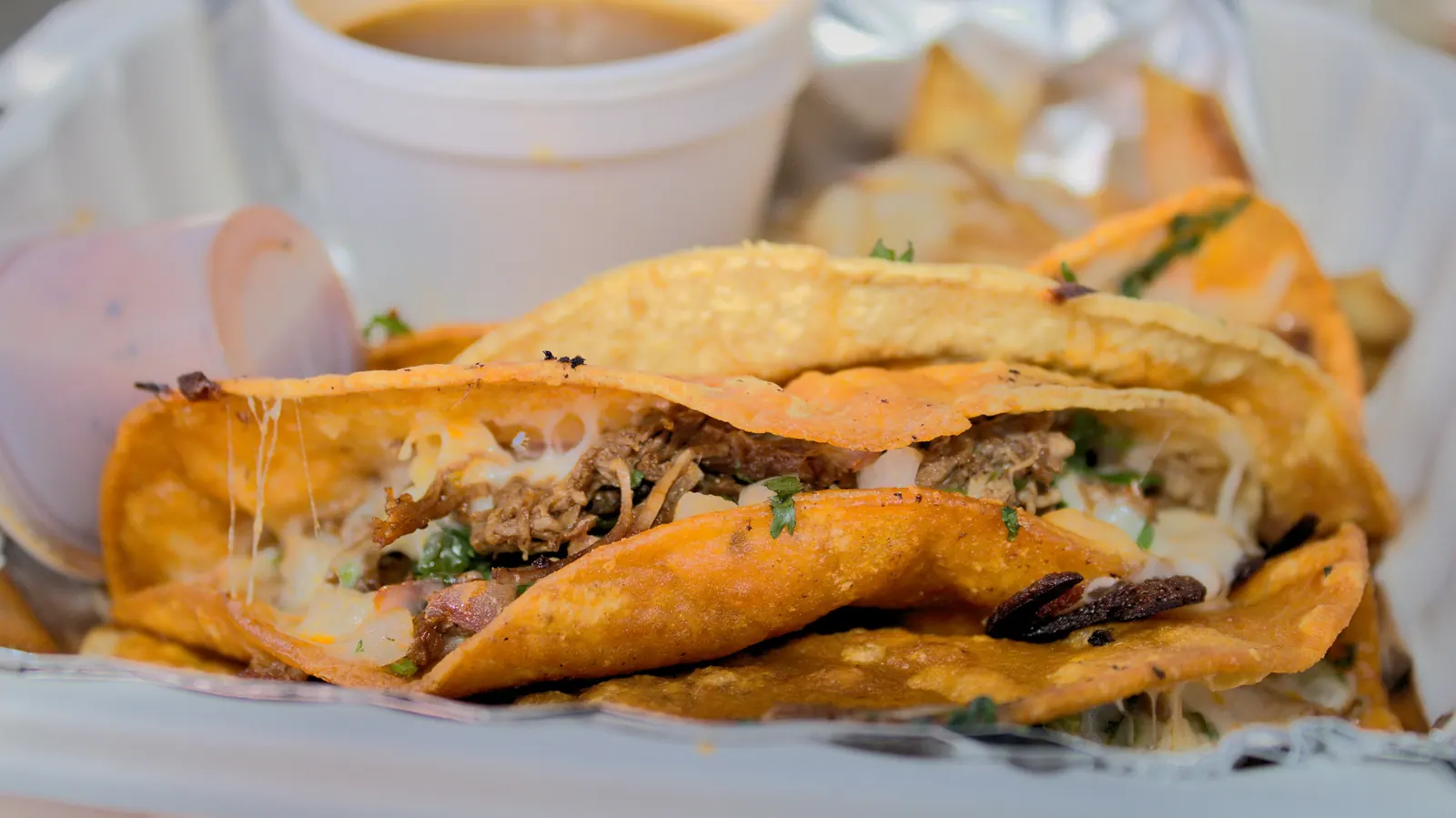
Birria went from a regional Mexican stew to a global taco trend in about three years, and the speed of that has left a lot of people ordering it without quite knowing what it is.
The confusing part is that “birria” describes two different things on a menu, depending on the restaurant.
The short answer
Birria is meat slow-cooked in a broth of dried chiles, vinegar and spices until it shreds. It originated in Jalisco, Mexico, and was traditionally made with goat. It can be served as a stew in its own broth, or the meat can be pulled out and used to fill tacos — which is the version that became famous online.
Where it comes from
Birria is a dish from the state of Jalisco in western Mexico. As Food Network explains, it is a slow-cooked stew served with its braising liquid, traditionally made with goat, though beef and lamb are now common substitutes.
It has always been celebration food. Birria turns up at weddings, baptisms, Christmas and funerals — occasions where a whole animal and a long cook make sense. That is worth knowing, because it explains the dish: nothing about birria is quick, and it was never designed to be.
What actually goes into it
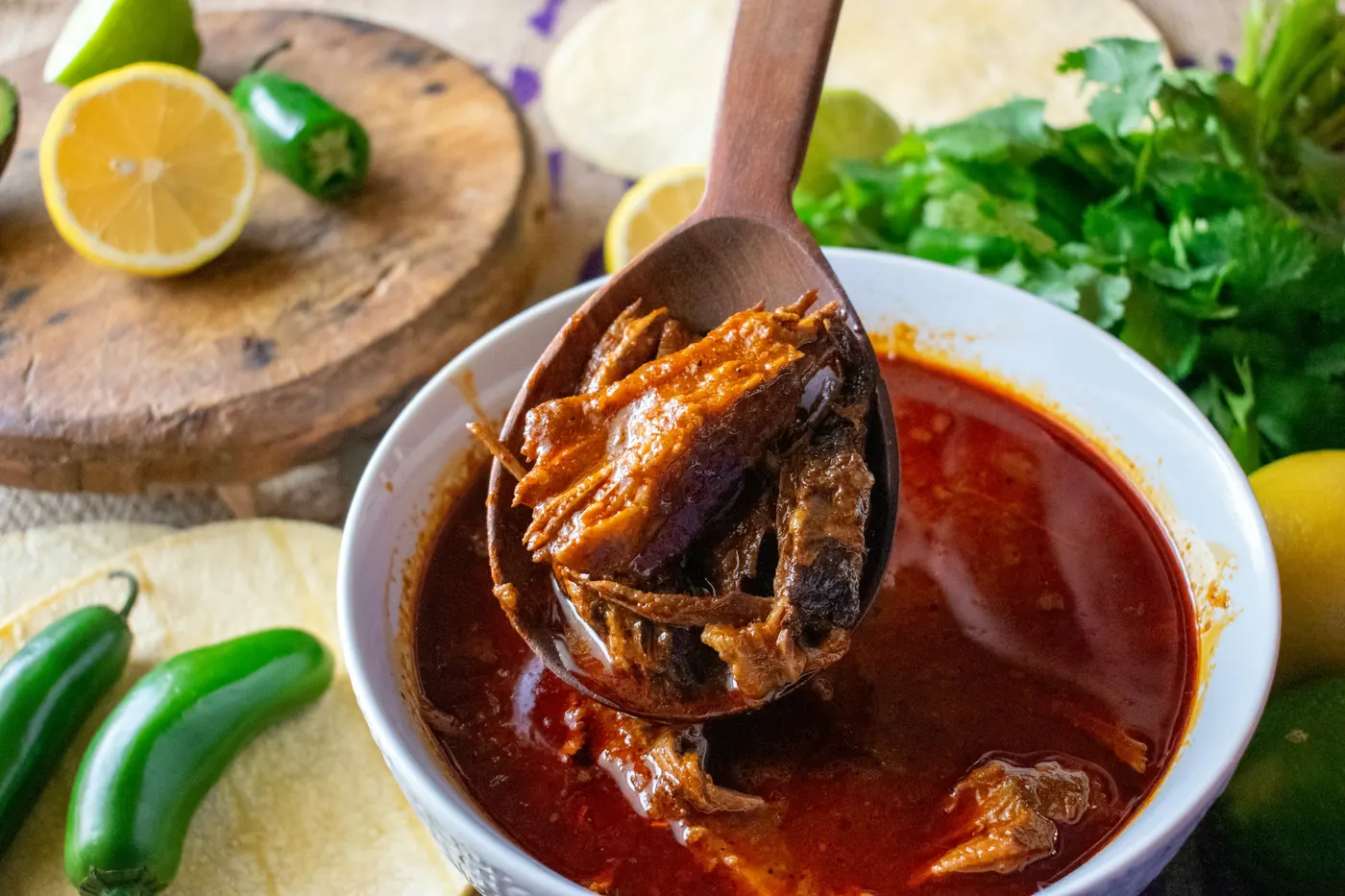
The base is dried chiles — guajillo, ancho and pasilla are the usual trio — rehydrated and blended with garlic, cumin, oregano, bay and a sour element, usually vinegar. That combination is an adobo.
The meat goes into that liquid and stays there for hours. It is braised, not roasted and sauced afterwards, which is the technical difference between birria and most other slow-cooked Mexican meats. The meat and the liquid become one dish.
The chiles are doing flavor work rather than heat work. Dried guajillo and ancho are mild and fruity, which is why birria is deeply savory but rarely hot. If you have read our guide to enchilada sauces, it is the same principle our chile guide sets out: drying a chile trades heat for depth.
The broth is not a garnish
The cooking liquid is called consomé, and it is the part people underestimate.
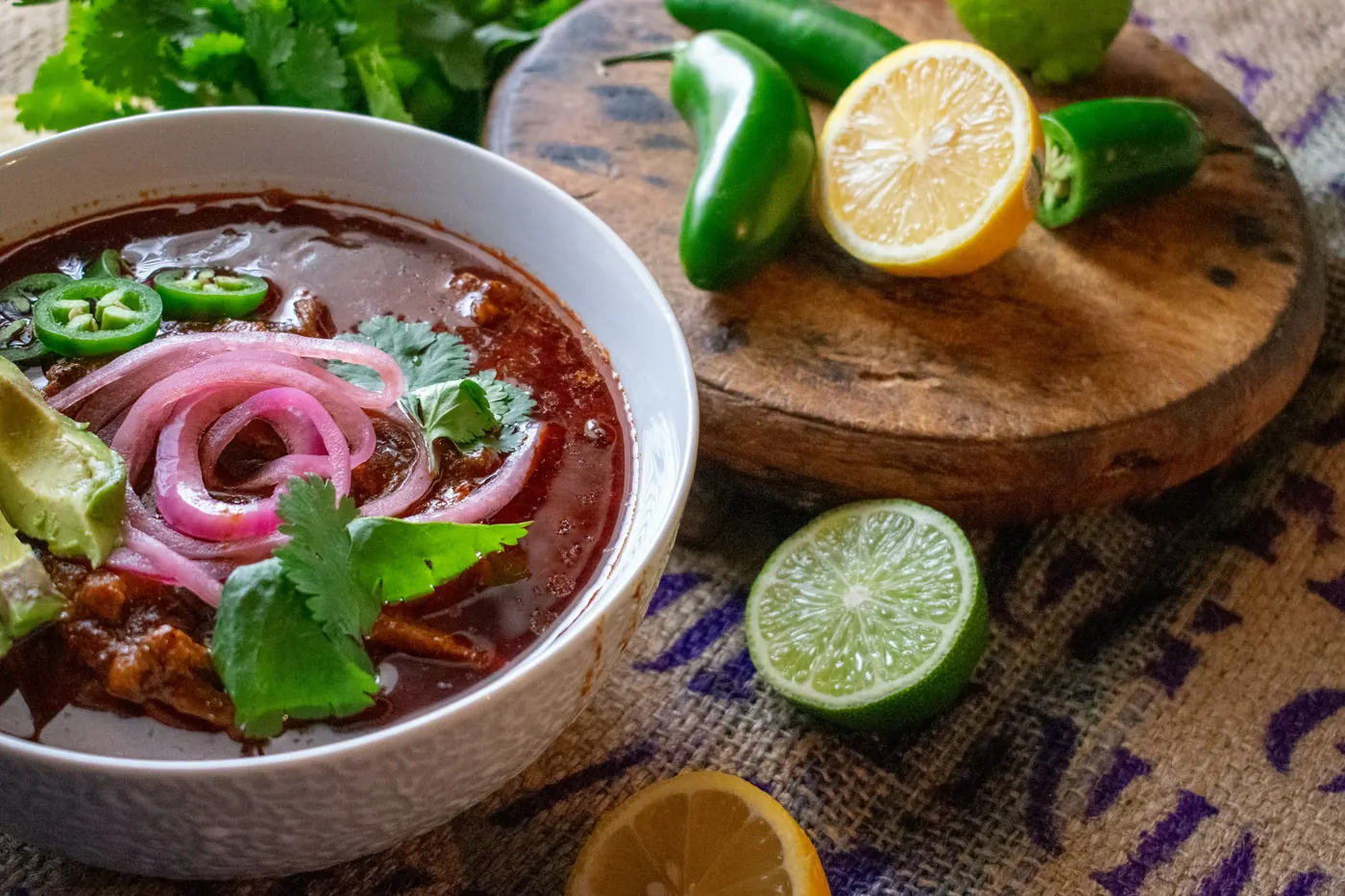
When birria is served as a stew, the meat sits in it. When it is served as tacos, the consomé is strained into a cup on the side, and you dip. Either way it is the same liquid the meat cooked in, carrying everything that came out of the chiles and the bones.
If a restaurant gives you consomé, drink it. It is not a sauce that was made separately.
Birria the stew vs birria tacos
This is the distinction that causes the most confusion, because the internet made one version famous and menus still serve the other.
| Birria as a plate | Birria tacos | |
|---|---|---|
| What arrives | Shredded meat, often with rice and beans | Filled tortillas, usually griddled |
| The broth | Served with or under the meat | Strained into a cup for dipping |
| Cheese | Not traditional | Often added and crisped in the pan |
| Which is older | The original form | A modern adaptation |
| Eats like | A stew with sides | A handheld snack or starter |
| Portion | A full main course | Ordered by the piece |
Neither is wrong. But if you order birria at a traditional Tex-Mex restaurant and expect the cheese-stuffed, consomé-dipping version from social media, you may be surprised by what lands.
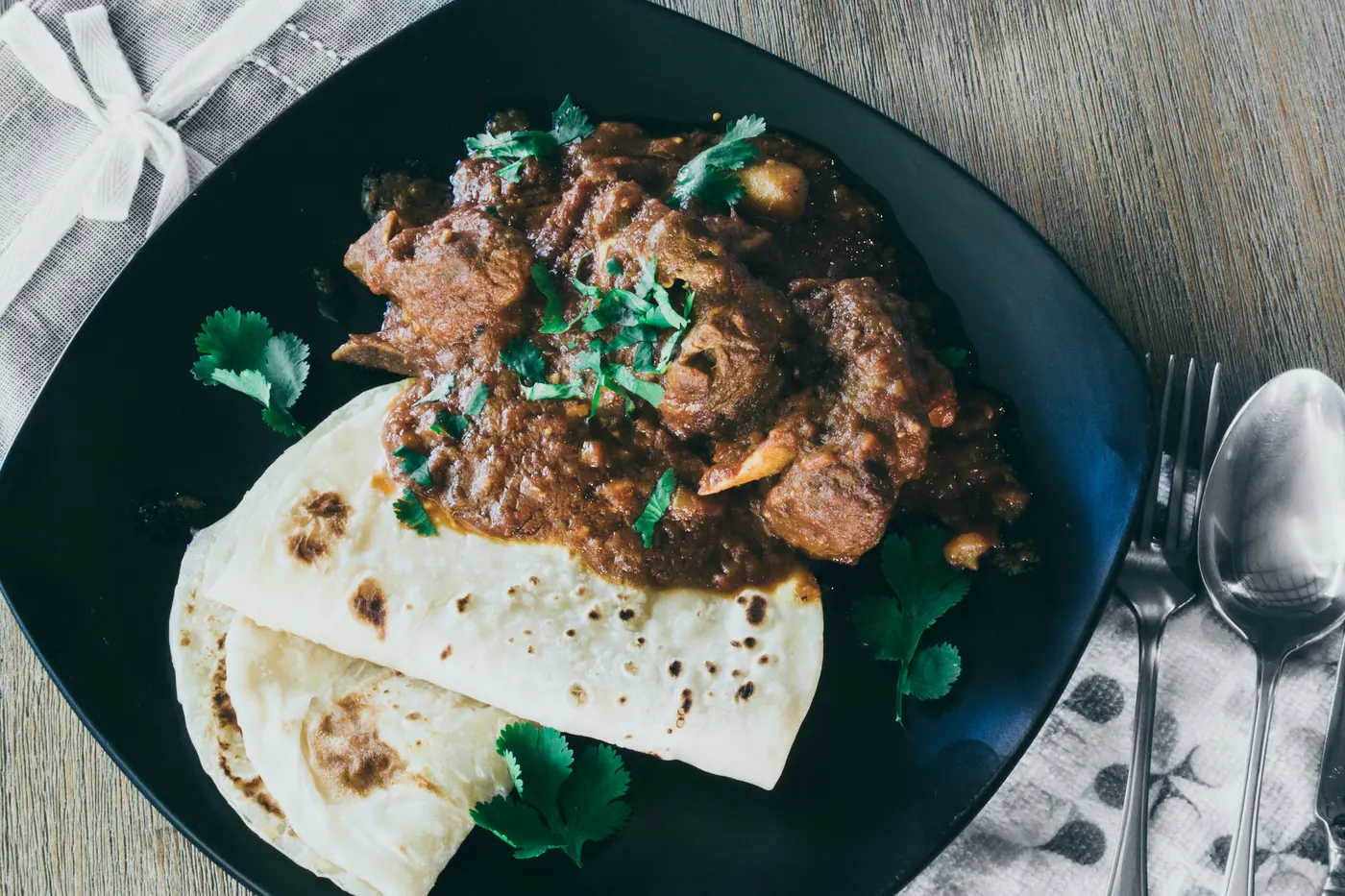
What “birria style” means on a Texas menu
You will often see the phrase “birria style” rather than plain “birria”, and that wording is doing real work.
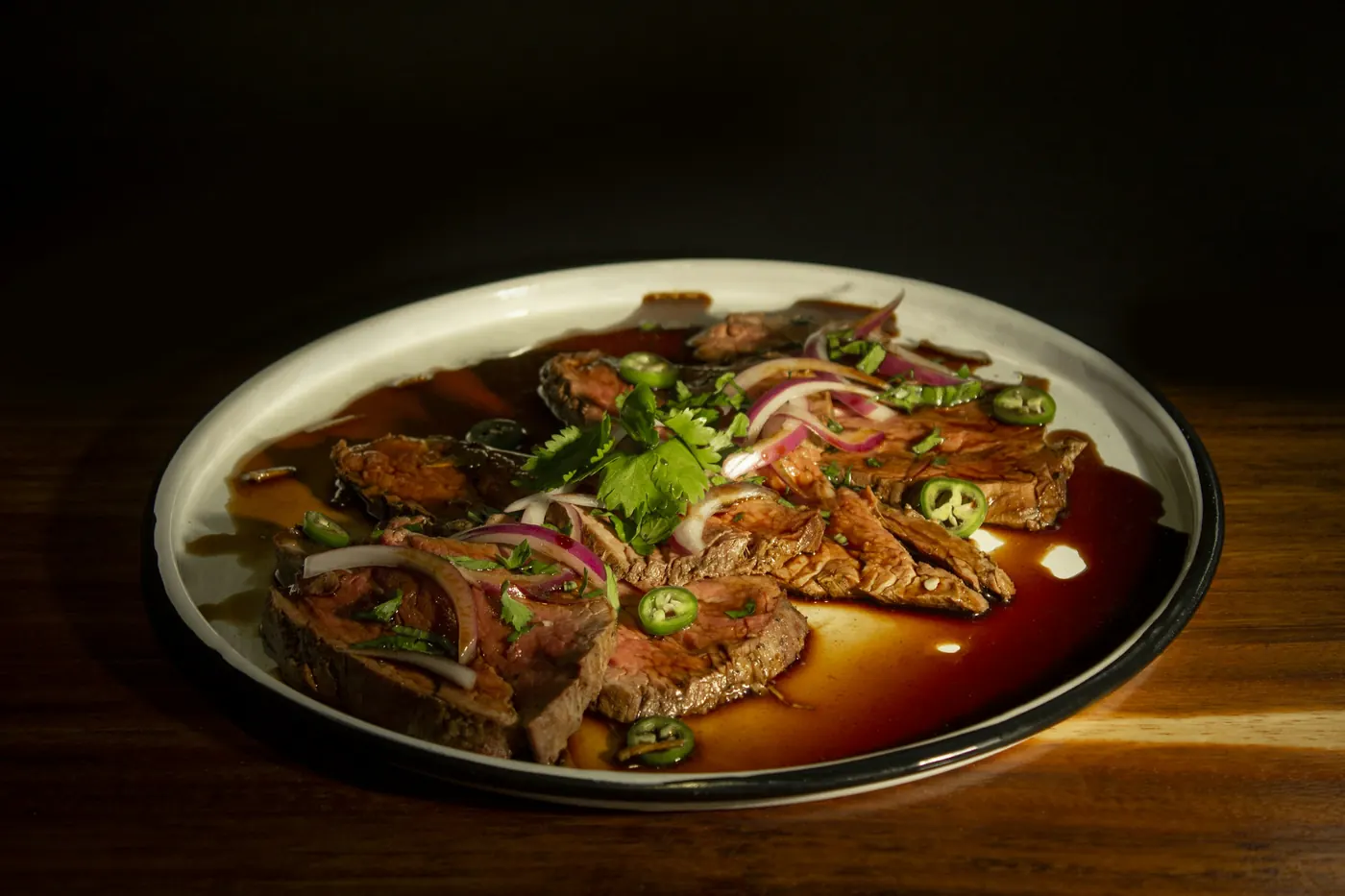
It signals the method rather than the traditional ingredient. A Texas kitchen is unlikely to be cooking goat; it is far more likely to be applying the birria technique — the dried-chile marinade and the long slow braise — to a cut it has plenty of. In Texas, that usually means brisket.
Brisket suits it. It is a tough, well-marbled cut that needs hours of low heat to become tender, which is exactly what the birria method provides. The result is not traditional Jaliscan birria, and a menu that says “birria style” is being honest about that.
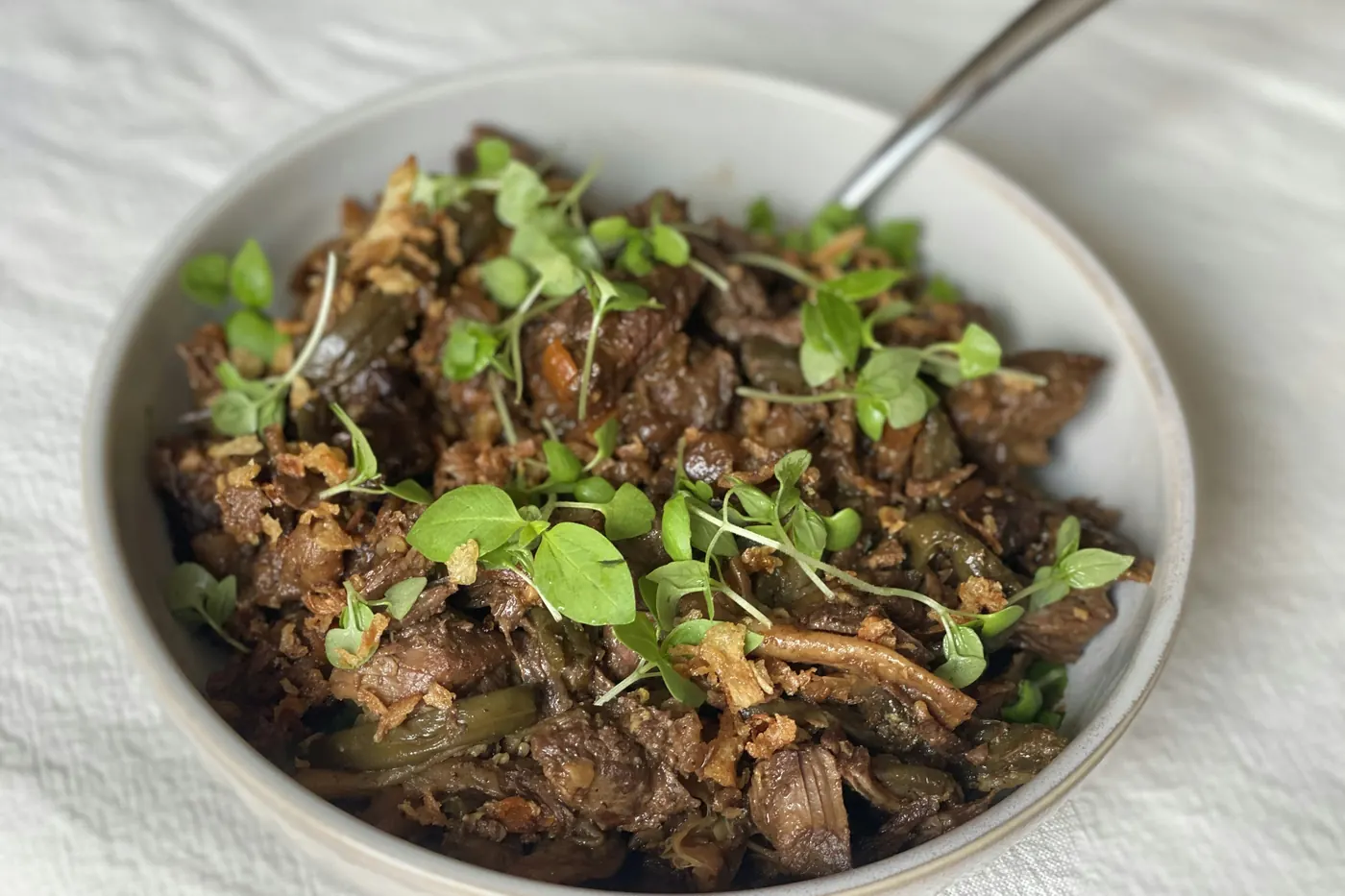
How Julia’s serves it
Julia’s lists Brisket Birria Style among the house specialties: brisket, slow roasted and marinated with dry peppers and fresh spices.
It arrives as a plate rather than as tacos — with guacamole, Mexican rice, charro beans and your choice of homemade corn or flour tortillas. You assemble as much or as little as you want, which makes it closer to the original stew format than to the viral taco.
Corn is the better tortilla choice here, for the reasons set out in our guide to corn and flour — braised meat carries liquid, and corn handles that without going soft.
It also appears as one of the family packs that serve four, which suits a dish that was always meant to feed a crowd.
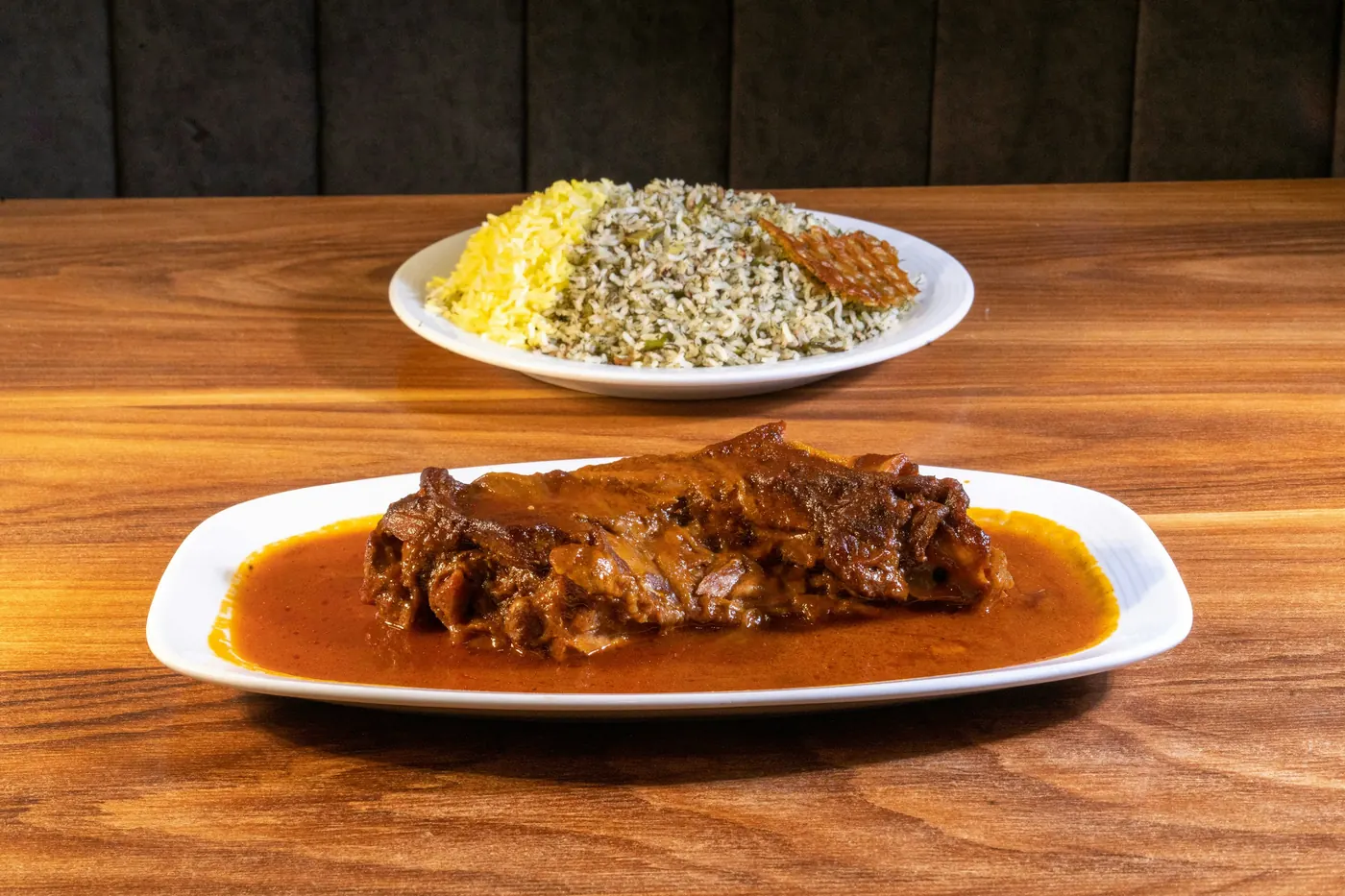
Why it suddenly appeared everywhere
Birria existed for generations before most people outside Mexico had heard of it. What changed was the taco.
The dipping format — a tortilla griddled in the fat that rises off the broth, filled with meat and cheese, served with a cup of consomé — photographs and films extremely well. The cheese pull, the dip, the color of the broth: it was built for a short video, whether or not anyone intended that.
The result is a dish that bridges two worlds. It remains celebration food in Jalisco, cooked for weddings and holidays, while simultaneously being a viral street-food item several thousand miles away. Both versions are legitimate; they are just not the same order.
How to tell whether it has been cooked properly
Birria is difficult to fake, which makes it a reasonable test of a kitchen.
The meat should pull apart under a fork with no resistance at all. If it needs cutting, it has not been in the pot long enough. The broth should be deep brick red rather than orange, and it should taste of chile and meat rather than of tomato — tomato is a shortcut some kitchens take to build color quickly.
There should also be a visible layer of rendered fat on the surface of the consomé. That fat carries most of the flavor, and skimming it all off is a sign the broth was rushed.
Frequently asked questions
Is birria spicy?
Usually not very. It is built on dried guajillo, ancho and pasilla chiles, which are mild and fruity rather than hot. Birria tastes deep and savory. Any real heat normally comes from a salsa served alongside, not from the meat itself.
What is consomé?
The broth the meat was cooked in, strained and served alongside. With birria tacos it comes in a cup for dipping. It is not a separate sauce — it is the braising liquid.
Is birria always made with goat?
Traditionally yes, in Jalisco. In practice, beef is now far more common, and lamb appears too. In Texas, brisket is a frequent choice because the cut suits the long braise.
What is the difference between birria and barbacoa?
Both are slow-cooked shredded meat, but birria is braised in a chile broth and served with that liquid. Barbacoa is traditionally steamed or pit-cooked and served without a broth, seasoned far more simply.
Do birria tacos always have cheese?
No. Cheese in the tortilla is a modern addition, popularized alongside the dipping-taco format. Traditional birria does not include it.
The short version
Birria is a Jaliscan chile-braised stew that became a taco. If a menu says “birria style”, expect the method rather than the tradition — often applied to brisket, and often served as a plate with tortillas on the side.
You can see how Julia’s handles it on the full food menu, and if you are still deciding between that and the grilled options, our tacos and fajitas comparison covers the other side of the menu.