
A Damascus chef’s knife is the one people stop and look at on a magnetic strip: wavy bands of light and dark steel running down the blade like water. In a Mexican kitchen it does the same work as any chef’s knife, a sack of white onions diced for pico de gallo, a mountain of cilantro, tomatoes sliced for a torta, flank steak cut thin for fajitas. The pattern is real on the knives below, but it is not what does the cutting, and knowing that is the key to buying one well.
This guide is narrower than our main best chef knife roundup. It covers only chef’s knives and gyutos with genuine layered cladding, from makers who state the core steel underneath. None of that guide’s nine picks are repeated here; its Damascus-clad Tojiro DP is left out so you get different options. We also explain what the cladding does, what the core does, and how to tell a real layered blade from an etched or printed “Damascus look”.
Julia’s earns a commission on purchases made through links on this page, at no cost to you. Recommendations are based on what a restaurant kitchen looks for, product specifications and verified buyer reports.
Quick verdict: which Damascus chef’s knife to buy
For most cooks, the best chef knife Damascus fans can buy is the Shun Classic 8-inch Chef’s Knife: a VG-MAX core inside 68 layers of Damascus cladding, a 16-degree edge, a D-shaped Pakkawood handle and Shun’s free sharpening service. If you want a slightly harder, finer edge with a grippy micarta handle, choose the Yaxell Ran Plus 8-inch. If you want the hardest stated core here, the Yaxell Super Gou 8-inch pairs SG2 powder steel at 63 HRC with 161 layers.
Below are the five standouts side by side, then all eight knives in full, then a plain explanation of how layered blades are built.
Five Damascus chef’s knives compared
Our five standout layered-steel chef’s knives, one per kind of buyer, with the core, cladding and handle each maker or listing states. All eight are reviewed below.
| Knife | Best for | Core & cladding | Handle | Buy on Amazon |
|---|---|---|---|---|

Shun Classic 8-inch Chef’s KnifeBest overall
|
Most cooks wanting real cladding | VG-MAX core, 68 layers | D-shaped Pakkawood | View on Amazon |

Yaxell Ran Plus 8-inch Chef’s KnifeBest VG10 Damascus
|
A fine 12-degree edge, grippy handle | VG10 core at 61 HRC, 69 layers | Canvas micarta | View on Amazon |

Enso HD 8-inch GyutoBest hammered finish
|
Less sticking on potatoes and onions | VG10, 37 layers, tsuchime | Triple-rivet micarta | View on Amazon |

Yaxell Super Gou 8-inch Chef’s KnifeHardest stated core
|
Long edge life, careful users | SG2 powder steel at 63 HRC, 161 layers | Red and black micarta | View on Amazon |
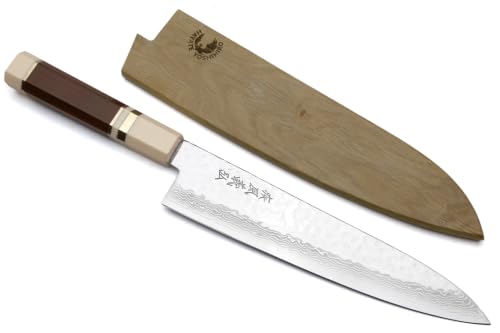
Yoshihiro VG10 46-Layer Hammered Damascus Gyuto, 210 mmBest wa handle
|
A light, blade-forward Japanese feel | VG10 core at 60 HRC, 46 layers | Octagonal rosewood, saya included | View on Amazon |
Product images from Amazon. Core steel, layer counts, hardness and angles are listed only where the maker or its Amazon listing states them; check the listing before you buy.
Our picks for the best chef knife Damascus cladding is worth paying for
All eight knives are double-bevel chef’s knives or gyutos of about 8 inches (roughly 185 to 210 mm), made by established knife companies that name the core steel inside the pattern. Seven are made in Japan, most of them in Seki; the eighth is a German-brand option whose maker states the core but not the country. Each review covers what the core is, how the cladding is built, what the handle is like, and one honest reason to pass.
1. Shun Classic 8-inch Chef’s Knife – VG-MAX Core in 68 Layers
Shun calls its Classic line the original authentic Japanese cutlery line introduced to the United States, and the 8-inch chef’s knife is the line’s all-round blade. The listing describes a VG-MAX steel core wrapped in 68 layers of Damascus cladding, sharpened to a 16-degree edge. VG-MAX is Shun’s own stainless steel; the cladding is softer stainless layered on each side, which is what you see as the pattern.
This is not the same knife as the Shun Classic Western Cook’s Knife on our main chef’s knife page, which Shun shapes after a Western chef’s knife. This is the Classic line’s standard chef’s knife, the one Shun describes for slicing, dicing and mincing, so it covers the everyday list: push-cutting onions and peppers, chopping cilantro, and the controlled tip work of slicing a jalapeño into thin rounds.
The D-shaped Pakkawood handle fits a right hand naturally, and Shun says it works for left- and right-handed users. The listing notes Shun’s free sharpening and honing service and a lifetime warranty. As with every hard Japanese blade, keep it off bones, frozen food and glass boards, and hand wash and dry it after lime or tomato.
Why we like it
- VG-MAX core with 68 layers of Damascus cladding, per Shun
- 16-degree edge, finer than most German chef’s knives
- Free sharpening and honing service from Shun
- Lifetime warranty, per the listing
Key specifications
| Model | DM0706 |
|---|---|
| Blade length | 8 inches |
| Core steel | VG-MAX |
| Cladding | 68 layers of Damascus stainless |
| Hardness (stated) | Not stated on listing |
| Edge angle | 16 degrees |
| Handle | D-shaped Pakkawood |
| Made in | Japan |
Why we recommend it
It suits the cook who wants a genuine layered blade from the brand that made the look familiar in American kitchens, with a sharpening service to fall back on and a handle most hands find comfortable straight away.
Skip it if you are left-handed and dislike D-shaped handles, or you want a stated hardness figure on the listing; this one does not give it.
Pros and cons
Pros
- Clear statement of core steel and layer count
- Free sharpening service
- Versatile gyuto-style profile
Cons
- Hard edge can chip if twisted or used on bone
- Hardness not stated on the listing
- D-shaped handle favors right-handed cooks
2. Yaxell Ran Plus 8-inch Chef’s Knife – 69 Layers and a 12-Degree Edge
Yaxell is a Seki knife maker, and the Ran Plus is its VG10 Damascus line. The listing is unusually specific: a VG10 cobalt-molybdenum-vanadium stainless core hardened to 61 Rockwell, with 34 layers of hard and soft stainless steel on each side for 69 layers in all. That is the classic recipe for a layered Japanese blade: one hard steel in the middle that forms the edge, and alternating steels outside that make the pattern when the blade is etched.
Yaxell grinds it to approximately 12 degrees, a finer angle than the Shun above. A finer angle glides more easily through a firm tomato or a raw chayote, at the cost of being a little more delicate; this is a knife for slicing and chopping on a wood or plastic board, not for splitting a chicken back. The kanji on the blade is hand engraved, per the listing.
The handle is black canvas micarta with two stainless rivets. Micarta is resin and linen layered and pressed, and it holds up well to water, which matters in a kitchen where hands are always wet from rinsing herbs. Yaxell asks for washing with warm water and mild detergent and backs the knife with a lifetime warranty.
Why we like it
- Stated VG10 core at 61 HRC
- 34 layers per side, 69 in total, per Yaxell
- Approximately 12-degree edge
- Canvas micarta handle, handcrafted in Seki City
Key specifications
| Model | Ran Plus 8-inch chef’s knife |
|---|---|
| Blade length | 8 inches |
| Core steel | VG10 |
| Cladding | 69 layers (34 per side) |
| Hardness (stated) | 61 HRC |
| Edge angle | About 12 degrees |
| Handle | Black canvas micarta, two rivets |
| Made in | Seki City, Japan |
Why we recommend it
It suits the cook who wants the full set of facts on the listing, core, hardness, layer count and angle, plus a water-tolerant handle, in a classic VG10 Damascus knife.
Skip it if you have never used a thin Japanese edge; the 12-degree angle rewards a gentle push cut and punishes twisting.
Pros and cons
Pros
- Complete published specifications
- Very fine stated edge angle
- Durable micarta handle
Cons
- Thin edge is easier to chip than a German knife
- No model number on the listing
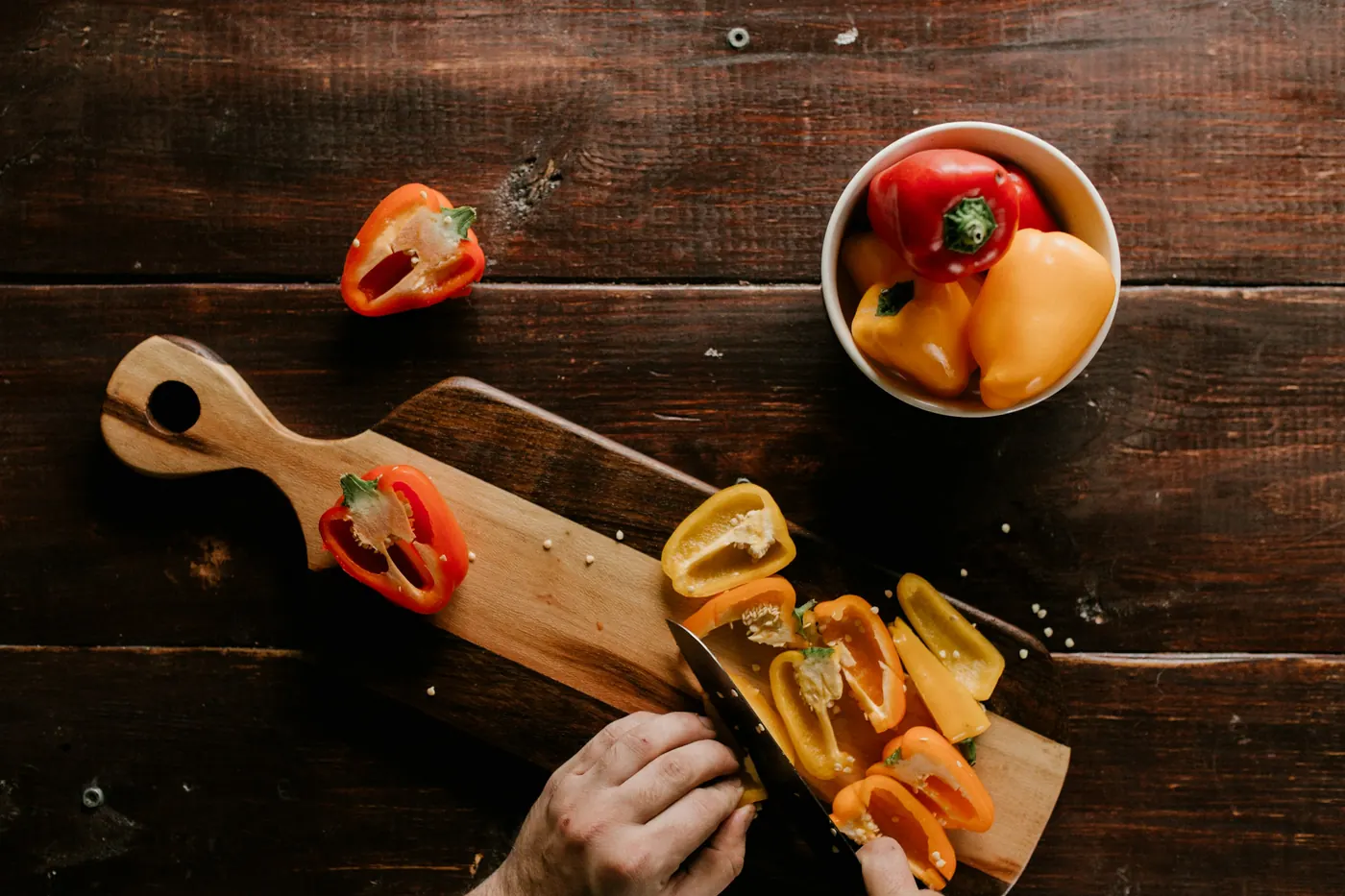
3. Enso HD 8-inch Gyuto – Hammered Damascus That Sheds Food
The Enso HD adds a second texture to the pattern: a hammered, or tsuchime, finish over 37-layer VG10 Damascus stainless. The listing gives a VG10 core at 61 Rockwell, hand-ground to approximately 12 degrees, with a double-bevel edge for right- and left-handed use. The blade is 8 inches (200 mm), 1.75 inches tall, 2 mm thick at the heel, and the knife weighs 7.9 ounces.
A hammered surface is more than decoration. The small dimples break the suction that makes wet slices cling to a flat blade, which is why hammered knives are popular for potatoes, cucumbers and onions. In a Mexican kitchen that means fewer slices of white onion sticking to the side of the knife when you cut a big batch for pico de gallo or curtido.
The handle is black canvas micarta with three stainless rivets and an end cap, a solid Western-style build. All Enso knives are handcrafted in Seki City, Japan, according to the listing, with a lifetime warranty against manufacturing defects.
Why we like it
- Tsuchime hammered finish over 37-layer Damascus
- VG10 core at 61 HRC, about 12 degrees
- Full dimensions and weight published
- Triple-rivet micarta handle with end cap
Key specifications
| Model | 35600 |
|---|---|
| Blade length | 8 inches (200 mm) |
| Core steel | VG10 |
| Cladding | 37-layer hammered Damascus stainless |
| Hardness (stated) | 61 HRC |
| Edge angle | About 12 degrees |
| Handle | Black canvas micarta, three rivets |
| Made in | Seki City, Japan |
Why we recommend it
It suits a cook who cuts a lot of starchy or wet vegetables and wants both a layered blade and a surface that helps slices fall away.
Skip it if you want the cleanest view of the Damascus pattern; the hammering breaks it up and is a matter of taste.
Pros and cons
Pros
- Hammered finish helps food release
- Sturdy three-rivet handle
- Clear published specifications
Cons
- Fewer layers than the Yaxell knives, if the pattern matters to you
- Thin edge needs a gentle hand
4. Yaxell Super Gou 8-inch Chef’s Knife – SG2 Powder Steel at 63 HRC
The Super Gou is Yaxell’s step up from the Ran Plus, and the difference is the core. The listing names SG2, a micro-carbide powder stainless steel, hardened to 63 Rockwell, two points harder than the VG10 knives above. Powder steels are made from fine metal powder pressed and sintered, which lets makers reach high hardness with a fine, even structure. The practical result is an edge that stays keen longer between sharpenings.
The cladding is the most elaborate here: 80 layers of alternating soft and hard stainless steel on each side, 161 layers in all. Yaxell states an approximately 12-degree double-bevel angle, a 1.75-inch blade height, a 2.5 mm spine at the heel and a weight of 7.75 ounces (220 g). The red and black canvas micarta handle has three rivets around an enclosed full tang.
The trade-off with very hard steel is toughness. At 63 HRC, the edge will not roll; it is more likely to chip if you twist it in a squash or hit a bone. It is also slower to sharpen on a stone. Keep it for slicing, dicing and mincing, and use a heavier knife for breaking down chicken.
Why we like it
- SG2 powder steel core at a stated 63 HRC
- 161 layers, 80 per side, per Yaxell
- Enclosed full tang with three rivets
- Handcrafted in Seki City with a lifetime warranty
Key specifications
| Model | 37100 |
|---|---|
| Blade length | 8 inches |
| Core steel | SG2 powder stainless |
| Cladding | 161 layers (80 per side) |
| Hardness (stated) | 63 HRC |
| Edge angle | About 12 degrees |
| Handle | Red and black canvas micarta, three rivets |
| Made in | Seki City, Japan |
Why we recommend it
It suits an experienced cook who sharpens on stones, wants the longest edge life on this list and treats the knife gently.
Skip it if your knife sometimes ends up prying, twisting or meeting bone; harder steel chips more readily than the VG10 knives here.
Pros and cons
Pros
- Hardest stated core on the list
- Most layers on the list
- Robust enclosed-tang handle
Cons
- Less tolerant of rough use
- Slower to sharpen than VG10
- Among the most expensive knives here
5. Yoshihiro VG10 46-Layer Hammered Damascus Gyuto, 210 mm – Octagonal Wa Handle and Saya
Every other knife on this list has a Western-style handle. The Yoshihiro has a traditional Japanese wa handle: an octagonal rosewood handle with a triple ring, fitted to a hidden tang. Wa handles are lighter than riveted Western handles, so the balance moves toward the blade, which many cooks like for a pinch grip and fine work such as mincing garlic or cutting chiles into slivers.
The blade is 210 mm (8.25 inches), forged and hammered with 46 layers of steel around a VG10 core, which Yoshihiro lists at 60 HRC. It is double-edged, so it works for either hand, and the listing describes a gyuto with a curved blade that rocks and an extended tip for quick chopping. A magnolia wood saya, the slip-on blade cover, is included, which is useful if the knife lives in a drawer or travels to a cookout.
Yoshihiro’s care instructions are strict and worth following: sharpen and hone only on water whetstones, hand wash and dry immediately, especially after acidic ingredients, and do not use it on bones, nutshells or frozen food. Lime juice and tomatoes are acidic, so that drying step matters in a salsa kitchen. The edge angle and warranty are not stated on the listing.
Why we like it
- Traditional octagonal rosewood wa handle
- 46-layer hammered Damascus over a VG10 core
- Magnolia wood saya included
- True 210 mm gyuto length
Key specifications
| Model | NSGY210AHMS |
|---|---|
| Blade length | 210 mm (8.25 inches) |
| Core steel | VG10 |
| Cladding | 46-layer hammered Damascus |
| Hardness (stated) | 60 HRC |
| Edge angle | Not stated (double-edged) |
| Handle | Octagonal rosewood wa, triple ring |
| Made in | Japan |
Why we recommend it
It suits the cook who wants a Damascus knife that also feels traditionally Japanese, light in the hand with the weight forward, and who will keep it on stones and away from the dishwasher.
Skip it if you prefer the heft and fixed finger position of a riveted Western handle; a wa handle feels very different.
Pros and cons
Pros
- Light, blade-forward balance
- Blade cover included
- Full 210 mm length
Cons
- Strict care: whetstones only, no bones or frozen food
- Edge angle and warranty not stated
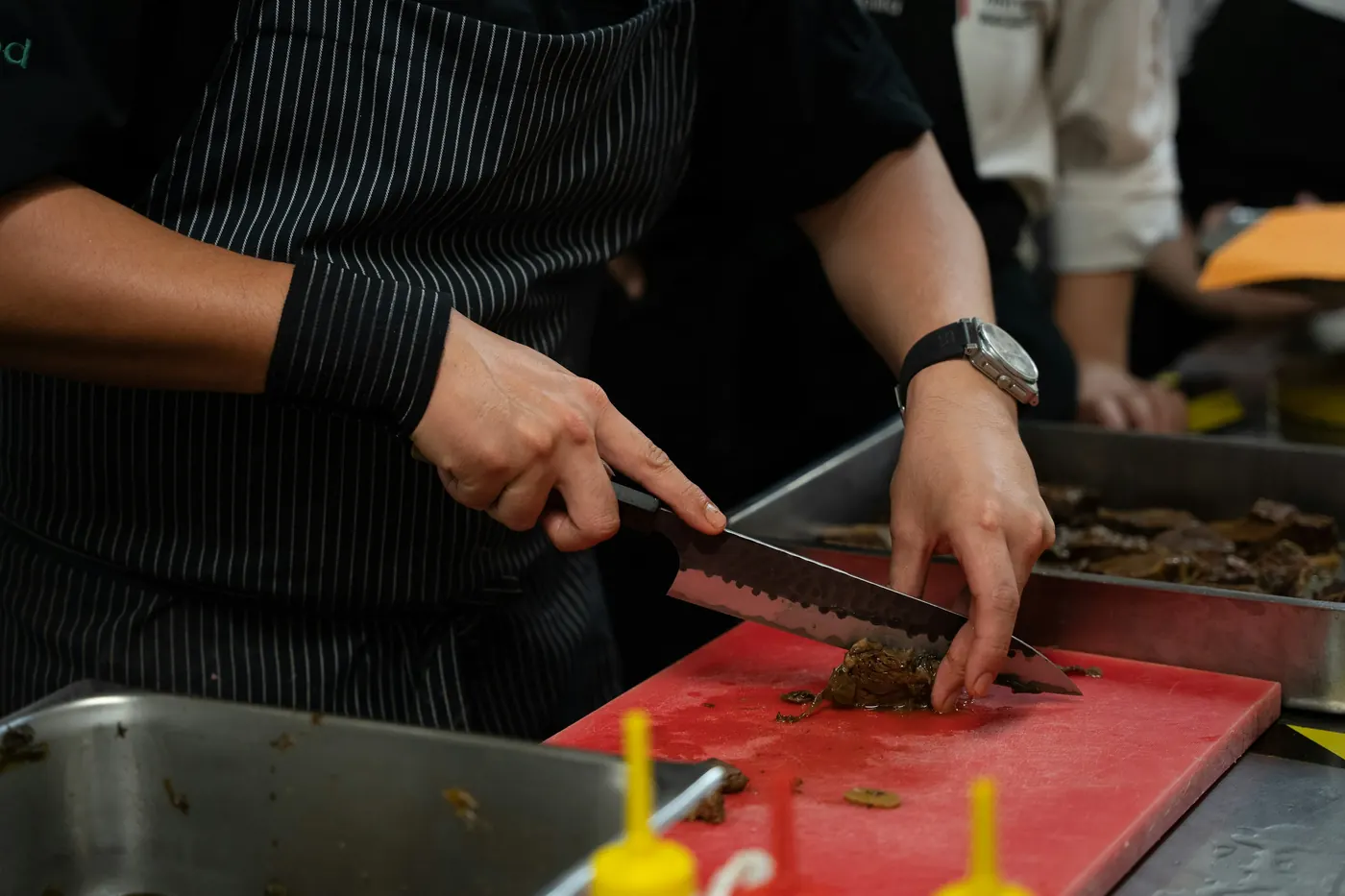
6. Shun Shiranami 8-inch Chef’s Knife – Layered Right to the Edge

The Shiranami is the exception that proves the rule on this page. Most Damascus knives have one hard core and a decorative jacket. Shun’s listing describes this blade differently: 71 alternating micro-layers of two high-carbon, high-chromium stainless steels, VG10 and VG2, with no separate core. The layers run all the way to the cutting edge, so the pattern is part of the edge itself rather than just the sides.
Retailer Cutlery and More, describing the same construction, explains that the two steels wear at slightly different rates in use, which leaves micro-serrations along the edge so it feels sharp longer. We could not find that claim on Shun’s Amazon listing, so treat it as the retailer’s explanation. Shun gives a 16-degree edge, and the name means “white-capped wave”, after the wave-shaped pattern.
The handle is Prussian blue jute micarta, which Shun says offers grip security for both hands. Like the Shun Classic, it comes with Shun’s free sharpening and honing service. It is a newer, more expensive line, and its blue handle is a love-it-or-leave-it look.
Why we like it
- 71 alternating layers of VG10 and VG2, per Shun
- Layers reach the edge rather than stopping at a core
- Jute micarta handle for grip
- Free sharpening service from Shun
Key specifications
| Model | FRD0706 |
|---|---|
| Blade length | 8 inches |
| Core steel | No separate core; VG10 and VG2 laminate |
| Cladding | 71 alternating micro-layers through the blade |
| Hardness (stated) | Not stated on listing |
| Edge angle | 16 degrees |
| Handle | Prussian blue jute micarta |
| Made in | Japan |
Why we recommend it
It suits the buyer who wants the layers to do more than decorate, and who likes the idea of a whole-blade laminate over the usual core-and-cladding build.
Skip it if you want a traditional look or a lower price; the Shun Classic gives you the same service and a similar edge for less.
Pros and cons
Pros
- Distinctive whole-blade laminate
- Grippy micarta handle
- Free sharpening service
Cons
- Hardness not stated on the listing
- Bold blue handle will not suit every kitchen
- Costs more than the Shun Classic
7. Made In 8-inch Japanese Damascus Gyuto – Full Tang With a POM Handle

Made In’s French-forged 8-inch chef’s knife is on our main roundup; this is a different knife from the same company, made in Seki, Japan. The listing describes a VG-10 core inside 66 total layers of Damascus steel, a 15-degree blade angle, a 2.3 mm blade and a weight of 7.25 ounces. It is full tang, “crafted from a single rod of metal”, with a black POM handle, a tough plastic that shrugs off water.
One detail to check before buying: the listing title says 8 inches and the variation size says 8.2 inches, but the listing’s own dimension line gives a blade length of 7 1/4 inches with a total length of 13 3/8 inches. Made In’s set page gives the gyuto as 8.2 inches. If exact length matters to you, confirm it with the seller. Either way it is a light, thin gyuto that Made In describes as suited to a wide range of cutting techniques.
The listing does not state hardness or warranty terms. Wash it by hand and dry it right away, as you would any VG-10 knife.
Why we like it
- VG-10 core inside 66 layers, made in Seki
- 15-degree angle and 2.3 mm blade, per the listing
- Full tang with a water-resistant POM handle
Key specifications
| Model | CUT-8-KNF-JP |
|---|---|
| Blade length | 7 1/4 inches on listing (8.2 inches per Made In’s set page) |
| Core steel | VG-10 |
| Cladding | 66 total layers |
| Hardness (stated) | Not stated on listing |
| Edge angle | 15 degrees |
| Handle | Black POM, full tang |
| Made in | Seki, Japan |
Why we recommend it
It suits the cook who already likes Made In cookware and wants a Japanese-made Damascus gyuto with a simple, durable synthetic handle.
Skip it if you want consistent published dimensions; the blade length differs between the listing and the maker’s site.
Pros and cons
Pros
- Made in Seki with a named core
- Water-resistant handle
- Light at 7.25 ounces
Cons
- Conflicting blade length figures
- Hardness and warranty not stated on the listing
8. Henckels Compass Damascus 8-inch Chef’s Knife – A German-Brand Take on Layers

The Henckels Classic on our main page is a fully forged German knife without a pattern. The Compass Damascus is Henckels’ layered line, and it is the one knife here with a European-style triple-rivet handle and profile. Henckels says the blades are forged from high-carbon D60 steel with an authentic 23-layer Damascus pattern protecting the core, at 59 to 61 Rockwell, a little softer than the Japanese VG10 knives and so a bit more forgiving of a twist.
The Amazon listing is open about one point most cheap “Damascus” listings hide: the pattern is enhanced with a darkened acid wash to bring out the waves. That is normal for real layered steel, where etching shows the contrast between the steels, and Henckels pairs it with a stated layer count and core. The listing names a broad range of jobs, from mincing herbs to cutting large pieces of meat.
Henckels recommends hand washing and offers a limited lifetime warranty. Neither the listing nor the Henckels pages we read state where the knife is made or the edge angle, so we have marked them not stated.
Why we like it
- Named D60 high-carbon core, per Henckels
- 23-layer pattern with a stated acid-wash finish
- Triple-rivet handle with stainless end cap
- Limited lifetime warranty
Key specifications
| Model | 1032996 |
|---|---|
| Blade length | 8 inches |
| Core steel | D60 high-carbon steel |
| Cladding | 23-layer Damascus pattern, acid-washed |
| Hardness (stated) | 59–61 HRC |
| Edge angle | Not stated |
| Handle | Triple-rivet, stainless end cap, mosaic pin |
| Made in | Not stated |
Why we recommend it
It suits the cook who likes the feel of a German chef’s knife and wants a layered blade from a long-established brand, with slightly softer steel that tolerates heavier work.
Skip it if country of manufacture matters to you; Henckels does not state it for this knife.
Pros and cons
Pros
- Familiar Western handle and profile
- Somewhat more forgiving hardness
- Honest description of the etched finish
Cons
- Country of manufacture not stated
- Fewest layers on the list
- Edge angle not stated
What the Damascus pattern actually is
The word “Damascus” on a modern kitchen knife almost always means pattern-welded steel: two or more steels forge-welded together in many layers, then ground, polished and etched so the different steels show up as light and dark bands. Knife retailer Chef Knives To Go puts it simply: the pattern comes from the structure of the steel and is revealed by grinding, polishing and etching. In Japan the same pattern is often called suminagashi, “floating ink”, after the old art of marbled paper.
The cladding is the jacket
On most Japanese Damascus knives, the layers are cladding: softer stainless steel wrapped around both sides of a thin, hard core. The cladding forms the sides of the blade. It supports the brittle core, adds stain resistance, and makes the blade easier to grind and sharpen. It also makes the pattern. What it does not do is cut: on the Shun Classic, the Yaxells, the Enso, the Yoshihiro, the Made In and the Henckels, the layers stop short of the very edge.
The core does the cutting
The edge is the core steel, exposed along the bevel when the knife is sharpened. That is why the core steel and its hardness tell you far more about a Damascus knife than the layer count. VG10 at 60 to 61 HRC is the common Japanese stainless choice; SG2 at 63 HRC, as in the Super Gou, holds an edge longer but is harder to sharpen and less tough. As Chef Knives To Go notes, core steel, heat treatment, grind and geometry matter more to cutting than the outer pattern, and a dramatic pattern proves none of them. Shun’s Shiranami is the exception, with the layers running all the way to the edge.

How to spot an etched or printed “Damascus look”
Search Amazon for a Damascus chef’s knife and you will see dozens of listings from sellers with no maker history. Some are genuine layered blades; others are a single piece of steel with a pattern lasered, printed or acid-stamped onto the surface. You cannot test the steel before buying, but a few checks catch most of them.
1. The listing names the core steel and hardness
A real clad knife has a core, and makers say what it is: VG10, VG-MAX, SG2, D60. Vague phrases such as “high-carbon Damascus steel” with no core named, or a pattern described without any layer construction, are a warning sign.
2. The pattern runs through, not over
On a layered blade the bands follow the shape of the knife, wrap around the spine and change where the blade has been ground, especially near the edge. A printed pattern often looks the same from heel to tip, stops sharply at the spine or edge, or repeats identically from one knife photo to the next. Real pattern-welded blades are each slightly different.
3. There is a visible core line
Because the hard core is exposed along the bevel, most clad knives show a thin band of plain, brighter steel just above the edge where the pattern stops. If the waves run unbroken right down into the cutting edge on a cheap knife that claims a separate core, be skeptical.
4. The maker has a name to protect
Every knife on this page comes from a company with its own line, model numbers and a stated warranty. We left out anonymous Amazon-only brands, not because all of them are fake, but because we could not verify their steel claims.
5. Acid etching is normal; paint is not
Real Damascus is etched to show the contrast, and Henckels even says so on its listing. What you do not want is a pattern that sits on the surface like a print and can wear away with scrubbing, which is how some low-cost “Damascus look” blades are made, according to knife retailers who warn about them.
How to choose a Damascus chef’s knife
Choose the core first
VG10 or VG-MAX at around 60 to 61 HRC is the sensible middle: sharp, stainless, and still sharpenable at home. SG2 at 63 HRC lasts longer between sharpenings and asks for more care. A German-style core at 59 to 61, as on the Henckels, gives a little more forgiveness.
Then the handle
Riveted Western handles (Shun Classic, Yaxell, Enso, Made In, Henckels) feel solid and keep the balance near the bolster. An octagonal wa handle like the Yoshihiro’s is lighter and moves the balance forward. Micarta and POM tolerate water better than natural wood.
Decide on hammered or smooth
A hammered tsuchime finish, as on the Enso and the Yoshihiro, helps wet slices fall off the blade. A smooth Damascus face shows the pattern more clearly.
Plan for sharpening
A thin, hard Japanese edge should be sharpened on whetstones, not a pull-through sharpener. Our guides to the best whetstone and the best honing steel for Japanese knives cover the tools. Shun’s free sharpening service is a real advantage if you would rather not learn.
Be honest about the board and the job
Use wood or soft plastic boards; our guide to the best wood cutting board covers why. Keep a cheaper, softer knife or cleaver for bones, frozen food and hard squash.
How we chose these eight knives
We started from what a layered chef’s knife has to do in a Mexican kitchen, the onions, chiles, tomatoes, herbs and thin-sliced beef, and then looked only at knives whose makers state both the core steel and a layered construction. Every knife here is sold on Amazon in the United States and was in stock when we checked it with the Amazon Creators API. Specifications come from each maker’s Amazon listing, Henckels’ own product pages and Made In’s site, and we say on each pick what is stated and what is not. For the explanation of cladding and patterns we relied on Chef Knives To Go’s guide to Damascus steel. We checked the U.S. Consumer Product Safety Commission’s recall list for each brand and found no kitchen-knife recalls for any of them. To keep this page distinct, we left out every pick from our main chef’s knife guide, including the Tojiro DP Damascus. We have not cut with these knives ourselves; where we describe performance, we say whose description it is.

Damascus chef’s knife questions, answered
Is a Damascus chef’s knife sharper than a plain one?
Not because of the pattern. Sharpness and edge life come from the core steel, its hardness and the grind. A Damascus knife with a VG10 core performs much like a plain VG10 knife with the same geometry.
What are the best chef knives Damascus buyers should consider first?
Start with the Shun Classic 8-inch for a well-supported all-rounder, the Yaxell Ran Plus for the fullest published specifications, and the Yaxell Super Gou if you want a harder SG2 core.
Does the Damascus pattern wear off?
On real layered steel, the pattern is in the metal, so it cannot rub off like a print, though its contrast can change where the blade is polished or reground. A pattern that fades with ordinary washing suggests a surface print.
Can a Damascus knife rust?
The knives here use stainless cladding and stainless cores, apart from the Henckels, whose high-carbon core Henckels does not describe as stainless. Even stainless knives can spot if left wet with lime juice or tomato, so wash and dry promptly.
Do I need a whetstone for a Damascus knife?
For the Japanese knives here, yes, or a professional service such as Shun’s. Their thin, hard edges are better kept on stones than in a pull-through sharpener.
Our final pick for a layered chef’s knife
Buy the Shun Classic 8-inch if you want a well-made Damascus chef’s knife with a sharpening service behind it, the Yaxell Ran Plus for a finer edge and a micarta handle, and the Yaxell Super Gou if edge life matters most. For plain-bladed German and Japanese options, go back to our main best chef knife guide, and for nakiri, santoku and petty knives see the best Japanese knife.
When the knife is sharp, put it to work: our guide to Mexican chiles explains what you will be slicing. And if you would rather someone else did the chopping tonight, see the menu or call to order.