A nakiri is the Japanese vegetable knife: a thin, flat-edged rectangle, usually about 6.5 inches long, that chops straight down instead of rocking. Put one next to a pile of white onions, a bunch of cilantro and a few Roma tomatoes and you see why prep cooks love it. Every stroke meets the board along the whole edge, so there are no strings of onion still joined at the bottom and no herbs crushed by a curved tip.
It is not a small cleaver, though it looks like one, and it is not a santoku. This guide explains the differences, including the single-bevel usuba that professional Japanese chefs use, and names the nakiri knives worth buying for a home kitchen that goes through a lot of vegetables.
Julia’s earns a commission on purchases made through links on this page, at no cost to you. Recommendations are based on what a restaurant kitchen looks for, product specifications and verified buyer reports.
Quick verdict: which nakiri to buy
For most home cooks, the best nakiri knife is the Shun Classic 6.5-inch nakiri: a VG-MAX core with a fine 16-degree edge, a comfortable D-shaped handle for either hand, and a place on America’s Test Kitchen’s recommended list. If you want a lighter, simpler blade, the all-steel Global G-5 was also recommended by ATK. For a carbon-steel edge, choose the Yoshihiro Kurouchi Blue #2 nakiri; for the dishwasher, the Kai Seki Magoroku Moegi; and on a budget, the Mercer Genesis.
All of these are nakiri, the double-bevel style sharpened on both sides that suits home cooks (Tojiro and Kai do not state the bevel on their listings). The section on nakiri, usuba and santoku below explains why.
Five nakiri knives side by side
Our five standout picks, one for each kind of cook, with the specifications each maker, listing or reviewer states. All nine nakiri are reviewed in full below.
| Nakiri | Best for | Blade & steel | Weight (as stated) | Buy on Amazon |
|---|---|---|---|---|

Shun Classic Blonde 6.5-inch NakiriBest overall
|
Everyday vegetable prep, either hand | 6.5 in, VG-MAX, 16° per side | 7.6 oz (Shun) | View on Amazon |

Global G-5 7-inch Vegetable KnifeBest lightweight
|
Long prep sessions, easy cleaning | 7 in, molybdenum/vanadium stainless | 6⅝ oz (America’s Test Kitchen) | View on Amazon |

Yoshihiro Kurouchi Blue #2 Nakiri, 6.5-inchBest carbon steel
|
Edge retention, traditional feel | 6.5 in, Blue #2 core, stainless clad | Not stated | View on Amazon |

Kai Seki Magoroku Moegi Nakiri, 6.5-inchBest dishwasher-safe
|
Busy family kitchens, low upkeep | 165 mm, three-layer stainless | Not stated | View on Amazon |
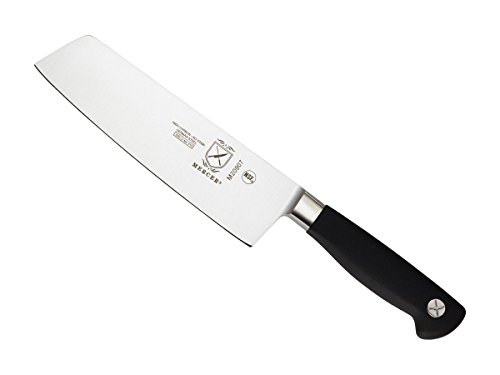
Mercer Genesis 7-inch NakiriBudget pick
|
Trying a nakiri for less | 7 in, forged German high-carbon steel | Not stated | View on Amazon |
Product images from Amazon. Weights are as stated by the maker or America’s Test Kitchen; where neither publishes one, we say so.
Our picks for the best nakiri knife
Nine nakiri made the list, from a dishwasher-safe stainless knife to a hand-forged carbon-steel blade. All are nakiri rather than single-bevel usuba, all are sold on Amazon in the United States, and all were in stock when we checked. America’s Test Kitchen’s three top-rated nakiri were not available from Amazon when we looked, so where ATK’s findings apply to the knives below, we say which ones.
1. Shun Classic Blonde 6.5-inch Nakiri – Fine Edge, Comfortable for Either Hand
The nakiri to buy if you want a proven Japanese vegetable knife that is easy to live with. Shun builds it with a VG-MAX steel cutting core clad in Damascus stainless layers, sharpened to 16 degrees per side, and lists it at 6.5 inches and 7.6 ounces with a full composite tang. It is handcrafted in Japan. The link is to the Blonde version (model DM0728W), which pairs the same Classic blade with a light-colored Pakkawood handle; the weight above is Shun’s figure for the Classic nakiri.
America’s Test Kitchen recommended the Shun Classic nakiri in its review of the knife type. ATK weighed it at 7⅜ ounces with a 2.1 mm spine, a little heavier than the 5 to 6 ounce knives its testers liked best, but still well short of the heavy models they found tiring. For a cook dicing a dozen onions for a pot of frijoles charros or shredding cabbage for tostadas, that bit of extra weight helps the blade fall through dense vegetables.
The D-shaped Pakkawood handle is the other reason it tops this list. Shun says it suits both left- and right-handed cooks, and the double-bevel edge means it cuts straight for either hand, unlike a single-bevel usuba. The tall, flat blade scoops diced pico de gallo off the board in one move.
Look after it as you would any hard Japanese blade: wash and dry it by hand, and use it on a wood or plastic board, never glass or stone. Shun covers it with a limited lifetime warranty.
Why we like it
- Recommended by America’s Test Kitchen
- VG-MAX core with Damascus cladding, handcrafted in Japan
- Fine 16-degree edge on each side
- D-shaped handle suits left- and right-handed cooks
- Limited lifetime warranty (Shun)
Key specifications
| Model | DM0728W (Blonde handle) |
|---|---|
| Blade length | 6.5 in (165 mm) |
| Steel | VG-MAX core, Damascus stainless cladding |
| Bevel | Double, 16° per side |
| HRC | Not stated by Shun |
| Handle | D-shaped ebony-finish Pakkawood |
| Weight | 7.6 oz (Shun); 7⅜ oz (ATK) |
| Warranty | Limited lifetime |
Why we recommend it
Choose it if you want one dependable vegetable knife with a fine edge, a comfortable handle and independent backing, and you are happy to hand wash it.
Skip it if you prefer a very light knife. ATK’s favorite nakiri weighed closer to 5 ounces, and the Global G-5 or Mac below are lighter.
Pros and cons
Pros
- Very sharp, fine edge
- Works for either hand
- Independent recommendation
- Lifetime warranty
Cons
- Heavier than ATK’s favorites
- Hard edge can chip if misused
- Hand wash only
2. Mac Professional 6.5-inch Nakiri – Light, Thin and Precise

Mac’s Professional Series nakiri is a lighter, thinner alternative to the Shun. Mac lists it at 6.5 inches long, 1.85 inches tall and 2.5 mm thick, with a total weight of 5.6 ounces, right in the 5 to 6 ounce range that America’s Test Kitchen’s testers preferred for long vegetable prep.
Mac itself calls this knife a “Japanese vegetable cleaver” and describes it as an usuba with a “thin, double-beveled edge”, which is a good example of how loosely the names are used outside Japan. By shape and edge it is a nakiri: double bevel, flat edge, square tip. The Amazon listing gives the steel as molybdenum steel and the handle as Pakkawood, and says it is made in Japan.
A light, thin blade is the right tool for fine work: shaving radishes for a pozole garnish, cutting jalapeños into neat rings, or slicing a cucumber paper-thin. It is less suited to dense winter squash, where ATK found thicker spines helped.
The listing says hand wash only and not dishwasher safe. Mac does not publish hardness or warranty terms on the product page.
Why we like it
- 5.6 oz, in ATK’s preferred weight range
- Thin 2.5 mm blade, double beveled (Mac)
- Molybdenum steel, made in Japan
- Pakkawood handle
Key specifications
| Model | MJU-65 |
|---|---|
| Blade length | 6.5 in, 1.85 in tall, 2.5 mm thick |
| Steel | Molybdenum steel (listing) |
| Bevel | Double (Mac) |
| HRC | Not stated by Mac |
| Handle | Pakkawood |
| Weight | 5.6 oz (Mac) |
| Warranty | Not stated on Mac’s product page |
Why we recommend it
Choose it if you want a light, nimble nakiri for long prep sessions and fine slicing.
Skip it if you want hardness and warranty details in writing; Mac’s page does not give them.
Pros and cons
Pros
- Light and thin
- Made in Japan
- Comfortable Pakkawood handle
Cons
- Hardness and warranty not published
- Less heft for dense squash
- Hand wash only
3. Global G-5 7-inch Vegetable Knife – One-Piece Steel, Easy to Clean
Global’s G-5 is its classic nakiri, sold in the United States as a 7-inch vegetable knife. America’s Test Kitchen recommended it and weighed it at 6⅝ ounces with a 2 mm spine, light and thin enough for fast, fatigue-free chopping.
The listing describes a lightweight, precisely balanced knife with a blade of molybdenum/vanadium stainless steel and a stainless steel handle molded for comfort and dimpled for grip. Global calls its steel CROMOVA 18. Because the handle and blade are one seamless piece of metal, there are no rivets or wood joints to trap food, which makes it easy to wipe clean between onions and chiles.
The trade-off is grip. ATK found metal, plastic and some composite handles slick, especially when wet, and preferred textured materials such as unvarnished wood. If you prep with wet hands, dry them between jobs.
Global warns against the dishwasher, saying heat and detergents can harm its steel, and against cutting bones or frozen food. The listing offers a lifetime warranty against defects and breakage.
Why we like it
- Recommended by America’s Test Kitchen
- 6⅝ oz with a 2 mm spine (ATK)
- Seamless all-steel body, easy to clean
- Lifetime warranty against defects and breakage (listing)
Key specifications
| Model | G-5 |
|---|---|
| Blade length | 7 in (18 cm) |
| Steel | Molybdenum/vanadium stainless (CROMOVA 18) |
| Bevel | Double |
| HRC | Not stated by Global |
| Handle | Stainless steel, dimpled |
| Weight | 6⅝ oz (America’s Test Kitchen) |
| Warranty | Lifetime against defects and breakage |
Why we recommend it
Choose it if you want a light, hygienic nakiri with a longer 7-inch edge for big leaves of cabbage or lettuce, and you like Global’s all-metal design.
Skip it if you often work with wet hands; ATK found metal handles slick when wet.
Pros and cons
Pros
- Light and well balanced
- Easy to keep clean
- ATK recommended
Cons
- Metal handle can be slippery
- Not dishwasher safe
- Hardness not stated by Global
4. Tojiro DP Damascus 7-inch Nakiri – VG-10 With a Western Handle

Tojiro’s DP Damascus nakiri pairs a Japanese steel core with a Western-style riveted handle. The listing describes a thick VG-10 core clad in 37 layers of low- and high-carbon stainless steel forged into a Damascus pattern, with a bolster for heft and balance while the blade and edge stay thin.
The handle is the main difference from the Shun and Mac: black Micarta with three stainless steel rivets, the kind of handle anyone used to German knives will recognize. The 7-inch blade is a little longer than the Japanese standard of 165 mm, which helps with wide vegetables like eggplant or a whole head of romaine for tacos dorados.
The listing says the shape makes it easier to cut straight slices and describes it as great for vegetables, and Tojiro covers it with a limited lifetime warranty against defects, according to the listing. Tojiro does not publish the weight or hardness on the listing; retailers’ figures differ, so we leave them as not stated.
As with any VG-10 blade, wash it by hand, dry it right away and keep it off bones and frozen food.
Why we like it
- VG-10 core with 37-layer Damascus cladding
- Riveted Micarta handle with a bolster
- 7-inch blade for wide vegetables
- Made in Japan, limited lifetime warranty (listing)
Key specifications
| Model | F-660 |
|---|---|
| Blade length | 7 in (180 mm) |
| Steel | VG-10 core, 37-layer stainless Damascus |
| Bevel | Double (standard nakiri edge; not specified) |
| HRC | Not stated on the listing |
| Handle | Micarta, three stainless rivets, bolster |
| Weight | Not stated |
| Warranty | Limited lifetime against defects |
Why we recommend it
Choose it if you want a Japanese steel core and a Western-style riveted handle, with a longer blade than most nakiri.
Skip it if you want published weight and hardness, or a lighter knife; the bolster adds heft.
Pros and cons
Pros
- VG-10 core
- Familiar Western handle
- Longer blade
Cons
- Weight and HRC not published
- Bolster makes full-edge sharpening harder
- Hand wash only
5. Miyabi Kaizen II 6.5-inch Nakiri – Hard FC61 Steel, Very Fine Edge

Miyabi, Zwilling’s Japanese brand, makes this nakiri in Seki. The listing describes an FC61 steel core with fine carbide distribution, protected by 48 layers of Damascus steel, hardened to 61 Rockwell and double ice-hardened by Zwilling’s FRIODUR process. Zwilling’s own page gives the hardness as 60 to 62 HRC and the weight as 0.47 pounds, about 7.5 ounces.
The edge is the headline. The listing says it is hand-honed by the Honbazuke method to 9.5 to 12 degrees, noticeably more acute than the Shun’s 16 degrees. A very fine edge glides through soft, slippery vegetables like ripe tomatoes and tomatillos without crushing them, which is exactly what you want for a clean salsa fresca.
The black Pakkawood handle has a traditional Japanese D shape and, according to the listing, a thicker, rounded bolster for comfort and balance. The listing describes an authentic, thin Japanese blade profile.
Such a fine, hard edge is less forgiving: it needs a wood or soft plastic board and careful hand washing, and it should never touch bone, frozen food or a glass board. Miyabi’s warranty terms are not on the listing.
Why we like it
- FC61 core, 60–62 HRC (Zwilling)
- Honbazuke edge at 9.5 to 12 degrees, per the listing
- 48-layer Damascus cladding
- Handcrafted in Seki, Japan
Key specifications
| Model | 34685-173 |
|---|---|
| Blade length | 6.5 in |
| Steel | FC61 core, 48-layer Damascus |
| Bevel | Double, 9.5–12° (listing) |
| HRC | 60–62 (Zwilling); 61 (listing) |
| Handle | Black Pakkawood, D-shaped |
| Weight | 0.47 lb (Zwilling) |
| Warranty | Not stated on the listing |
Why we recommend it
Choose it if you want the sharpest edge on this list for soft produce and precise cuts, and you will treat it with care.
Skip it if you want a forgiving knife; a 61 HRC edge at under 12 degrees can chip if it twists in a squash or hits a hard board.
Pros and cons
Pros
- Extremely fine edge
- Hard, edge-holding steel
- Made in Japan
Cons
- More fragile edge
- Warranty not on listing
- Hand wash only
6. Yoshihiro VG10 Hammered Damascus Nakiri, 6.5-inch – Traditional Wa Handle and Saya
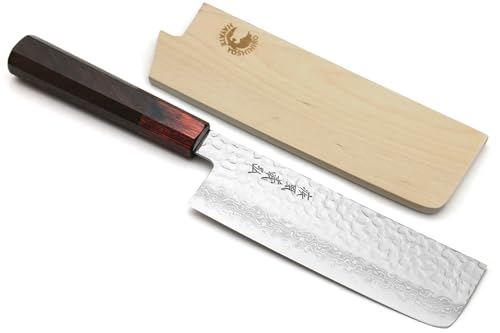
Yoshihiro’s VG10 nakiri is the most traditional-looking stainless knife on this list. The listing gives the specifications plainly: VG10 stainless blade, double edged, 46 layers of hammered Damascus, HRC 60, an octagonal Japanese wa-style handle, and a natural magnolia wood saya (sheath), made in Japan.
A wa handle is light, so the balance sits forward in the blade, which many cooks find helps a nakiri fall cleanly through vegetables. America’s Test Kitchen also found unvarnished wood handles among the easiest to grip, and its top-rated nakiri all used wood. The hammered finish, the listing says, reduces friction and keeps food from sticking to the blade.
Yoshihiro describes the nakiri the way a kitchen uses it: a flat edge that meets the board along its whole length, so you avoid cuts where ingredients are still “hanging by a string”. That matters for fine brunoise of onion and chile for a salsa.
The care instructions are traditional too: sharpen only on water whetstones, hand wash and dry immediately, especially after acidic ingredients such as lime and tomato, and do not use it on bones, nutshells or frozen foods. Weight and warranty are not stated.
Why we like it
- VG10 steel at HRC 60, double edged (listing)
- Octagonal wa handle, light and forward-balanced
- Magnolia saya included
- Hammered finish to reduce sticking
Key specifications
| Model | NSUS160SH |
|---|---|
| Blade length | 6.5 in (165 mm) |
| Steel | VG10, 46-layer hammered Damascus |
| Bevel | Double |
| HRC | 60 (listing) |
| Handle | Octagonal rosewood wa handle |
| Weight | Not stated |
| Warranty | Not stated |
Why we recommend it
Choose it if you want a traditional Japanese handle and sheath with the convenience of stainless steel, and you are willing to sharpen on whetstones.
Skip it if you want a full-tang Western handle or a published warranty.
Pros and cons
Pros
- Light wa handle
- Saya included
- Stain-resistant VG10
Cons
- Whetstone sharpening only
- Weight and warranty not stated
- Wooden handle needs hand care
7. Yoshihiro Kurouchi Blue #2 Nakiri, 6.5-inch – Carbon Steel Core, Stainless Outside
For cooks who want the edge of carbon steel without the constant care, this is the nakiri to look at. The listing describes a Blue Steel #2 core at HRC 62 to 63, prized for edge retention, clad in stainless steel with a black-forged kurouchi finish. Only the very edge is reactive carbon steel; the rest of the blade resists rust.
That construction matches what America’s Test Kitchen found in its nakiri review: its testers had no preference between carbon and stainless steel, because the carbon-steel models were clad in stainless, so only the edges were prone to rust, and they were easy to maintain if wiped dry after use. Two of the nakiri ATK recommended, including one of its top-rated picks, used stainless-clad carbon cores this way.
The handle is an octagonal ebony wa handle, and the blade is double edged, made in Japan. The saya is optional and sold separately. Carbon steel will darken and develop a patina, especially after cutting lime, tomato and onion, which is normal.
Yoshihiro’s care advice: sharpen on water whetstones, hand wash and dry immediately, oil the edge regularly to prevent oxidation, and never cut bones, nutshells or frozen food.
Why we like it
- Blue Steel #2 core at HRC 62 to 63 (listing)
- Stainless cladding limits rust to the edge
- Kurouchi black-forged finish, made in Japan
- Ebony octagonal handle
Key specifications
| Model | YMWANA165EH |
|---|---|
| Blade length | 6.5 in (165 mm) |
| Steel | Blue Steel #2 core, kurouchi stainless cladding |
| Bevel | Double |
| HRC | 62–63 (listing) |
| Handle | Octagonal ebony wa handle |
| Weight | Not stated |
| Warranty | Not stated |
Why we recommend it
Choose it if you sharpen on stones and want the longest-lasting, keenest edge here, with stainless cladding to keep maintenance reasonable.
Skip it if you leave knives wet on the counter; the carbon edge will rust, and the hard steel needs gentle handling.
Pros and cons
Pros
- Excellent edge retention
- Only the edge can rust
- Handmade in Japan
Cons
- Edge needs drying and oiling
- Saya sold separately
- Weight and warranty not stated
8. Kai Seki Magoroku Moegi Nakiri, 6.5-inch – Made in Japan and Dishwasher Safe
Kai’s Seki Magoroku Moegi is an everyday Japanese kitchen knife rather than a showpiece. The listing describes a 165 mm (6.5-inch) blade of three-layer stainless steel with a molybdenum-vanadium stainless core, and a heat-resistant resin handle. It is made in Japan.
The rare feature is in the title: it is dishwasher safe. Kai lists the handle materials as polypropylene and nylon with stated heat limits, so it is built for machine washing in a way that wood-handled Japanese knives are not. For a family kitchen where knives do end up in the dishwasher, that is a real advantage, though any edge lasts longer washed by hand.
The listing calls it a right-handed knife that can be used by left-handed cooks, and the overall size is about 29 cm long. Kai’s listing also reminds owners to remove dirt and moisture after use, since leaving it wet can cause rust or tarnish even on stainless.
Kai does not state the weight, hardness or warranty on the listing, and Japanese retailers we checked do not give the weight either.
Why we like it
- Dishwasher safe, per Kai’s listing
- Three-layer stainless with a molybdenum-vanadium core
- Made in Japan
- Resin handle with stated heat resistance
Key specifications
| Model | AE-2904 |
|---|---|
| Blade length | 6.5 in (165 mm) |
| Steel | Three-layer stainless, molybdenum-vanadium core |
| Bevel | Not stated (listing: right-handed, usable by left-handers) |
| HRC | Not stated |
| Handle | Polypropylene and nylon resin |
| Weight | Not stated |
| Warranty | Not stated |
Why we recommend it
Choose it if you want a genuine Japanese-made nakiri that can go in the dishwasher, for a busy household or as a second vegetable knife.
Skip it if you want detailed specs; Kai’s listing omits weight, hardness and warranty.
Pros and cons
Pros
- Dishwasher safe
- Made in Japan
- Low maintenance
Cons
- Few published specs
- Plain resin handle
- Can still tarnish if left wet
9. Mercer Genesis 7-inch Nakiri – Forged German Steel on a Budget
Mercer’s Genesis nakiri is a German-steel take on the Japanese shape, and the least expensive way on this list to find out whether a nakiri suits you. The listing describes a knife precision-forged from high-carbon German steel with a taper-ground edge, and a non-slip ergonomic handle that stays secure even with wet hands.
German steel is softer and tougher than the Japanese steels above, which has two consequences. The edge will not stay as keen for as long, but it is less likely to chip if it meets a squash seed or a hard board, and it is easy to restore with a honing steel. For a cook who chops onions, peppers and cilantro every day and does not want to think about the knife, that is a fair trade.
The grippy handle is a real advantage at the prep table; America’s Test Kitchen found slick handles a problem with wet produce. The 7-inch blade gives a bit more length than the 165 mm Japanese standard.
Mercer’s care instructions: wash by hand with warm water and mild soap, rinse and dry with a soft towel, never in the dishwasher, and do not soak it. The listing offers a lifetime warranty. Mercer does not state weight or hardness.
Why we like it
- Precision-forged high-carbon German steel
- Non-slip handle for wet hands
- Tough, easy-to-hone edge
- Lifetime warranty (listing)
Key specifications
| Model | M20907 |
|---|---|
| Blade length | 7 in |
| Steel | High-carbon German steel, forged |
| Bevel | Double, taper ground |
| HRC | Not stated |
| Handle | Non-slip ergonomic handle |
| Weight | Not stated |
| Warranty | Lifetime (listing) |
Why we recommend it
Choose it if you want to try a nakiri without much outlay, or need a tough vegetable knife for a busy kitchen.
Skip it if you want a thin, very sharp Japanese edge; a German blade feels heavier through vegetables and dulls sooner.
Pros and cons
Pros
- Budget friendly
- Forgiving edge
- Secure grip
Cons
- Dulls sooner than Japanese steel
- Weight not stated
- Hand wash only
Nakiri, usuba or santoku: which vegetable knife?
The three knives look related and do overlapping jobs, but the edge is what separates them.
- Nakiri is a double-bevel knife, ground and sharpened on both sides, with a straight edge and a square tip. Knifewear’s comparison calls it “a workhorse knife, every home can use”, suited to left- and right-handed cooks, with average sharpening difficulty. Every pick on this page is a nakiri.
- Usuba is a single-bevel knife, ground on one side only. Knifewear rates it “expert” to sharpen, notes that it is made for one hand, so a left-handed cook needs a left-handed usuba, and describes it as a tool for paper-thin slicing and the rotary peeling Japanese chefs use for garnishes. When we checked, every true single-bevel usuba on Amazon from makers such as Yoshihiro and Masamoto was down to its last few units, so none made this list. Note that some makers, Mac among them, use “usuba” for knives that are actually double beveled.
- Santoku has a double-bevel edge like a nakiri but with a curved belly and a pointed, sloping tip. It handles meat and fish as well as vegetables and allows a slight rocking cut. If you want one general-purpose Japanese knife, a santoku is the better first buy; see our best santoku knife guide.
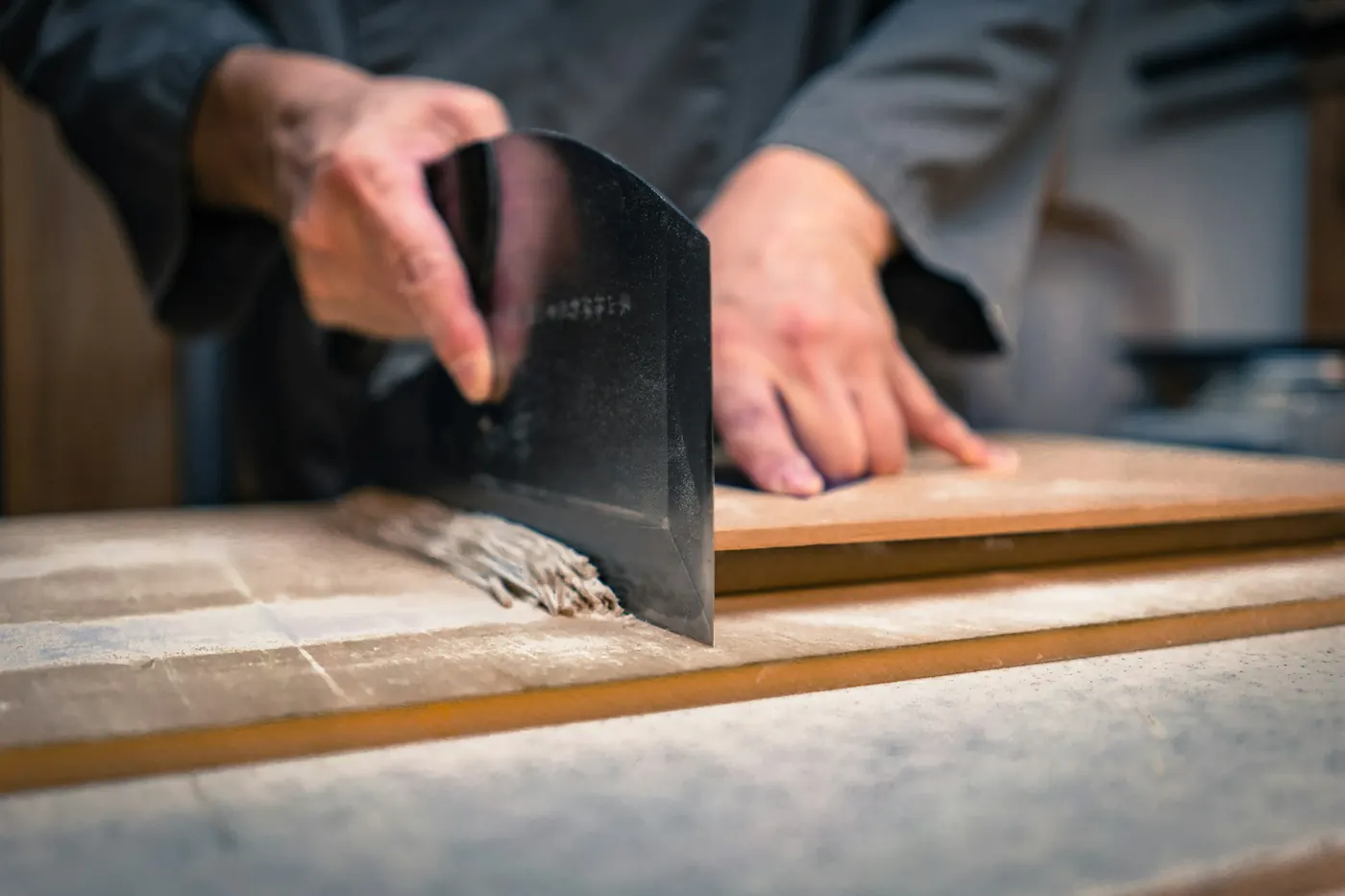
A nakiri is also not a cleaver. America’s Test Kitchen’s guide to buying one is blunt: the blade is thin and brittle, so avoid “hacking up chicken parts”, bone-in proteins and frozen food. If you need a blade for bone, see our guide to the best cleaver, which covers both meat cleavers and the larger Chinese vegetable cleaver.
How to choose a nakiri knife
Weight
America’s Test Kitchen’s testers preferred nakiri of about 5 to 6 ounces, which reduced arm fatigue during long prep; their least favorite models weighed nearly twice as much. The Mac (5.6 oz) and Global (6⅝ oz) are the lightest here; the Shun is a little heavier.
Blade thickness and length
Thin blades performed best in ATK’s review, because thick spines wedged into food, though a thicker spine helped with dense squash. ATK’s testers preferred blades of about 6.5 inches, long enough for big peppers and greens in a single stroke, while a 6-inch blade gave more control for dicing onions.
Steel: stainless or carbon
ATK’s testers had no preference between carbon and stainless steel, because the carbon-steel models were clad in stainless and only the edges could rust. Choose stainless (Shun, Global, Mac, Kai) for low maintenance, carbon core (Yoshihiro Kurouchi) for edge retention if you will wipe and dry it every time.
Hardness and edge angle
Harder steels, such as the Miyabi’s 60 to 62 HRC or the Yoshihiro Blue #2’s 62 to 63, hold a finer edge longer but chip more easily. Softer German steel, like the Mercer’s, is tougher and easier to hone. A finer edge angle, from Miyabi’s 9.5 to 12 degrees to Shun’s 16, cuts more cleanly but needs more care.
Handle
ATK found textured materials, especially unvarnished wood, easiest to grip, and metal, plastic and some composite handles slick when wet. Wa handles (Yoshihiro) are light and shift the balance forward; Western riveted handles (Tojiro, Mercer) feel familiar if you use German knives.
Care
Only the Kai is sold as dishwasher safe. Everything else should be hand washed and dried straight away, and Yoshihiro advises drying immediately after acidic ingredients. Keep any nakiri on wood or plastic; our best wood cutting board guide has options, and our best knife sharpener guide covers keeping a straight edge sharp.
How to use a nakiri in a Mexican kitchen
A nakiri changes your cutting technique. As ATK puts it, the straight edge means you chop up and down rather than rocking the blade from tip to heel. Lift the whole blade, let it fall through the food, and slide the food back with your guiding hand between strokes.
- Onions for pico de gallo and salsa. Halve the onion, make horizontal and vertical cuts toward the root, then chop straight down. The flat edge cuts through every layer, so there are no onion strips still joined at the bottom.
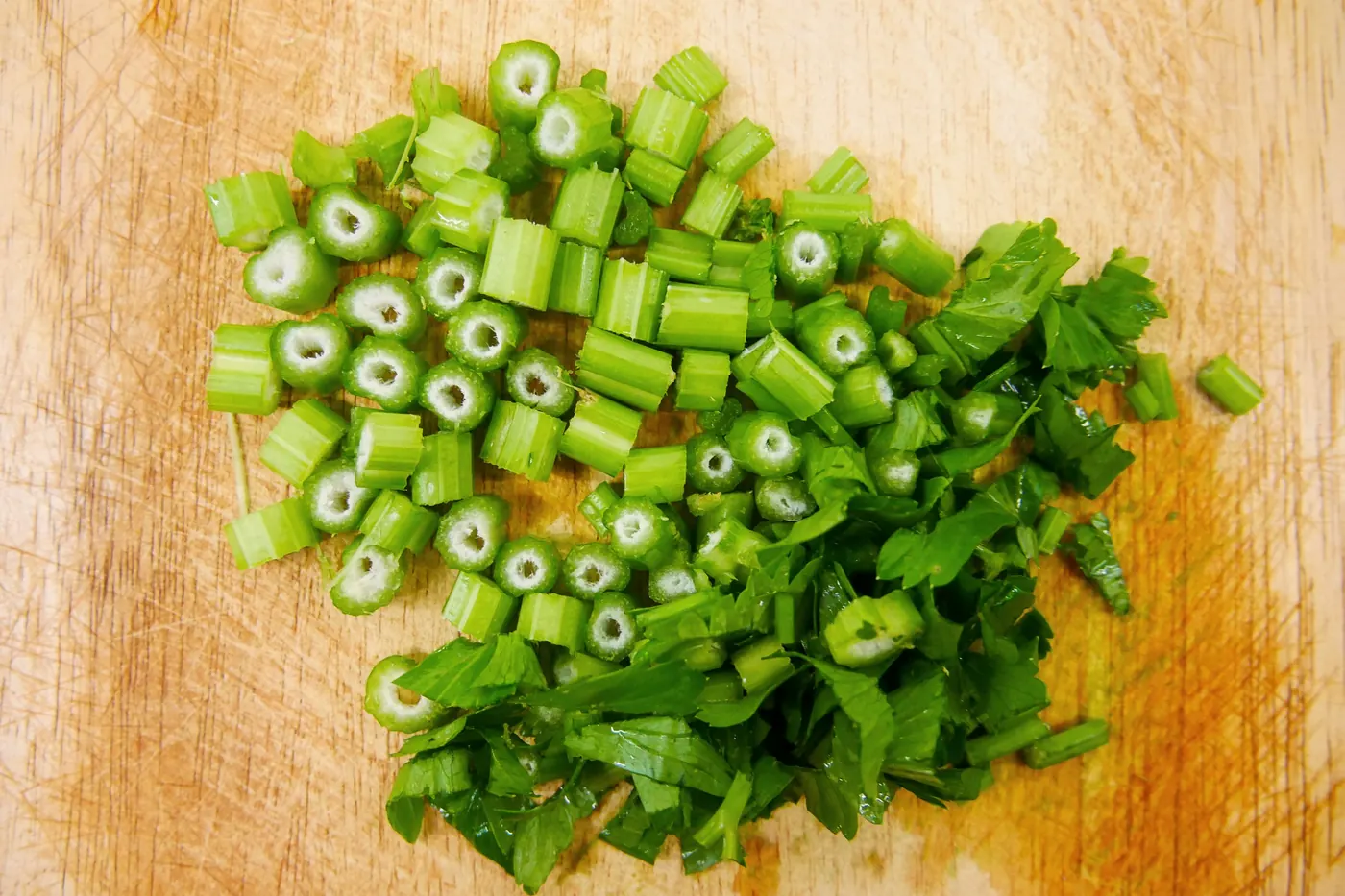
- Cilantro. Bunch the leaves and tender stems and chop straight down; a nakiri cuts herbs cleanly rather than bruising them. Our guide to Mexican herbs covers which herbs go where.
- Tomatoes and tomatillos. A sharp, thin nakiri slices ripe tomatoes without crushing them, the first step of a good salsa roja or salsa verde.
- Cabbage and radishes. Shred cabbage for tostadas and pozole, and slice radishes thin for garnish.
- Scooping. ATK notes the flat blade makes a good scoop for moving food to a bowl or pan, but do not drag the edge across the board, which dulls it.
How we picked these nine nakiri knives
We started from what a prep station asks of a vegetable knife: a thin, flat edge that meets the board along its length, a weight that does not tire the arm, a handle that grips when wet, and steel that holds an edge through a long session of onions and herbs. We then narrowed the field to double-bevel nakiri sold on Amazon in the United States and in stock when we checked, from identifiable makers, and confirmed specifications on the maker’s site where possible (Shun, Mac, Zwilling for Miyabi) or the brand’s own Amazon listing, saying which in each review. We used America’s Test Kitchen’s nakiri review and its guide to buying a nakiri for how these knives behave, and Knifewear’s comparison for nakiri versus usuba; we read all three. ATK’s three top-rated nakiri, from Masamoto, Sakai Kikumori and Masutani, were not available in stock on Amazon, and no true single-bevel usuba was either. We did not use these knives ourselves, and we passed over marketplace brands whose steel and “Damascus” claims we could not verify.
Nakiri questions, answered
What is the best nakiri knife for home use?
The Shun Classic 6.5-inch nakiri suits most home cooks: a fine edge, a handle for either hand and a recommendation from America’s Test Kitchen. If you want something lighter, the Mac Professional or Global G-5; if you want dishwasher-safe, the Kai Moegi.
What did America’s Test Kitchen pick as the best nakiri?
ATK’s winner was the Masamoto Sohonten Wa-Nakiri, with the Sakai Kikumori Aogami 2 and Masutani VG1 also highly recommended. Those were not in stock on Amazon when we checked. Among the knives ATK recommended that are available, the Shun Classic and Global G-5 are on this list.
What is the best nakiri knife for the money?
The Mercer Genesis is the least expensive way to try the shape, with a tough German edge and a lifetime warranty. For a Japanese-made knife on a moderate budget, look at the Kai Moegi or the Tojiro DP.
Is a nakiri worth it if I have a chef’s knife?
If you cut a lot of vegetables, yes. A nakiri’s flat edge and up-and-down motion make faster, cleaner work of onions, herbs and cabbage. It does not replace a chef’s knife for meat or for rocking cuts; our best chef knife guide covers that.
Can a nakiri cut meat?
Boneless meat, yes. ATK says a nakiri can handle “pretty much everything else”, including thick steaks, as long as you avoid heavy-duty tasks. Never use it on bone or frozen food.
Should I buy a single-bevel usuba instead?
Probably not for a home kitchen. Knifewear rates the usuba “expert” to sharpen and notes it is made for one hand, while the double-bevel nakiri suits everyone. An usuba is a specialist’s knife for paper-thin slicing and garnishes.
Our final pick for vegetable prep
Buy the Shun Classic nakiri if you want one excellent vegetable knife that works for either hand. Choose the Mac or Global G-5 for less weight, the Yoshihiro Kurouchi for a carbon-steel edge, the Kai Moegi for the dishwasher, and the Mercer Genesis to try the shape on a budget. For the rest of the knife block, see our guides to the best Japanese knife and the best knife set, and for bigger blades, the best cleaver.
Want one made in Japan? See our guide to the best Japanese nakiri knives.
On a budget? See our guide to the best cheap nakiri knives.
Related guide: Nakiri vs santoku.
And if you would rather someone else chopped the onions tonight, see the menu or call to order.