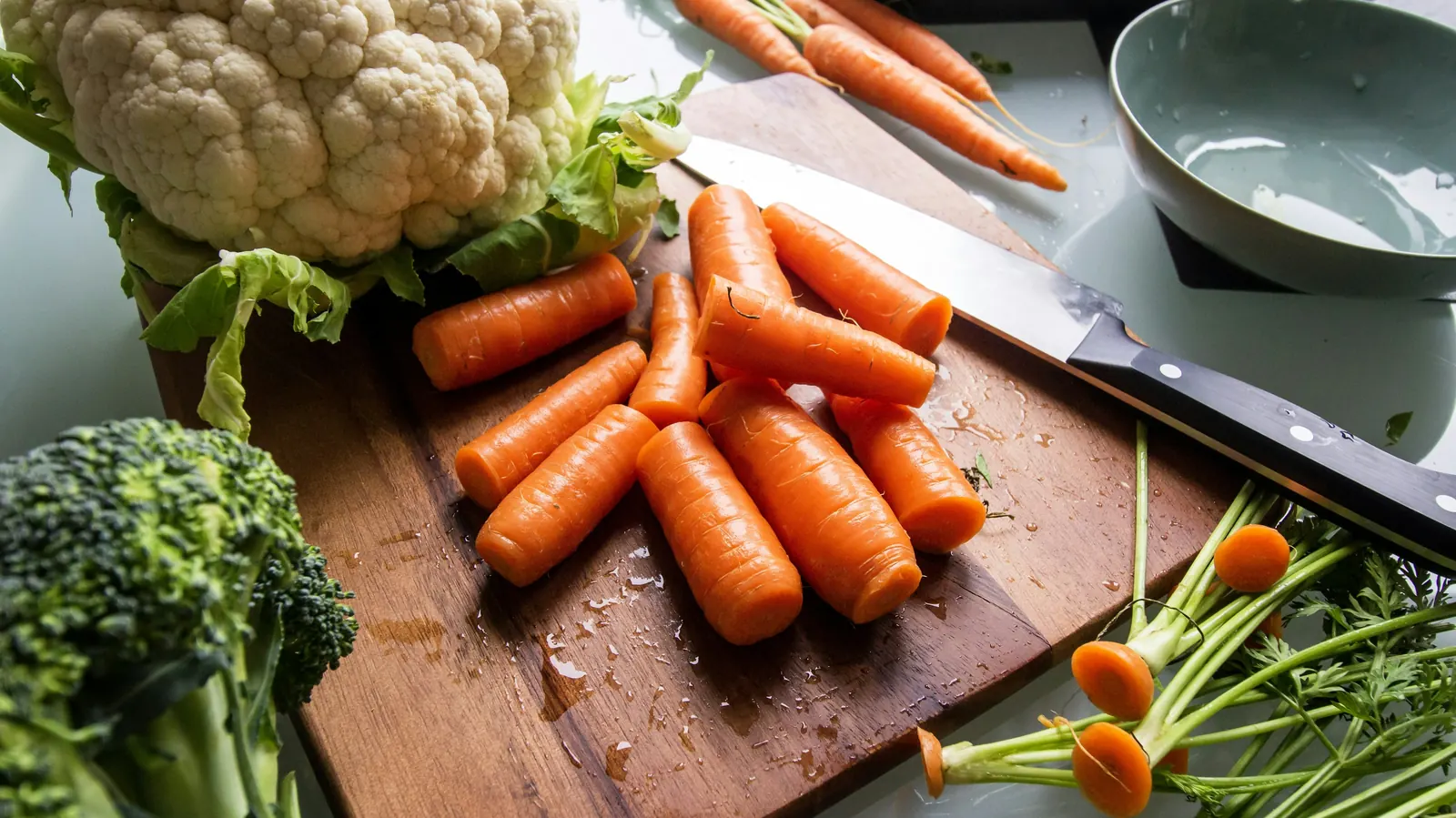
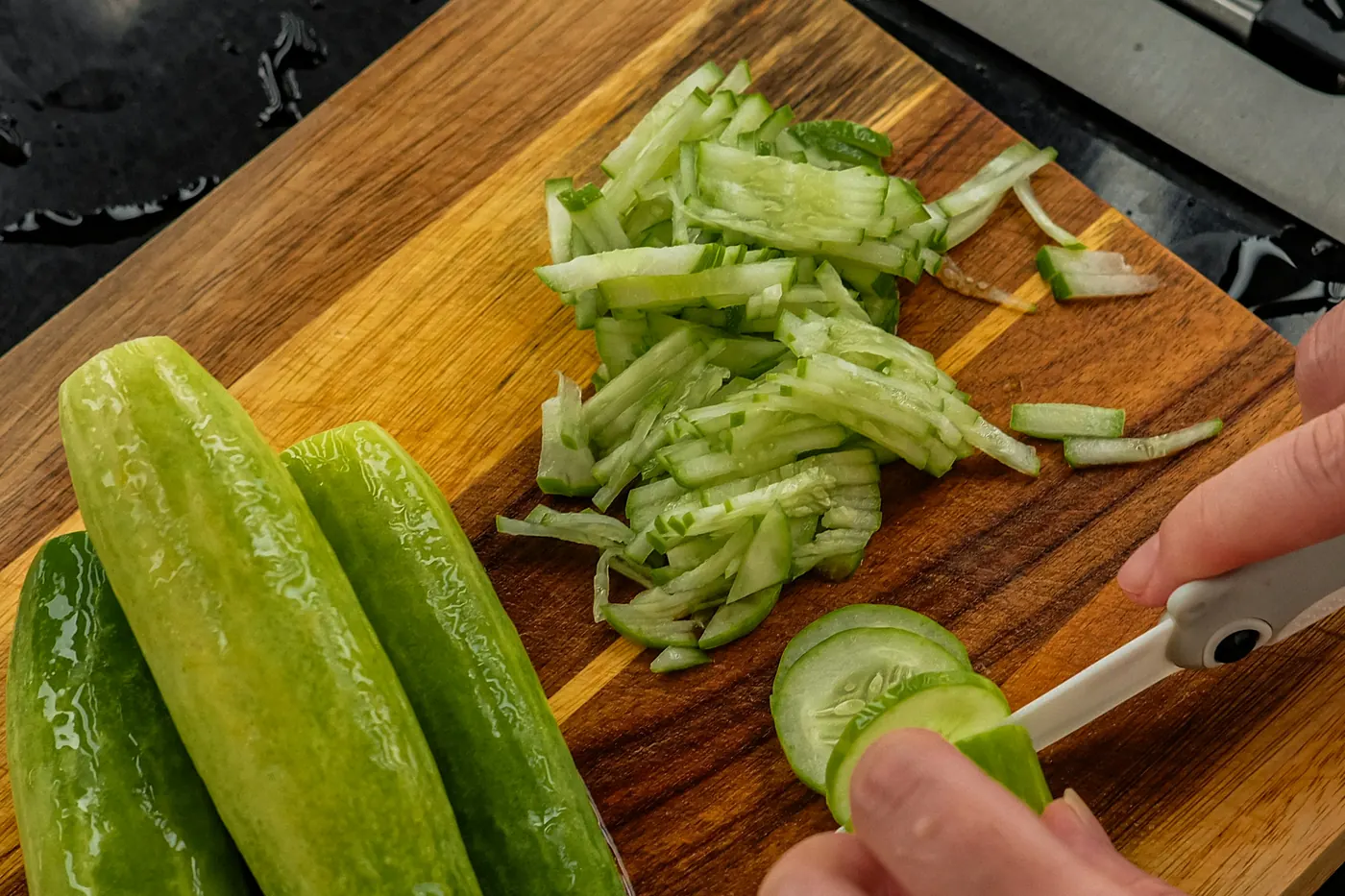
A santoku is the Japanese home cook’s all-purpose knife: a shorter, taller blade than a Western chef’s knife, a flat edge for push cuts, and a rounded tip that drops down to meet it. In a Mexican kitchen it is the knife for the daily jobs, dicing onion and tomato for pico de gallo, mincing garlic and serranos, slicing cucumbers and radishes for garnish, and cutting chicken thighs into strips for tacos.
This guide is for the cook who wants a santoku actually made in Japan, and wants to know what the steel, the bevel and the handle style change. Our best santoku knife guide covers the whole category, German and budget knives included. Here every pick is made in Japan by an identifiable maker, and none of them repeats a knife from that guide or from our other Japanese knife guides.
Julia’s earns a commission on purchases made through links on this page, at no cost to you. Recommendations are based on what a restaurant kitchen looks for, product specifications and verified buyer reports.
Quick verdict: which Japanese santoku to buy
For most cooks, the best santoku knife Japanese makers sell is the Shun Premier 7-inch santoku: a VG-MAX core in hammered Damascus cladding, a 16-degree edge, a comfortable Western-style handle and Shun’s free sharpening service. If you want the hardest, thinnest edge here, choose the Miyabi Mizu SG2 (63 Rockwell, 12-degree edge). For a traditional octagonal wa handle and carbon steel, the Yoshihiro Kurouchi Blue #2 is the pick, and for a simple, light working knife the MAC Superior 6.5-inch is the best value.
The table compares our five standout picks, one for each kind of cook. All eight knives we recommend are reviewed in full below it.
Five Japanese santokus side by side
Blade steel, handle style and edge as each maker or listing states them.
| Santoku | Best for | Blade steel | Handle | Buy on Amazon |
|---|---|---|---|---|

Shun Premier 7-inch SantokuBest overall
|
Most home cooks | VG-MAX core, 68-layer Damascus, hammered | Contoured Pakkawood (Western style) | View on Amazon |
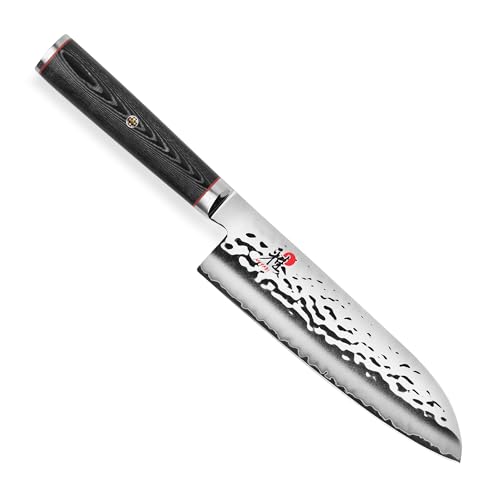
Miyabi Mizu SG2 7-inch SantokuBest powder steel
|
Fine slicing, long edge life | SG2 powder steel, 63 HRC | D-shaped Micarta with bolster | View on Amazon |

Yoshihiro Kurouchi Blue #2 6.5-inch SantokuBest wa handle
|
Carbon steel fans, light grip | Blue Steel #2 core, stainless clad, 62–63 HRC | Octagonal ebony wa handle | View on Amazon |

MAC Superior 6.5-inch SantokuBest value
|
A light, simple everyday knife | High-carbon, rust-resistant, 2 mm thick | Pakkawood (Western style) | View on Amazon |

Kai Seki Magoroku Damascus 5.7-inch Small SantokuBest small santoku
|
Small hands, small boards | Stainless composite, Damascus pattern | Laminated wood, triangular section | View on Amazon |
Product images from Amazon. Specifications as stated by each maker or listing; check the listing before you buy.
Steel, bevel and handle: what makes a santoku Japanese
Plenty of knives called santoku are made in Germany, China or elsewhere. A Japanese-made santoku usually differs in three ways, and they matter more than the pattern on the blade.
Harder steel. Japanese makers generally harden their blades further than German makers do. A harder edge stays sharp longer and can be ground thinner, but it is less forgiving: it can chip on bone, frozen food or a twist in a hard squash. The knives here run from about 61 to 63 on the Rockwell scale where the maker states it.
A finer edge angle. Shun sharpens to 16 degrees per side, and Miyabi and Enso to about 12. A narrower angle slices a tomato skin without pressure; it also needs a whetstone or a sharpener set to match.
Wa or yo handles. A wa handle is the traditional Japanese style: a light octagonal or D-shaped wooden handle fitted over a hidden tang, which shifts the balance toward the blade. A yo handle is Western style, full tang with riveted scales, heavier and familiar to anyone raised on German knives. Neither is better; the wa handle suits a pinch grip and a light touch, the yo handle suits cooks who like weight in the hand.
Our picks for the best santoku knife Japanese makers sell
These eight knives cover the main Japanese steels (VG10, VG-MAX, SG2, Blue #2 carbon and Ginsan), both handle styles and sizes from 5.7 to 7 inches. Each pick lists what the maker or listing states, and one honest reason to skip it.
1. Shun Premier 7-inch Santoku – Hammered Blade, Free Sharpening
Shun’s Premier line is easy to spot: a brown Pakkawood handle and a hammered, or tsuchime, finish over 68 layers of Damascus cladding. Underneath is a core of VG-MAX, Shun’s own stainless steel, sharpened to a 16-degree edge. Shun says each knife is handcrafted in Japan.
The hammered dimples are there for a reason. Shun says the tsuchime finish reduces drag and helps keep food from sticking to the blade, which is what you want when you are dicing a pile of potatoes or slicing cucumbers thin. The 7-inch blade is long enough for a whole onion and short enough to stay nimble on a small board.
The handle is contoured for a secure grip in either hand, so this is a Western-style (yo) knife with a Japanese edge, the easiest step up for a cook coming from a German chef’s knife. Shun also offers free sharpening and honing for the life of the knife, and the listing states a limited lifetime warranty.
Why we like it
- VG-MAX core with 68 layers of Damascus cladding
- Hammered finish to reduce drag and sticking, per Shun
- 16-degree edge, usable left- or right-handed
- Free sharpening service and limited lifetime warranty
Key specifications
| Model | TDM0702 |
|---|---|
| Blade length | 7 inches |
| Blade steel | VG-MAX core, 68-layer Damascus cladding, hammered |
| Hardness | Not stated on the listing |
| Edge angle | 16 degrees |
| Handle | Contoured Pakkawood (Western style) |
| Made in | Japan |
| Warranty | Limited lifetime; free sharpening |
Why we recommend it
It suits a home cook who wants one good Japanese knife for everyday prep, with a familiar handle and a maker that will sharpen it for free.
Skip it if you want a traditional wa handle or a lighter, plainer knife; the Premier is a showpiece as well as a tool.
Pros and cons
Pros
- Food-release hammered finish
- Familiar Western-style grip
- Free lifetime sharpening
Cons
- Hardness not published on the listing
- Hard edge can chip on bone or frozen food
- Hand wash only, like every knife here
2. Miyabi Mizu SG2 7-inch Santoku – Hardest, Thinnest Edge Here
Miyabi is the Japanese knife line of the Zwilling group, made in Seki, Japan. The Mizu santoku uses SG2, a micro-carbide powder stainless steel, under a hammered Damascus finish. Miyabi’s Cryodur ice-hardening brings the blade to 63 on the Rockwell scale, the highest stated hardness in this guide.
The edge is finished by Honbazuke, a three-step sharpening method Miyabi traces to Japanese sword making, to 12 degrees on each side. That is a noticeably finer edge than the 16 degrees on the Shun knives, and it is what makes a powder-steel knife glide through ripe tomatoes and paper-thin radish slices.
The handle is D-shaped Micarta, a hard resin-and-fabric composite, with a bolster and a metal end cap. The D shape is a traditional Japanese profile, so it fills the hand like a wa handle while keeping some of the weight of a Western knife. The listing states a limited lifetime warranty. A 63-hardness, 12-degree edge rewards a whetstone and careful use; keep it away from bones and frozen food.
Why we like it
- SG2 powder steel at 63 Rockwell, per Miyabi
- 12-degree Honbazuke edge
- D-shaped Micarta handle with bolster
- Made in Seki, Japan; limited lifetime warranty
Key specifications
| Model | 1012484 |
|---|---|
| Blade length | 7 inches |
| Blade steel | SG2 micro-carbide powder steel, hammered Damascus finish |
| Hardness | 63 HRC |
| Edge angle | 12 degrees, double bevel |
| Handle | D-shaped Micarta, bolster, metal end cap |
| Made in | Seki, Japan |
| Warranty | Limited lifetime |
Why we recommend it
Choose it if you already sharpen on stones, or want to, and want the longest-lasting, finest edge in a santoku.
Skip it if your knife sometimes ends up in the sink or on a frozen block of chorizo; a blade this hard is the least forgiving here.
Pros and cons
Pros
- Highest stated hardness here
- Very fine 12-degree edge
- Durable Micarta handle
Cons
- Most prone to chipping if misused
- Needs stone sharpening to keep the angle
- Weight not stated on the listing
3. Yoshihiro Kurouchi Blue #2 6.5-inch Santoku – Carbon Core, Octagonal Wa Handle
This is the most traditional knife here. Yoshihiro forges it with a core of Blue Steel #2 (Aogami #2), a Japanese carbon steel, clad in stainless steel with a black-forged kurouchi finish. The listing gives the hardness as 62 to 63 Rockwell and says the core is prized for edge retention.
The stainless cladding is the practical part. A full carbon steel knife rusts and stains quickly; here only the exposed cutting edge is reactive, so the knife is, in Yoshihiro’s words, stain resistant except along the edge. You still need to wipe it dry as you work, especially after lime, tomato or onion, and Yoshihiro says to keep it dry and oil it regularly.
The handle is an octagonal ebony wa handle, light and slim, which moves the balance toward the blade and suits a pinch grip. The 6.5-inch (165 mm) blade is double-edged, so it works for left- and right-handed cooks. This listing includes a magnetic oak saya, the wooden sheath, and Yoshihiro says the knife should be sharpened only on water whetstones.
Why we like it
- Blue Steel #2 carbon core at 62–63 HRC
- Stainless cladding limits rust to the edge
- Octagonal ebony wa handle
- Wooden saya included with this listing
Key specifications
| Model | YMWASA165EHNR |
|---|---|
| Blade length | 6.5 inches (165 mm) |
| Blade steel | Blue Steel #2 core, kurouchi stainless cladding |
| Hardness | 62–63 HRC |
| Edge angle | Double-edged; angle not stated |
| Handle | Octagonal ebony wa handle |
| Made in | Japan |
| Warranty | Not stated |
Why we recommend it
It suits a cook who wants a traditional Japanese knife, likes a light wa handle, and does not mind wiping the blade dry while cutting.
Skip it if you want a knife you can leave wet on the board; the carbon edge will rust and the cut faces of onions and limes can discolor it.
Pros and cons
Pros
- Carbon steel sharpness and edge life
- Light, traditional wa handle
- Saya included
Cons
- Edge can rust if left wet
- Whetstone sharpening only, per Yoshihiro
- Warranty not stated
4. MAC Superior 6.5-inch Santoku – Thin, Light and Plain
MAC’s Superior santoku is the plain working knife of this list. There is no Damascus pattern and no hammered finish, just a 2 mm blade of high-carbon, rust-resistant steel and a Pakkawood handle, made in Japan. MAC lists the weight at 5.4 ounces, so it is one of the lightest knives here.
The blade length is given as 6.5 inches on the Amazon listing and 6.75 inches on MAC’s own product page; either way, it is a compact santoku that suits a standard cutting board. MAC does not publish a hardness or edge angle for this knife, and retailers quote different figures, so we leave those as not stated.
This is not the MAC santoku in our main santoku guide; that one is the Professional series MSK-65, with a bolster and dimples. The Superior is the simpler, lighter series. MAC says to hand wash it, and the thin blade sharpens quickly on a stone or a pull-through sharpener set for Japanese angles.
Why we like it
- Light at 5.4 ounces, per MAC
- Thin 2 mm blade for clean cuts
- Rust-resistant high-carbon steel, made in Japan
- Simple Pakkawood handle
Key specifications
| Model | SK-65 |
|---|---|
| Blade length | 6.5 inches (listing); 6.75 inches (MAC) |
| Blade steel | High-carbon, rust-resistant; 2 mm thick |
| Hardness | Not stated by MAC |
| Edge angle | Not stated by MAC |
| Handle | Pakkawood (Western style) |
| Made in | Japan |
| Warranty | Not stated on the listing |
Why we recommend it
Buy it if you want a light, thin Japanese santoku for everyday prep and do not care about a decorative blade.
Skip it if you want published steel and hardness figures; MAC gives fewer details for this knife than Miyabi or Enso do.
Pros and cons
Pros
- Very light
- Thin, easy-cutting blade
- Made in Japan by a knife specialist
Cons
- Steel grade and hardness not published
- Blade length differs between sources
- No food-release finish
5. Enso HD 6.5-inch Santoku – VG10 Damascus With Full Specs

Enso knives are made in Seki City, Japan, and the HD santoku gives you a full set of numbers to judge it by: 37 layers of VG10 stainless Damascus with a hammered finish, 61 on the Rockwell scale, hand-ground to about 12 degrees, a 6.5-inch blade 1.75 inches tall, a 2 mm spine and a weight of 7.4 ounces.
VG10 is the stainless steel most Japanese Damascus knives are built around: hard enough to hold a fine edge, and easier to sharpen and less brittle than the powder steels. At 61 hardness the Enso sits a step below the Miyabi, which makes it a little more forgiving in a busy kitchen.
The handle is black canvas Micarta with three stainless steel rivets and an end cap, a Western-style build. The edge is double-bevel, so it works for both hands, and Enso backs its knives with a lifetime warranty.
Why we like it
- 37-layer VG10 Damascus with a hammered finish
- 61 HRC and about 12 degrees, per the listing
- Durable canvas Micarta handle
- Made in Seki City; lifetime warranty
Key specifications
| Model | 35601 |
|---|---|
| Blade length | 6.5 inches |
| Blade steel | VG10, 37-layer hammered Damascus |
| Hardness | 61 HRC |
| Edge angle | About 12 degrees, double bevel |
| Handle | Black canvas Micarta, three rivets (Western style) |
| Made in | Seki City, Japan |
| Warranty | Lifetime |
Why we recommend it
It suits a cook who wants a Damascus santoku with a fine Japanese edge and a sturdy, riveted handle, and likes to know exactly what they are buying.
Skip it if you want a light knife; at 7.4 ounces it is heavier than the MAC.
Pros and cons
Pros
- Fully published specifications
- VG10 is easy to resharpen
- Lifetime warranty
Cons
- Heavier than most here
- Shorter blade than the 7-inch picks
- Hand wash only
6. Yoshihiro Ginsan 7-inch Santoku – Carbon-Like Edge, Stainless Care

Ginsan, or silver steel, is Yoshihiro’s answer for cooks who want the feel of a traditional Japanese carbon knife without the rust. The listing describes Ginsan-ko as a blend of high carbon and stain-resistant elements, at 61 to 62 Rockwell, and the blade is clad in stainless steel with a nashiji (pear-skin) finish.
That makes it the practical choice for a Mexican kitchen, where limes, tomatoes and tomatillos are on the board every day. You still wash and dry it by hand straight away, and Yoshihiro asks for water whetstones only, but you do not need to oil the blade the way you would with the Blue #2 knife above.
Despite the traditional blade, this listing gives it a Western-style handle that runs the full length of the tang, according to Yoshihiro. The 7-inch (180 mm) blade is the longest size here, and this listing includes a wooden saya.
Why we like it
- Ginsan stain-resistant high-carbon steel, 61–62 HRC
- Stainless cladding with a nashiji finish
- Full-tang Western-style handle
- Saya included with this listing
Key specifications
| Model | TGISA180MS |
|---|---|
| Blade length | 7 inches (180 mm) |
| Blade steel | Ginsan (silver steel) core, stainless clad, nashiji finish |
| Hardness | 61–62 HRC |
| Edge angle | Not stated |
| Handle | Western style, full tang |
| Made in | Japan |
| Warranty | Not stated |
Why we recommend it
Choose it if you want a traditional Japanese steel that tolerates acidic ingredients, with a full-tang handle that feels like a chef’s knife.
Skip it if you want a wa handle; for that, the Kurouchi Blue #2 is the Yoshihiro to buy.
Pros and cons
Pros
- Stain resistant, per Yoshihiro
- Longest blade here
- Saya included
Cons
- Edge angle and weight not stated
- Whetstones only
- Warranty not stated
7. Shun Sora 7-inch Santoku – Shun’s VG10 Edge for Less

The Sora is Shun’s entry line. Shun’s Composite Blade puts a san mai VG10 edge, sharpened to 16 degrees, on a blade whose upper part is 420J stainless steel. You get Japanese cutting steel where it touches the food and a less costly steel above it, which is how Shun keeps the price down.
The hollow-ground indentations along the blade help release food and reduce friction, according to Shun. The handle is a full-tang, textured polymer blend (PP/TPE) that is easy to grip with wet hands, and it is made for left- and right-handed cooks.
Like the Premier, it is handcrafted in Japan and comes with Shun’s free sharpening and honing service, which is a real advantage on a budget knife. The listing describes a limited warranty against manufacturing defects.
Why we like it
- VG10 cutting edge at 16 degrees
- Hollow-ground indentations for food release
- Textured, full-tang polymer handle
- Free sharpening from Shun
Key specifications
| Model | VB0718 |
|---|---|
| Blade length | 7 inches |
| Blade steel | VG10 san mai edge, 420J stainless upper |
| Hardness | Not stated on the listing |
| Edge angle | 16 degrees |
| Handle | Textured PP/TPE polymer, full tang |
| Made in | Japan |
| Warranty | Limited; free sharpening |
Why we recommend it
It suits a first Japanese knife, a gift, or a second santoku for a family that cooks together, at a lower price than the Premier.
Skip it if you want a wood handle or a blade made of one steel throughout.
Pros and cons
Pros
- Japanese VG10 edge for less
- Grippy handle
- Free sharpening
Cons
- Composite blade, not one steel
- Polymer handle looks plain
- Hardness not stated
8. Kai Seki Magoroku Damascus 5.7-inch Small Santoku – Compact and Light
Kai is the Seki company behind Shun, and Seki Magoroku is its line for the Japanese home market. This small santoku has a 145 mm (5.7-inch) blade with a Damascus pattern on a stainless composite, and the listing gives the weight as 0.121 kilograms, about 4.3 ounces, the lightest knife here.
A short santoku is underrated. It is the right size for cooks with smaller hands, for a small cutting board in an apartment kitchen, and for the in-between jobs: halving limes, mincing a few cloves of garlic, slicing a jalapeño or trimming cilantro stems. Kai shapes the handle in an inverted triangle that fits the hand, in laminated reinforced wood with a stainless ferrule and butt.
The listing does not name the core steel or give the hardness or edge angle, so this is a knife to buy for its size and weight rather than its specifications. Country of manufacture is Japan.
Why we like it
- Compact 5.7-inch blade
- Lightest knife here, about 4.3 ounces
- Triangular laminated wood handle
- Made in Japan by Kai
Key specifications
| Model | AE5201 |
|---|---|
| Blade length | 5.7 inches (145 mm) |
| Blade steel | Stainless composite, Damascus pattern; core not named |
| Hardness | Not stated |
| Edge angle | Not stated |
| Handle | Laminated reinforced wood, inverted-triangle section |
| Made in | Japan |
| Warranty | Not stated |
Why we recommend it
Choose it as a first santoku for smaller hands or a small kitchen, or as a partner to a larger gyuto.
Skip it if you dice large quantities; a 5.7-inch blade means more strokes through a big onion than a 7-inch santoku.
Pros and cons
Pros
- Very light and nimble
- Good size for small boards
- Japanese home-market line
Cons
- Core steel not named
- Short for big prep jobs
- Warranty not stated
How to choose a Japanese santoku
Every knife above will dice an onion. These are the differences that decide which one suits you.
1. Stainless, semi-stainless or carbon steel
VG10 and VG-MAX are stainless, hold an edge well and forgive a wet board. SG2 is a powder steel that can be hardened further for a longer-lasting edge. Blue #2 is a carbon steel: very sharp and easy to sharpen, but it rusts and darkens with acidic food. Ginsan sits between them. If limes and tomatoes are on your board every day, start with stainless.
2. Hardness
Higher numbers mean longer edge life and more risk of chipping. Around 61 is a good everyday balance; 63 rewards careful cooks who sharpen on stones.
3. Edge angle
A 12-degree edge feels sharper than a 16-degree one but needs more care. Match your sharpener to the angle; our guide to the best whetstone covers the stones that hold these edges.
4. Wa or yo handle
Choose a wa handle for lightness, a pinch grip and a blade-forward balance. Choose a yo handle for weight, a full tang and a feel close to a German knife. D-shaped handles, like the Miyabi’s, sit between the two.
5. Blade length
Seven inches is the standard santoku, enough for a large onion or a pile of tomatoes. Shorter blades, around 5.5 to 6.5 inches, are easier on small boards and in small hands.
6. Board and storage
Hard Japanese edges chip on glass, stone and bamboo boards. Use a softer wood or rubber board, as our guide to cutting boards for Japanese knives explains, and store the knife in a block, on a strip or in a saya rather than loose in a drawer.
How we chose these eight santokus
We did not cut with these knives. We started from what a working kitchen asks of a prep knife (a sharp, durable edge, a secure grip and easy care around acidic ingredients), then read each maker’s specifications and Amazon listing, checked that every knife was made in Japan and in stock on Amazon when we wrote this, and compared steel, hardness, edge angle, handle and warranty. Where a maker does not state a figure, the specifications say “not stated” rather than repeat a number from a third-party seller.
We left out every santoku already recommended in our best santoku knife guide and our best Japanese knife guide, so you can read them together without repeats. We also passed over knives listed with only a few units left, including several Miyabi, Misono, Masamoto and Global santokus, and knives from sellers that say “Japanese” in the title but do not state where the knife is made.
Japanese santoku questions, answered
Which Japanese santoku knife brands are worth buying?
Look for a maker that states where the knife is made and what the steel is. Shun and Kai, Miyabi, Enso, MAC and Yoshihiro all make the santokus above in Japan and publish their steel; several, including Shun and Miyabi, also publish edge angles and offer long warranties.
Santoku or gyuto?
A santoku is shorter and flatter, good for push cuts and chopping vegetables. A gyuto is the Japanese chef’s knife, longer and with more curve for rocking and slicing large cuts of meat. Our guide to the best gyuto covers that shape, and for vegetables alone see the best Japanese nakiri.
Do Japanese santokus need special care?
Hand wash and dry them straight away, never put them in the dishwasher, avoid bones and frozen food, and use a wood or rubber board. Carbon steel blades, like the Blue #2, also need to be wiped dry during use and oiled now and then.
What size Japanese santoku is best?
Seven inches suits most cooks. Choose 6.5 inches or less for smaller hands, a small board, or as a second knife.
Our final pick for a Japanese-made santoku
Buy the Shun Premier if you want one Japanese santoku that does everything, with a familiar handle and free sharpening. Choose the Miyabi Mizu for the finest edge, the Yoshihiro Kurouchi Blue #2 for a traditional wa handle and carbon steel, the MAC Superior for a light, plain knife, and the Kai small santoku for small hands and small boards.
For the full range, including German and budget santokus, go back to our guide to the best santoku knife, and for what to do with all that diced tomato and onion, read salsa roja vs salsa verde. If you would rather leave the chopping to us tonight, see the menu or call to order.