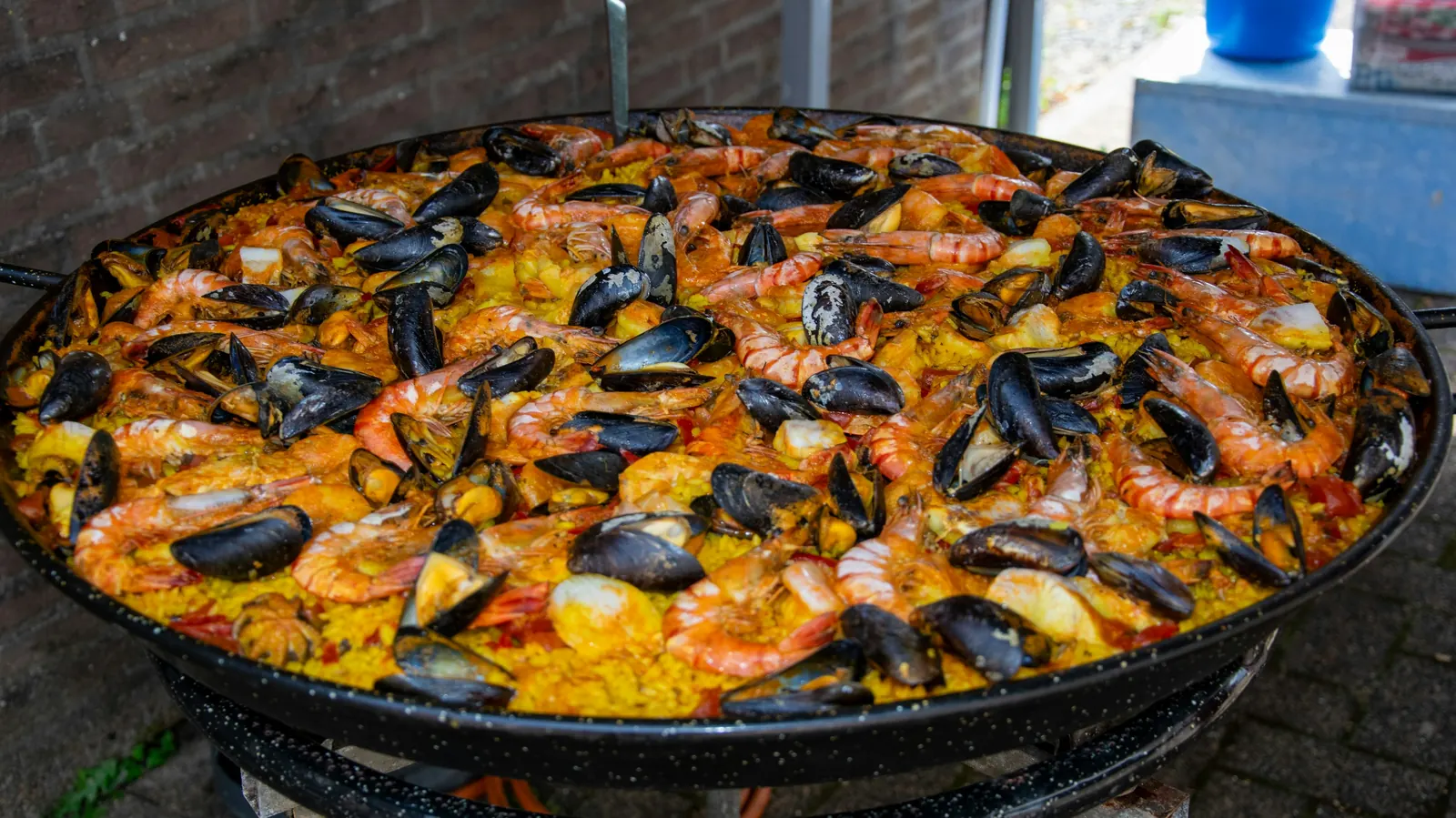
People book a table at a “Spanish restaurant” and turn up expecting tacos. It happens constantly, and the two cuisines are about as similar as English and American food.
They share a language and roughly five hundred years of history. Almost nothing else.
The short answer
Mexican food is built on corn, chiles, beans, tomatoes and avocado — all native to the Americas. Spanish food is built on wheat, olive oil, pork, saffron, garlic and rice. Spain gave Mexico cattle, pigs, wheat, cheese and citrus; Mexico gave Spain the tomato, the chile and chocolate. They are two cuisines that fed each other, not two versions of one thing.
The exchange went both ways
The University of New Hampshire’s history of the Columbian Exchange opens by asking you to picture a burrito, and then takes it apart.
Its point is that a single dish contains both halves of the exchange. The beans, tomatoes, peppers, avocado and corn came from the Americas. The beef and cheese came from Europe. Rice culture arrived with enslaved Africans. And the flour tortilla, as the same page puts it, imitates the smaller maize tortillas of Mesoamerica while reflecting the European preference for wheat.
Going the other direction, it lists maize, turkeys, potatoes, tomatoes, beans, squash and peppers traveling east to Europe, Africa and Asia — and wheat, pigs, horses and cattle arriving in the Americas.
Which reframes the question. Spanish food without the tomato and the chile is barely recognizable; Mexican food without pork, cheese and wheat is equally so.
Side by side
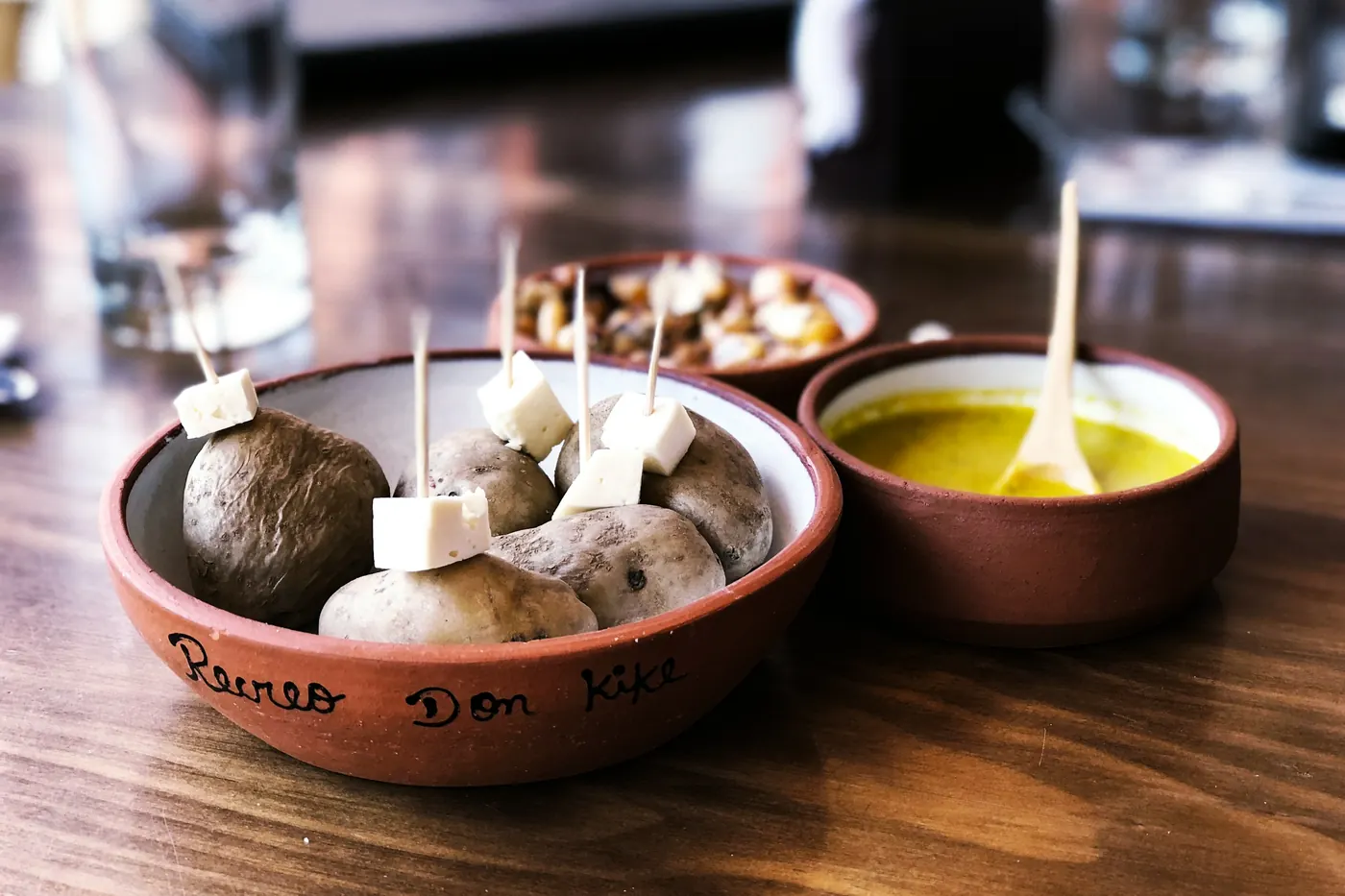
| Mexican | Spanish | |
|---|---|---|
| Staple grain | Corn, as tortillas and masa | Wheat as bread; rice in the east |
| Cooking fat | Lard, and increasingly oil | Olive oil, almost exclusively |
| Heat | Chiles, fresh and dried | Almost none; paprika for color |
| Signature spice | Cumin, oregano, achiote, cacao | Saffron, smoked paprika, bay |
| Common protein | Pork, chicken, beef | Pork, seafood, cured meats |
| Table format | Plated mains, shared starters | Tapas: many small plates |
| “Tortilla” means | A thin flatbread | A thick potato omelet |
The last row is the one that causes actual confusion. Order a tortilla in Madrid and you get eggs and potato on a plate.
Spain does not do chiles
This surprises people more than anything else on the list.
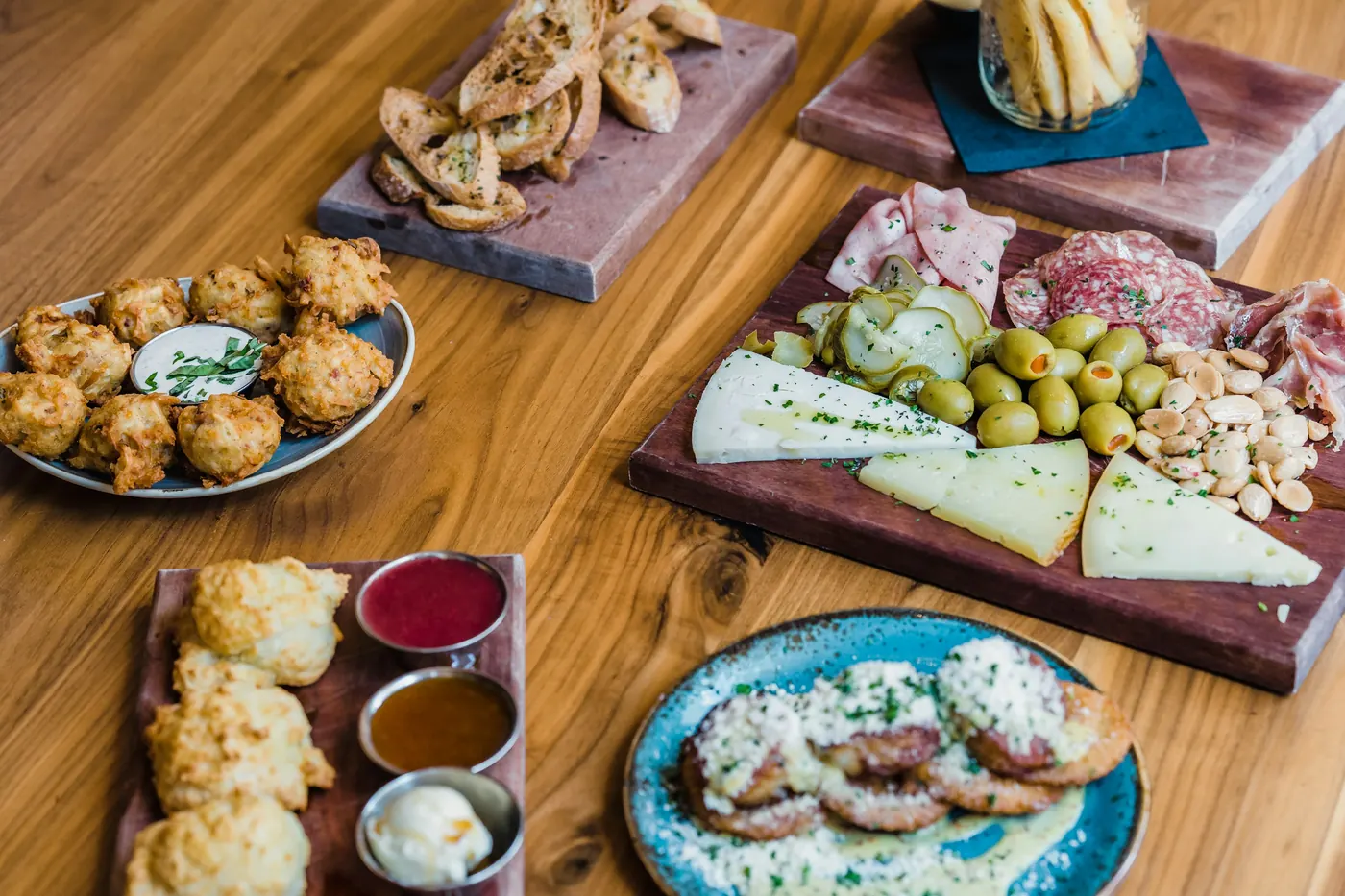
Spain adopted the chile pepper from the Americas and then largely bred the heat out of it. What survives is pimentón — smoked paprika — which contributes color, sweetness and smoke, and almost no capsaicin. Spanish food is seasoned rather than hot.
Mexico did the opposite, developing dozens of varieties across the whole heat range, which our chile guide covers.
The one common exception is patatas bravas, and the sauce is usually mild by Mexican standards.
The same split shows up in how each cuisine builds depth. Spain reaches for cured pork, saffron and long-aged cheese; Mexico reaches for toasted dried chiles, seeds and cacao. Both produce dishes that taste like they took a long time, and neither route involves much heat.
Different ways to eat
The structural difference is as large as the ingredient one, and it shapes the whole evening.
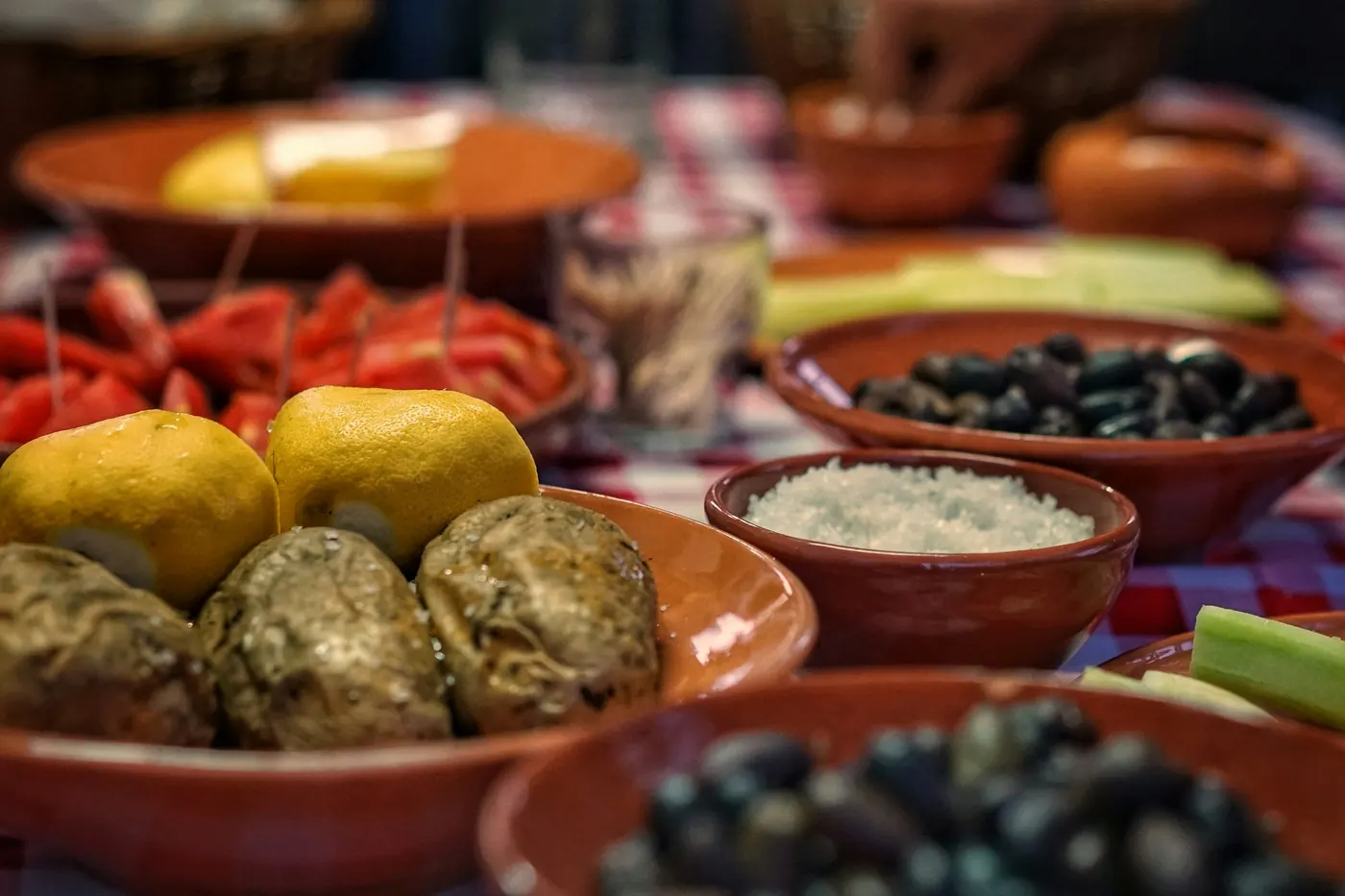
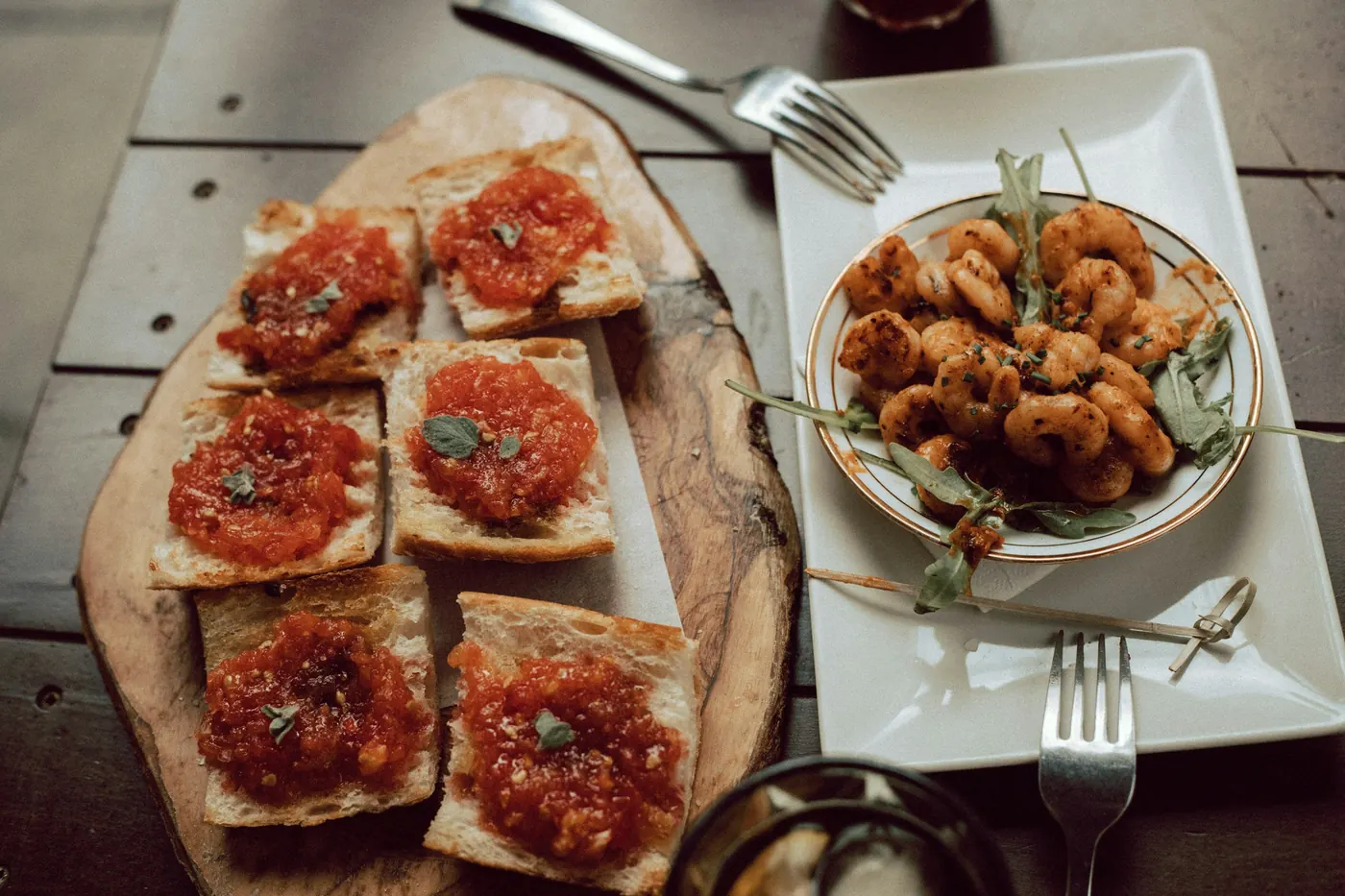
Spanish eating is built around tapas: many small plates, ordered over time, often standing, often across several bars in one night. There is no main course.
Mexican restaurant eating is closer to the American pattern — a shared starter, then a plated main each, arriving together. Our guide to ordering is built on that structure.
Timing differs too. Spanish dinner starts at nine or ten at night; the large meal in Mexico is comida in mid-afternoon, which our portions guide explains.
Where they genuinely overlap
Some Mexican dishes are Spanish techniques rebuilt on native ingredients, and those are the interesting cases.
Adobo is a Spanish preserving method — meat in vinegar and spice — remade with dried chiles, as our adobo guide describes.
Escabeche, the vinegar pickle behind pickled jalapeños, is Spanish by way of Persia.
Flan is Spanish outright. So is the fried dough behind churros, and the cheese-and-cream logic behind suiza sauces.
Pescado a la veracruzana is the clearest case: Gulf fish cooked with olives, capers and oregano, which is Mediterranean cooking with a Mexican address. Our seafood guide covers it.
On Julia’s menu
Julia’s is a Mexican and Tex-Mex kitchen, not a Spanish one, and the menu has no paella, tapas or jamón on it.
What it does have is the Spanish inheritance, visible once you look for it. The cochinita pibil is pork — a Spanish import — marinated in achiote and sour orange, both of which arrived from elsewhere. The enchiladas suizas are built on cream and melted cheese, dairy being a European contribution. The flan on the dessert list is Spanish in origin.
The carne Azteca is a beer-and-lemon marinated ribeye — beef, wheat beer and citrus, none of them native to Mexico, on a plate named after the Aztecs. That is the exchange in one dish.
And the flour tortillas, offered alongside corn on most plates, are the wheat half of the story sitting next to the corn half.
Why the confusion persists
The mix-up is not really about food. It is about the word Spanish doing two jobs at once.
In American usage “Spanish” has long been used loosely to mean Spanish-speaking, so “Spanish food” gets applied to Mexican, Cuban, Puerto Rican and Salvadoran cooking indiscriminately. In parts of the United States, Spanish rice is a Tex-Mex side dish with no connection to Spain at all — a point our rice guide untangles.
The practical version: if a restaurant serves tapas, jamón and paella, it is Spanish. If it serves tortillas, salsa and beans, it is Mexican or Tex-Mex. Almost nowhere serves both, because the two kitchens need different pantries.
Frequently asked questions
Is Mexican food the same as Spanish food?
No. They share a language and a colonial history, but the ingredients, the cooking fats, the spicing and the structure of a meal are all different.
Is Spanish food spicy?
Rarely. Spain uses smoked paprika for color and sweetness rather than heat. Mexican cooking uses chiles across the whole heat range.
What is a Spanish tortilla?
A thick omelet of egg and potato, served in wedges. Nothing to do with the Mexican flatbread of the same name.
What did Spain give Mexican cooking?
Pork, beef, chicken, cheese, wheat, rice, citrus, onions, and techniques like frying in fat, escabeche and adobo.
What did Mexico give Spanish cooking?
Tomatoes, chiles, chocolate, vanilla, corn, beans, squash and turkey. Spanish food as it exists now depends on several of them.
The short version
Corn, chiles and lard on one side; wheat, saffron and olive oil on the other. Two cuisines that traded ingredients for five centuries and stayed entirely distinct.
Julia’s cooks the Mexican side, with the Spanish inheritance visible in the pork, the dairy and the flan on the menu.