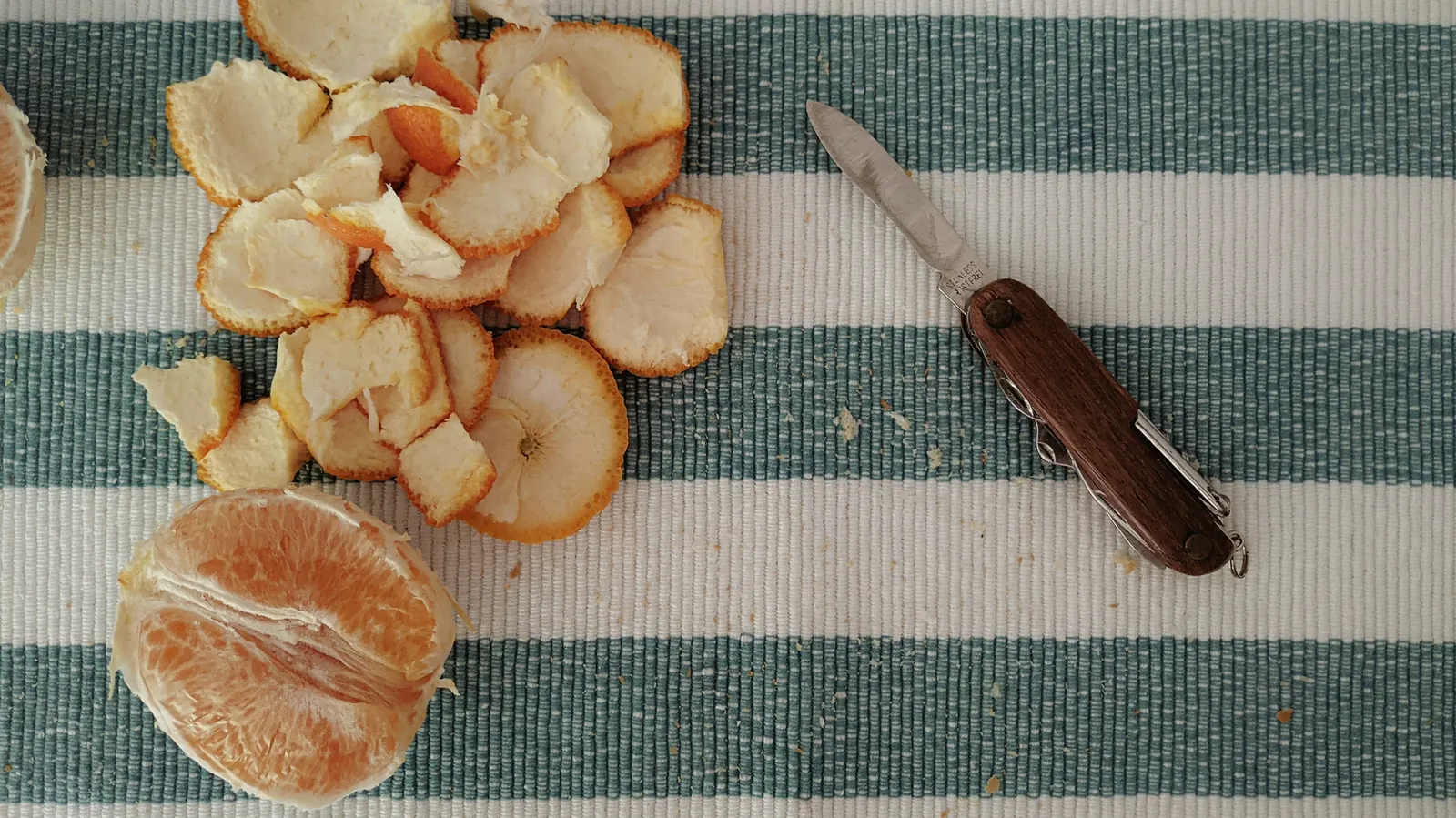
A paring knife and a chef’s knife are the two knives almost every kitchen ends up with, and they are not really rivals. One is a long blade that works on the cutting board; the other is a short blade that often works in your hand. The real question is which one to buy first, which jobs belong to each, and whether a small knife can stand in for a big one, or the other way round.
In a restaurant kitchen the split is clear. The chef’s knife does the onions, cilantro, tomatoes and carne for the day’s salsas and fillings. The paring knife seeds jalapeños, cores tomatoes, trims limes and peels a mango. This guide compares the paring knife vs chef knife question on size, the jobs each does well, control and safety, and care, then names a sensible pick for each side.
Julia’s earns a commission on purchases made through links on this page, at no cost to you. Recommendations are based on what a restaurant kitchen looks for, product specifications and verified buyer reports.
Quick verdict: which knife comes first?
Buy the chef’s knife first. University of Illinois Extension calls it the workhorse, used to chop, slice, dice and mince, and it does most of the cutting in any meal. Add a paring knife second for small, in-hand jobs: peeling, coring, seeding chiles and trimming. A paring knife can’t replace a chef’s knife, because it is too short for board work and, as Escoffier warns, isn’t suited to hard vegetables. Most cooks should own both.
The table sums up the differences; each section after it explains one, with its source.
Paring knife vs chef knife, side by side
| Paring knife | Chef’s knife | |
|---|---|---|
| Blade length | 2 to 4 inches (Illinois Extension); usually no longer than 3.5 (Escoffier) | About 8 to 10 inches (Illinois Extension); 6 to 14 sold (Escoffier) |
| Main jobs | Peeling, coring, stemming, seeding, small garnishes | Chopping, slicing, dicing, mincing |
| Where it works | Often in the hand, and on the board for small items | On the cutting board |
| Hard vegetables | Not suited (Escoffier) | Yes: squash, carrots, beets |
| Volume prep | Slow; only small amounts | Fast; made for repetitive cutting |
| Learning curve | Short, but in-hand cuts need care | Needs the pinch grip and claw to use well |
| Buy order | Second | First |
Size: two very different tools
The gap in size is the whole story. University of Illinois Extension describes the chef’s knife as a broad, tapered blade about 8 to 10 inches long, and the paring knife as small, with a 2- to 4-inch blade that makes it easy to handle. Escoffier, the culinary school, gives a wider range for chef’s knives, from 6 to 14 inches, and says a paring knife is usually no longer than 3.5 inches. It even calls the paring knife essentially a mini chef’s knife.
For home cooks, an 8-inch chef’s knife is the usual middle ground; Illinois Extension’s 8 to 10 inches sets the range. Our best chef knife guide goes into length in more detail. Paring knives cluster at 3 to 4 inches: short enough to steer a point around a tomato core, long enough to halve a lime.

What a chef’s knife does that a paring knife can’t
The chef’s knife is the board knife. Illinois Extension says it is used to chop, slice, dice and mince foods, which covers nearly all the cutting for a family dinner: a pile of onions for sofrito, a bunch of cilantro, a few pounds of chicken, a head of cabbage for slaw. The long edge lets you cut a whole onion half in a few strokes, and the height of the blade keeps your knuckles off the board.
Hard, large produce is also chef’s knife territory. Escoffier says a paring knife isn’t suited to harder vegetables like carrots, beets or squash, and urges care with them. A small blade can’t get through a butternut squash in one controlled stroke; you end up sawing and pushing, and that is when a knife slips. A longer, heavier blade does that work safely.
What a paring knife does that a chef’s knife can’t
The paring knife is the hand knife. Illinois Extension says to use it for peeling soft foods such as peaches or apples and for removing stems and cores. Escoffier adds that it is great for mincing small amounts of garlic and onion and for coring tomatoes, and notes that it is the one knife you’ll peel toward your body rather than away from it, which is exactly why it has to be short and well controlled.
In a Mexican kitchen that list grows fast. Seeding and deveining jalapeños, coring tomatoes for pico de gallo, hulling strawberries for agua fresca, trimming tomatillos and scoring a mango are all paring knife jobs. You can do some of them with the tip of a chef’s knife on the board, but holding an 8-inch blade in the air to peel something is awkward and riskier than it needs to be.
Control and safety
Both knives are safest when sharp and held correctly. Illinois Extension says a dull knife is a more dangerous knife because it can easily slip. It recommends gripping the knife by pinching right where the handle meets the blade, wrapping the other fingers around the handle, and keeping the fingers of your other hand curled under in a claw position. That grip and the claw are how you get control from a long chef’s knife on the board.
The paring knife’s risk is different: because you often cut toward your thumb, the blade must be sharp enough to cut without force and small enough to move slowly. Use a paring knife on the board, not in the hand, when the item is hard or slippery. Our general kitchen advice is to pick the knife whose length matches the food: a short blade for small things, a long one for anything bigger than your fist.
Steel, weight and handles
Construction varies within each type far more than between them. Chef’s knives come stamped or forged, light or heavy; our German vs Japanese knives guide covers the trade-offs in steel and weight. Paring knives are light by nature, and a cheap stamped one can be just as useful as an expensive forged one, because it does small jobs at low force.
Two picks below show the point. Mercer lists its Millennia 4-inch paring knife as stamped from high-carbon Japanese steel at HRC 53 to 54, with a 15-degree blade angle. Victorinox lists its Wood 8-inch chef’s knife as not forged, with a wear-resistant stainless blade and a weight of 6.3 ounces. Neither needs to be heavy to do its job well. What matters more is a handle you can grip when your hands are wet with lime juice or tomato.
Sharpening and care
Illinois Extension recommends sharpening knives with a stone or electric sharpener and honing them with a honing steel, and storing them so they don’t rub against other items and get chipped or dull. Both makers below advise against the dishwasher: Mercer says it does not recommend dishwasher washing and asks you to store knives in a block or sheath, and Victorinox lists its wood-handled chef’s knife as not dishwasher safe.
The chef’s knife will need more attention, simply because it does more cutting. A paring knife’s short edge is quick to touch up, and many cooks keep a cheap spare for jobs that dull an edge fast, such as cutting citrus on a plate. Our best knife sharpener guide covers tools for both.
Where a santoku or utility knife fits
Two in-between knives often come up. A santoku is a shorter, flatter alternative to the chef’s knife for board work, not a paring knife; our santoku vs chef knife guide covers that choice. A utility knife sits between the two in length and does some of each, but it doesn’t replace either: it is short for a big onion and long for peeling. Buy the two classics first and add a utility knife only if you find a real gap.
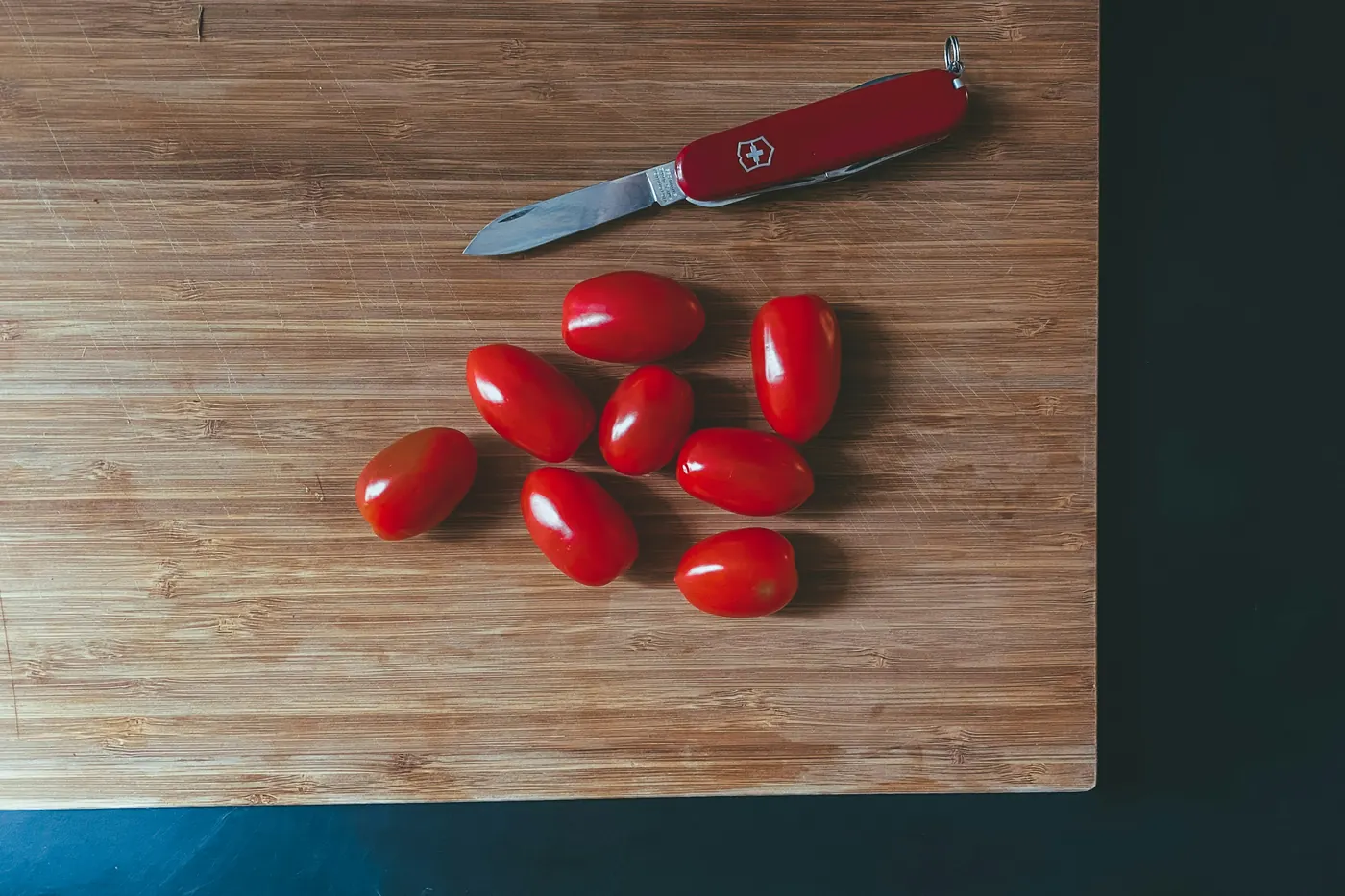
Choose a paring knife if… / Choose a chef’s knife if…
Choose a paring knife if…
- You already own a chef’s knife and keep using its tip for small jobs.
- You seed chiles, core tomatoes or peel fruit most days.
- You want a small knife for a lunchbox, picnic or bar setup.
- You want a cheap second knife that is easy to sharpen.
Choose a chef’s knife if…
- You are buying your first good knife.
- You chop onions, herbs, meat and vegetables for full meals.
- You cut hard vegetables such as squash, carrots or beets.
- You want one knife to do most of the cutting in your kitchen.
Our pick on each side of the paring knife vs chef knife question
One pick per side, both from makers that sell mainly to professional kitchens, both in stock when we checked and neither on our other guides. Both are plain, light, unforged knives, which suits the point of this page: buy the right shape first, and spend more later if you want to. For more choices, see our best paring knife guide and our best chef knife guide.
1. Mercer Culinary Millennia 4-inch Paring Knife – Grippy Handle for Small Jobs

The Millennia is the kind of paring knife you find in professional kitchens: plain, light and easy to grip. Mercer lists the blade at 4 inches, at the long end of the paring range, stamped from one piece of high-carbon Japanese steel that it says gives easy edge maintenance and rapid sharpening. It gives a hardness of HRC 53 to 54 and a 15-degree blade angle.
The handle is the reason to choose it. Mercer describes it as a combination of Santoprene for comfort and polypropylene for durability, and the listing adds textured finger points for a non-slip grip, which matters when your fingers are wet from chiles or citrus. The listing names exactly the jobs a paring knife is for: small slicing and intricate cutting, garnishes, seeding jalapeños, deveining shrimp and trimming beans.
Mercer does not recommend the dishwasher and asks you to store the knife in a block or sheath to protect the edge. The knife is made in Taiwan, NSF certified, and covered by a limited lifetime warranty. The softer steel will need sharpening more often than a harder blade, but a 4-inch edge takes a minute to touch up.
Why we like it
- 4-inch blade for in-hand and small board jobs
- Textured, non-slip handle (listing)
- 15-degree edge angle (Mercer)
- NSF certified
Key specifications
| Model | M22004 |
|---|---|
| Blade length | 4 inches |
| Construction | Stamped, one piece |
| Steel | High-carbon Japanese steel, HRC 53 to 54 |
| Edge angle | 15 degrees |
| Handle | Santoprene and polypropylene |
| Made in | Taiwan |
| Care | Hand wash; dishwasher not recommended |
Why we recommend it
It suits a cook who already owns a chef’s knife and wants a dependable small knife for chiles, tomatoes, limes and fruit.
Skip it if you want a harder steel that holds its edge longer between sharpenings; our best paring knife guide includes forged and Japanese options.
Pros and cons
Pros
- Secure grip when wet
- Stated hardness and edge angle
- Limited lifetime warranty
Cons
- Softer steel needs more frequent sharpening
- No sheath mentioned in the listing
- Not for the dishwasher
2. Victorinox Wood 8-inch Chef’s Knife – Light Swiss Blade, Wood Handle

This is Victorinox’s everyday 8-inch blade with a wooden handle. Victorinox lists the blade at 7.9 inches with a straight edge in wear-resistant stainless steel, and the whole knife at 6.3 ounces. That is light for a chef’s knife, which makes long prep sessions easier on the wrist and suits cooks who are new to a full-size blade.
Victorinox lists the handle as modified maple (the Amazon title calls it rosewood; we go by the maker) and describes it as ergonomic. The knife is not forged, according to Victorinox; in general that means a lighter blade without a thick bolster, so you can sharpen the full length of the edge. At 7.9 inches it sits squarely in the 8- to 10-inch range Illinois Extension gives for chef’s knives, and it handles onions, herbs, chicken and squash alike.
The wood handle brings one rule: Victorinox lists the knife as not dishwasher safe. Wash it by hand and dry it straight away. It is made in Switzerland and covered by Victorinox’s lifetime warranty.
Why we like it
- Light at a stated 6.3 ounces
- 7.9-inch blade, the classic all-round length
- Unforged, light blade (Victorinox)
- Swiss made, lifetime warranty
Key specifications
| Model | 5.2060.20G |
|---|---|
| Blade length | 7.9 inches |
| Construction | Not forged (Victorinox) |
| Steel | Stainless; hardness not stated |
| Edge angle | Not stated |
| Handle | Modified maple wood |
| Made in | Switzerland |
| Care | Hand wash only |
Why we recommend it
It suits a first-time buyer, or anyone who wants a light, easy-to-handle chef’s knife with a warm wood handle for everyday prep.
Skip it if you want a dishwasher-tolerant handle or a heavier forged blade; the best chef knife guide covers both.
Pros and cons
Pros
- Light and easy to control
- Full-length edge for sharpening
- Lifetime warranty
Cons
- Wood handle is hand wash only
- Steel hardness not stated
- Too light for anyone who likes a heavy blade
Paring and chef’s knife questions, answered
Can a paring knife replace a chef’s knife?
No. It is too short for chopping and slicing in volume, and Escoffier says it isn’t suited to hard vegetables like carrots, beets or squash. It is a second knife, not a substitute.
Can a chef’s knife replace a paring knife?
For many board jobs, yes; the tip can core a tomato or mince a clove of garlic. For peeling, seeding and anything held in the hand, a long blade is awkward, which is why most cooks add a paring knife.
What size paring knife should I get?
Illinois Extension gives 2 to 4 inches, and Escoffier says usually no longer than 3.5. A 3- to 4-inch blade covers most kitchen jobs.
What size chef’s knife is best for a home cook?
Illinois Extension gives about 8 to 10 inches. An 8-inch blade is the usual starting point; a longer one suits big hands and big batches.
Which should a beginner buy first?
The chef’s knife. It does most of the cutting, and learning the pinch grip and claw on it makes every other knife easier. Our best chef knife for beginners guide has more options.
Two knives, one cutting board
The paring knife vs chef knife choice is really an order of purchase. Start with a good chef’s knife and learn to use it well; it will handle almost every meal. Add a paring knife for the small, close jobs a long blade makes clumsy, and keep both sharp. Together they cover nearly everything a home kitchen cuts, from a sack of onions to a single jalapeño.
And when you would rather someone else did the chopping, see the menu or call to order.