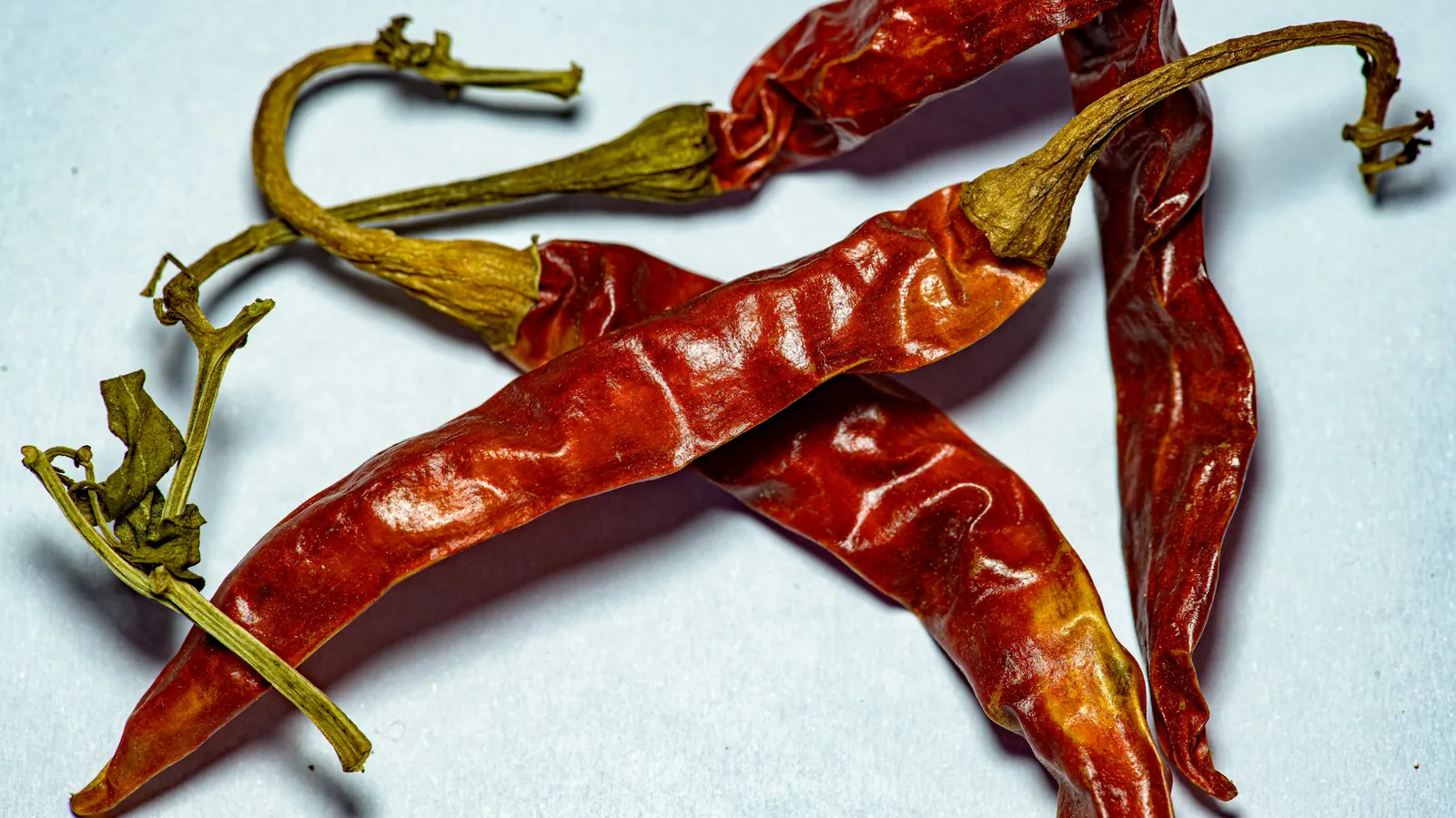
If you have eaten Mexican food this year you have eaten guajillo, and there is a good chance no menu told you so.
It is the most widely used dried chile in Mexico and the one kitchens are least likely to name.
The short answer
Guajillo is the dried form of the mirasol chile — long, smooth-skinned, deep red, and mild. It runs 2,500 to 5,000 Scoville units, roughly a jalapeño. It tastes fruity and slightly tart with berry notes, and it is used for color and depth rather than heat. It is the base of birria, adobo, pozole, most red enchilada sauces and a great many moles.
What it is
Specialty Produce, in its reference entry on dried guajillo, identifies it plainly: the elongated dark red peppers are the dried version of the mirasol chile, and one of the most commonly grown varieties in Mexico.
That name change is the usual pattern. Fresh it is a mirasol; dried it is a guajillo — the same renaming that turns a poblano into an ancho, which our chile guide works through.
Mirasol means “looking at the sun,” a reference to the pods growing upright on the plant rather than hanging down.
How to recognize it
Smooth is the word to hold onto.
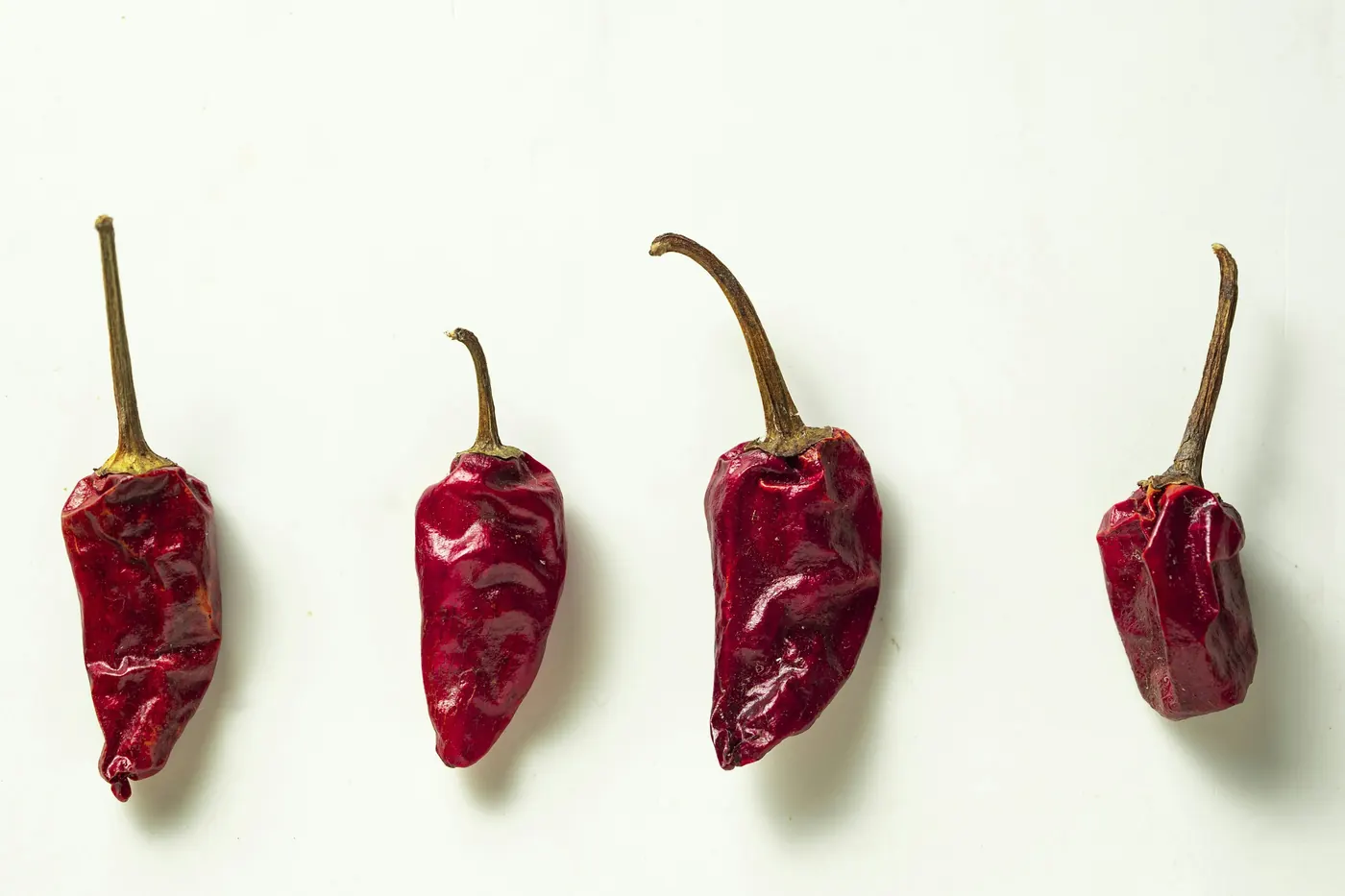
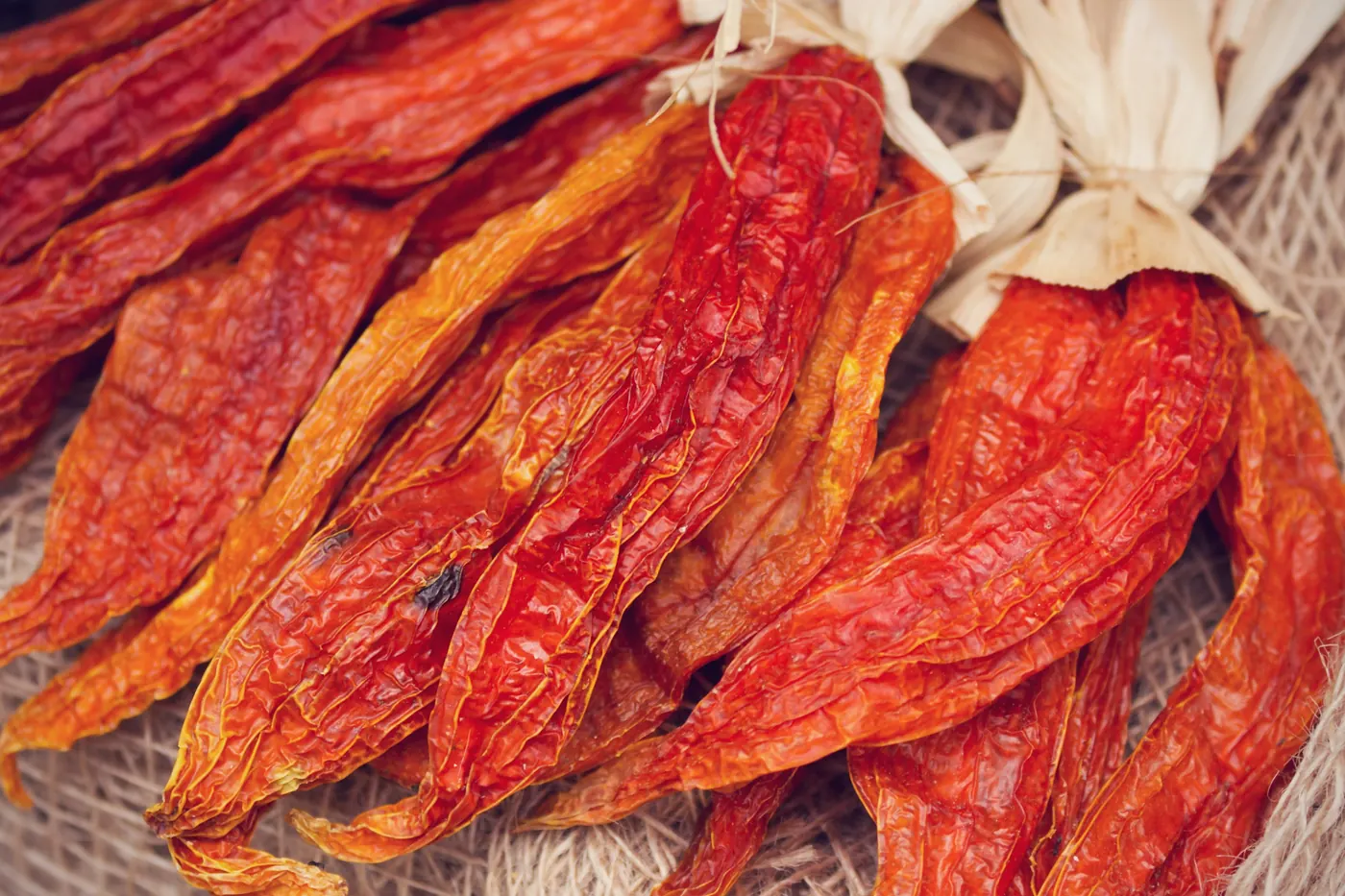
The same source describes the skin as smooth, semi-wrinkled, tough and glossy, with a pliable nature that indicates freshness. That last part is the practical test: a guajillo you can bend is worth buying, and one that snaps is old and will taste of dust.
Against the other common dried chiles, the shape sorts it out. An ancho is broad, flat and heavily wrinkled. A pasilla is long, narrow and nearly black. A guajillo sits between them — long, tapering, and noticeably smoother than either.
Four to six inches is typical, and the color is a deep translucent red rather than brown.
What it tastes like
Not what most people expect from something this red.
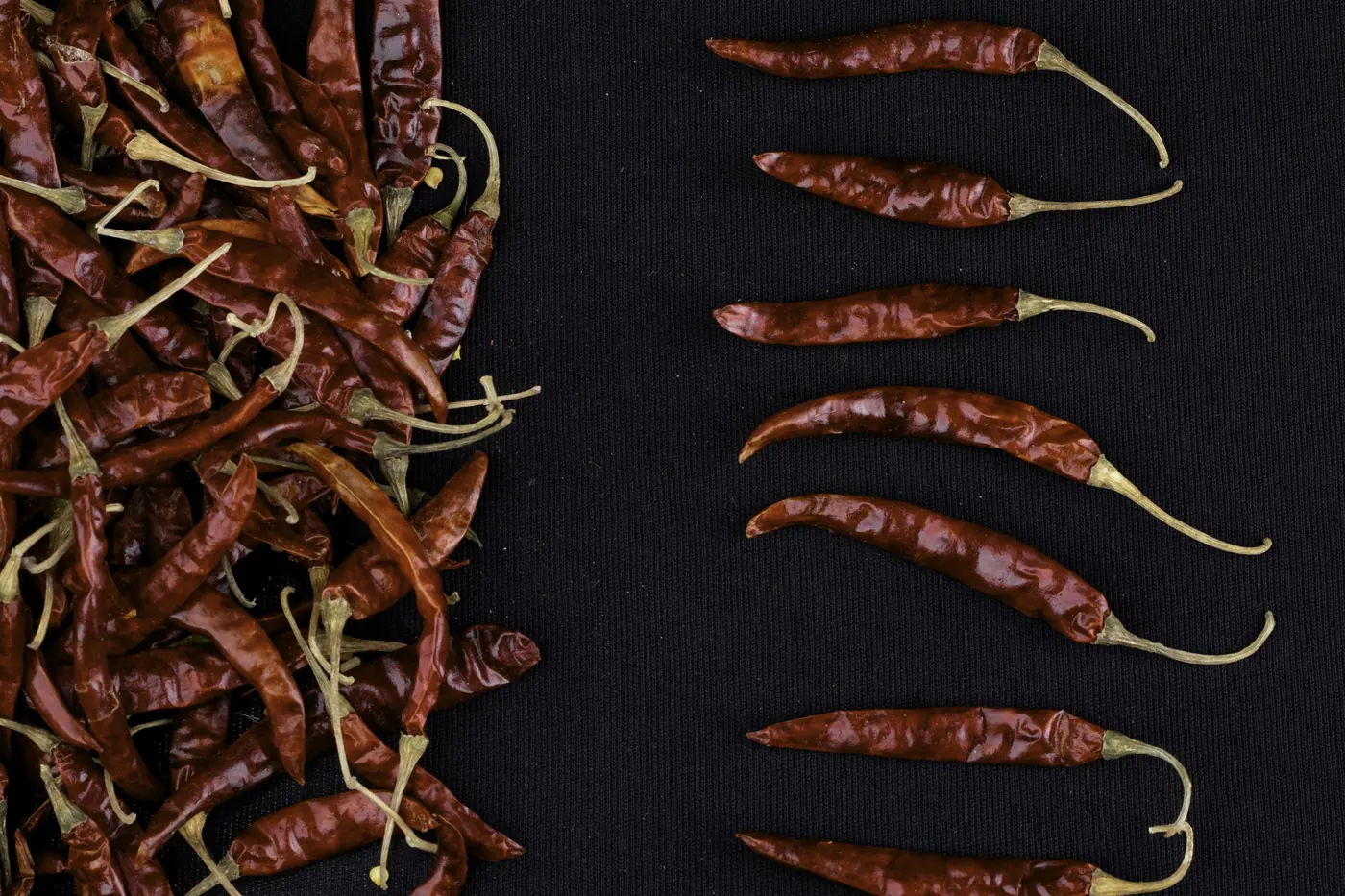
Specialty Produce describes a complex blend of fruity, nutty and savory flavors with berry-like nuances and a mild to moderate spice. Cranberry and dried tomato are the comparisons people reach for.
The heat is genuinely low: 2,500 to 5,000 Scoville units, which the same entry notes is similar to a jalapeño, a pepper that can reach 8,000. That is the whole reason guajillo gets used in quantity — you can put six in a sauce and still serve it to anyone.
It also contributes tartness, which is unusual among dried chiles and is what keeps a guajillo sauce from tasting flat and sweet the way an all-ancho one can.
Where it turns up
| Dish | What guajillo does |
|---|---|
| Birria | The backbone of the broth, with ancho |
| Adobo | Color and tartness against the vinegar |
| Pozole rojo | The red in the red |
| Enchilada sauce | Body and color without heat |
| Al pastor marinade | Works alongside achiote |
| Salsa roja | Base for a table salsa with some heat added |
Read that list and a pattern appears: guajillo is almost never the only chile. It is the volume ingredient that carries color and body, and something else is added for heat — chile de árbol usually.
Our guides to birria, adobo and enchilada sauces all name it, which is a fair indication of how often it appears.
How it is used
Three steps, and the first one is where it goes wrong.
Toast. A few seconds per side on a dry comal until it smells nutty and softens. Longer than that and it turns bitter, and a scorched chile cannot be rescued.
Soak. Twenty to thirty minutes in hot water until pliable. Some cooks keep the soaking water; many discard it, because it carries bitterness.
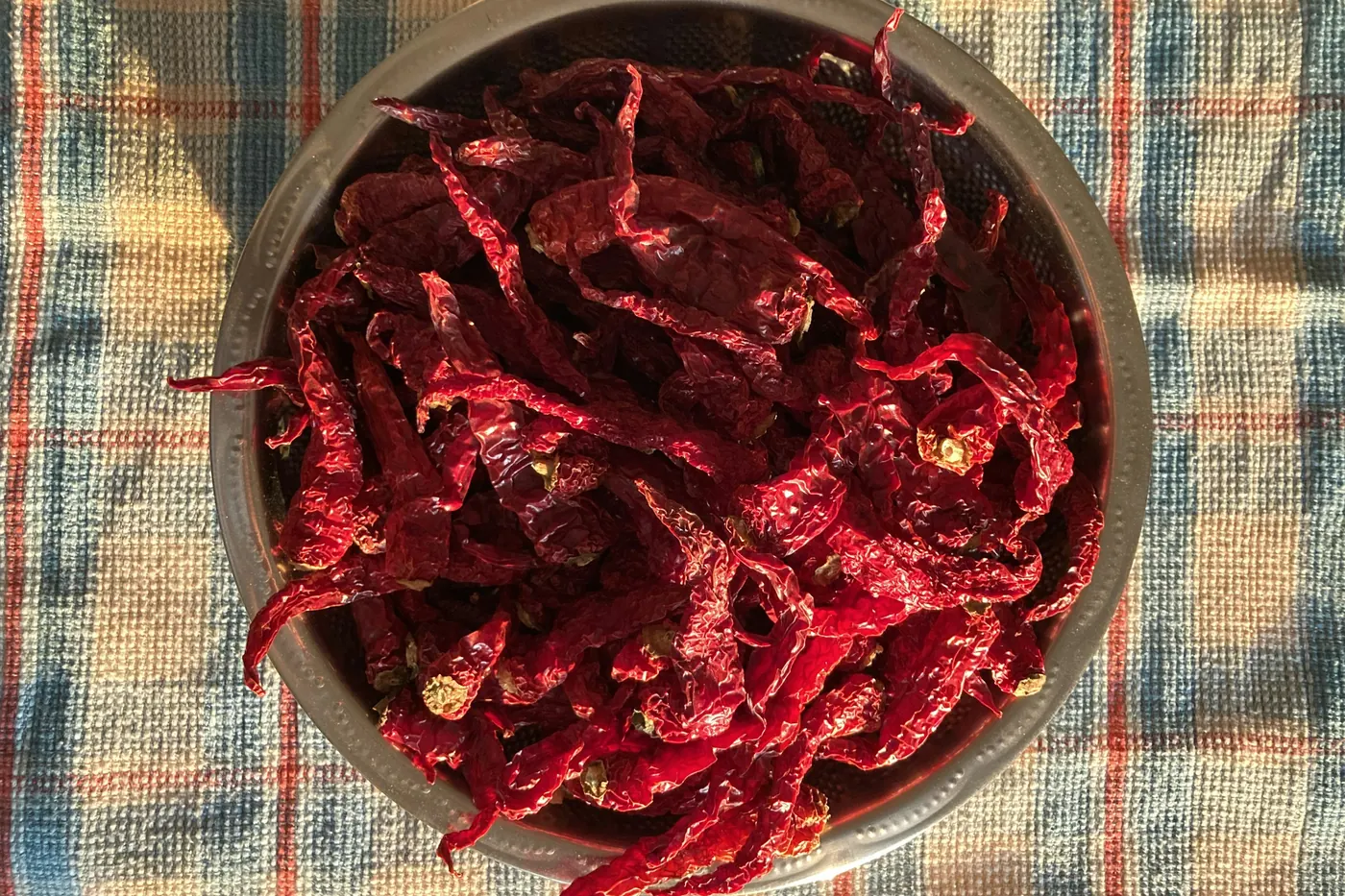
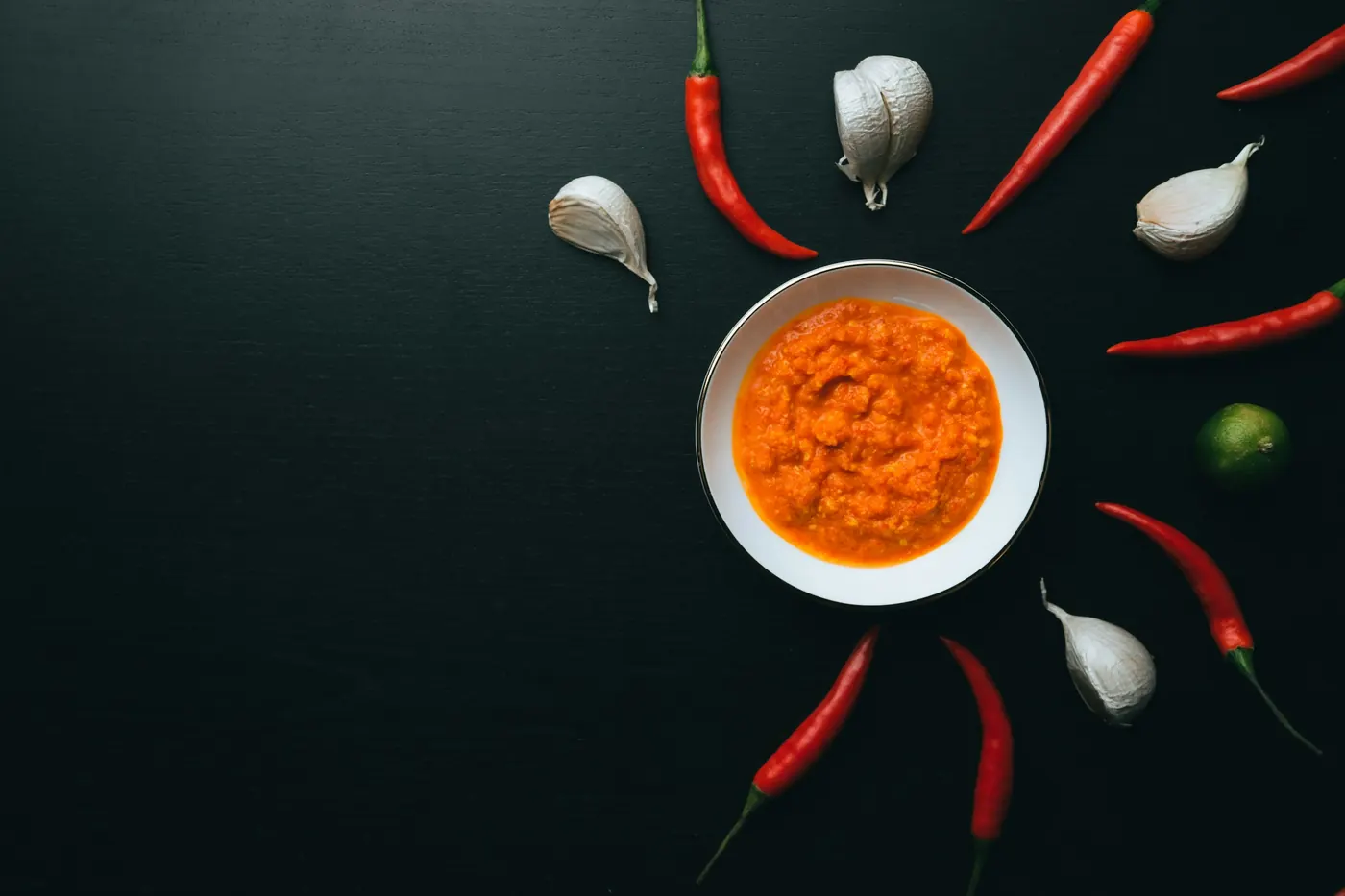
Blend and strain. Once rehydrated, as Specialty Produce notes, guajillo is chopped or blended into salsas, pastes, sauces and marinades. Straining matters here more than with other chiles — guajillo skin is tough and does not break down, and an unstrained sauce is gritty.
On Julia’s menu
Guajillo is not named anywhere on Julia’s menu, and that is worth being straight about rather than guessing around.
What the menu says is “dry peppers,” twice. The pozole is hominy with a blend of dry peppers, spices and pork. The brisket birria style is slow roasted and marinated with dry peppers and fresh spices.
Naming a chile blend is unusual on any menu, because the blend is the recipe. What can be said honestly is that guajillo is the near-universal base for both of those dishes across Mexico, and that a red pozole or a birria broth without it would be unusual.
Where the site does name it is in our own coverage — the birria, adobo and al pastor guides all identify guajillo among the chiles those preparations are built on, and the reason is the same in each case. It brings the red.
If you are reading the menu for heat, none of this is where to look. Our guide to mild dishes covers which names actually signal it.
Buying and keeping it
Dried chiles are sold as if they keep forever. They do not.
The bend test is the whole thing: a good guajillo flexes without cracking, because it still holds moisture and volatile oils. One that snaps has dried past usefulness and will taste papery no matter how long you soak it.
Color is the second check. Deep translucent red is what you want. Dull brown means age or heat damage in storage.
They keep six months to a year in a sealed container away from light, and longer in a freezer. Ground chile powder keeps far less well — the surface area that makes it convenient is also what lets the aroma go — which is why whole pods are worth the extra step.
Frequently asked questions
What is a guajillo chile?
The dried form of the mirasol pepper — long, smooth-skinned, deep red and mild. Mexico’s most widely used dried chile.
How hot is guajillo?
2,500 to 5,000 Scoville units, comparable to a jalapeño and often milder. It is used for flavor and color rather than heat.
What does guajillo taste like?
Fruity and tart with berry and dried-tomato notes, plus a nutty savory depth. Less sweet than ancho.
How do I tell guajillo from ancho or pasilla?
Shape and skin. Guajillo is long and smooth; ancho is broad and heavily wrinkled; pasilla is long, narrow and nearly black.
Why strain a guajillo sauce?
The skins are tough and never fully break down in a blender. Straining is what makes the difference between a smooth sauce and a gritty one.
The short version
Long, smooth, deep red and mild. Fruity and tart rather than hot, used in quantity for color and body, and almost always working alongside something else.
Julia’s does not name it — the menu says “dry peppers” — which is what nearly every menu says.