Cochinita pibil is the best argument on any Mexican menu that a dish can be two cultures at once and belong entirely to neither.
Everything in it that is not the cooking method arrived on a Spanish ship. Everything about how it is cooked is Maya.
The short answer
Cochinita pibil is pork marinated in achiote and sour orange, wrapped in banana leaves, and cooked slowly in a pit — or now, usually, an oven. It comes out deep orange and falling apart, and it is served shredded with pickled red onion. It is the signature dish of the Yucatán, and it is not spicy.
The name is the recipe
Both halves tell you something, and they come from different languages.
Sandwich Tribunal, in its account of the dish, gives the etymology: cochinita is an archaic Spanish word for suckling pig, and pibil derives from the Yucatec Maya word for a cooking pit, piib.
So the noun is Spanish and the method is Maya. That split runs through the entire dish.
What the Spanish brought
More of it than people assume, and the same source lays out which parts.
The suckling pigs came to the Yucatán with the Spanish in the sixteenth century, and were adopted by the Maya. So did the sour orange — the Seville orange whose juice marinates both cochinita pibil and poc chuc.
What was already there was the pit, the banana leaf, and the achiote. Annatto seed, as the same piece notes, has a mild earthy flavor and lends the dish its bright orange color — the point our achiote guide makes at length.
The result is a dish that could not have existed before 1500 and could not have been invented by anyone but Maya cooks.
The pib
A hole in the ground, and the reason the dish tastes the way it does.
A pit is dug, lined with stones, and a wood fire built on top until the stones glow. The fire burns down, the wrapped meat goes in, more leaves and earth go over it, and it stays buried for hours.
What that produces is not roasting. There is no dry heat and no browning — the meat cooks in trapped steam at a steady low temperature, which is why it shreds rather than slices. It is the same principle as barbacoa, which our cooking methods guide groups alongside it.
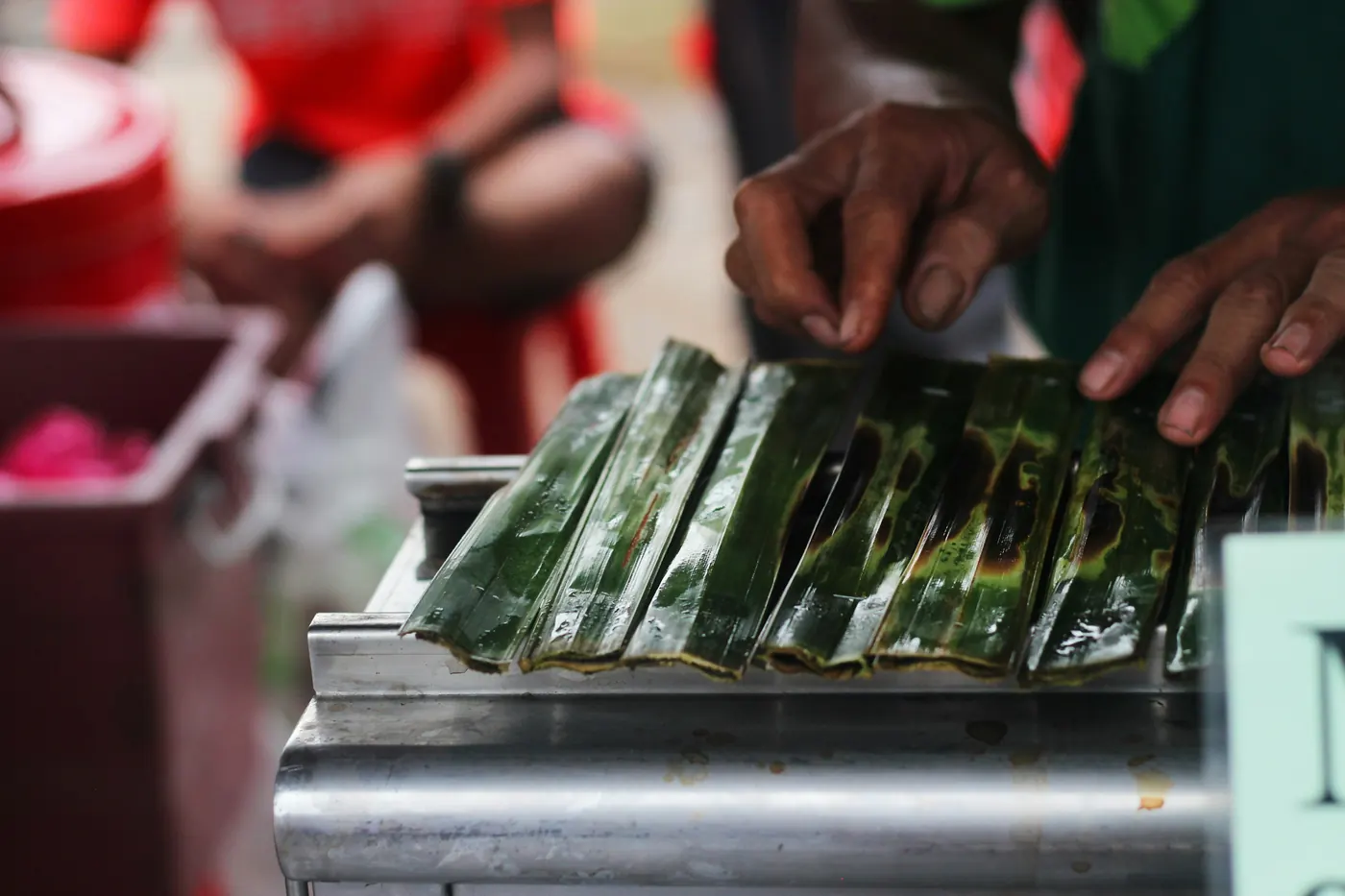
Almost no restaurant digs a pit. An oven with a tightly wrapped parcel gets close, because the leaf is doing most of the work.
The four elements
| Element | What it does | Came from |
|---|---|---|
| Pork | The meat, cooked to shreds | Spain, 16th century |
| Achiote | Color and earthy base note | Indigenous |
| Sour orange | Acid, tenderizing, floral bitterness | Spain, via the Arab world |
| Banana leaf | Traps steam, adds a grassy note | Asia, via the Spanish |
| The pib | Slow, steady, enclosed heat | Maya |
Only one row in that table is indigenous to the Yucatán, and one is the technique. Everything else is imported and has been there for five hundred years.
The pickled onion is not a garnish
It is half the dish, and leaving it off changes the eating experience entirely.
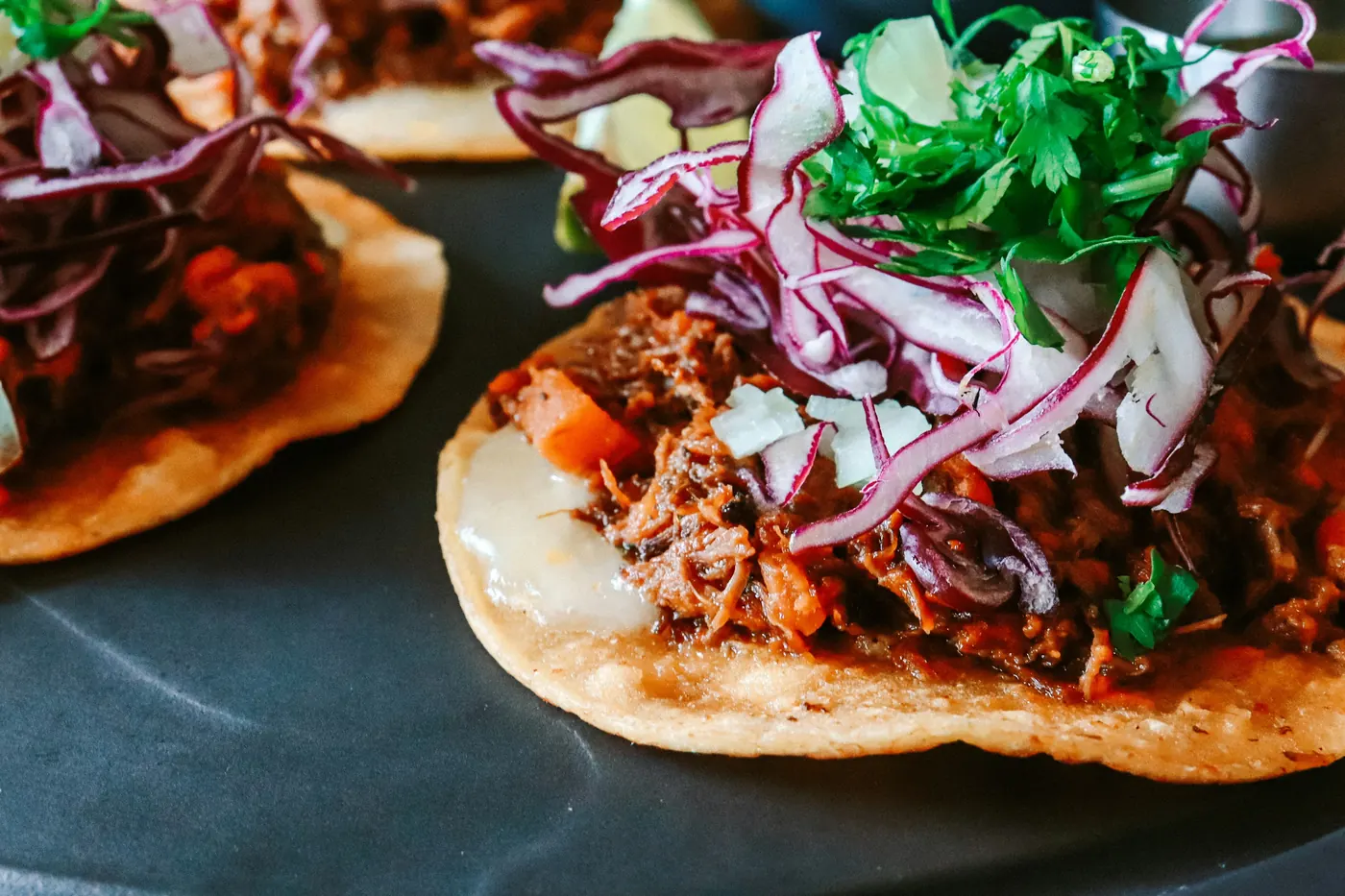
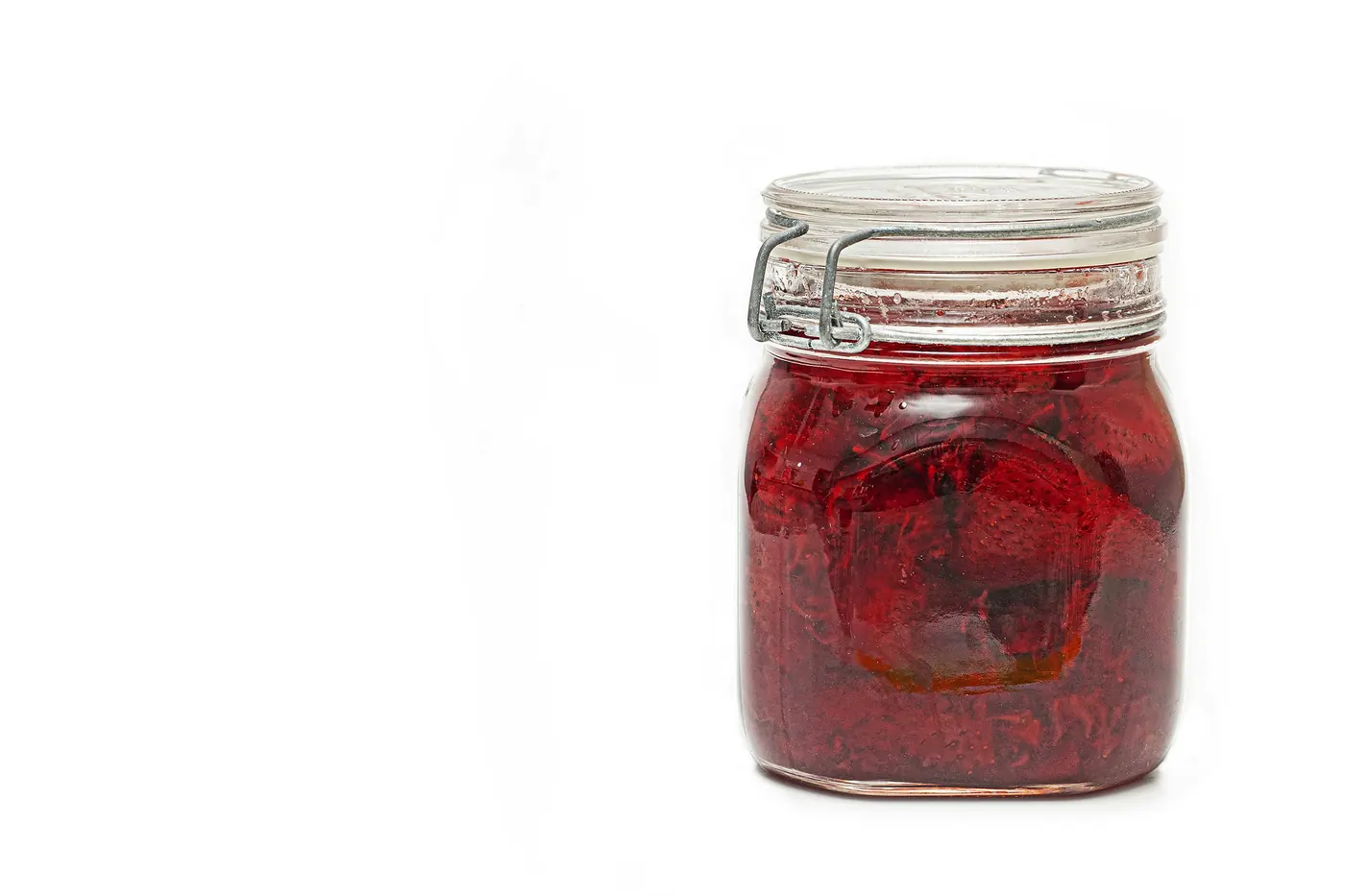
Red onion sliced thin, covered in sour orange juice with salt and often a habanero, and left for an hour or more. It turns bright pink on its own — the acid reacts with the pigment in the skin, and nothing is added to color it.
The job is contrast. Cochinita pibil is rich, soft and uniformly textured; the onion is sharp, crunchy and acidic. Without it the plate is monotonous by the third bite.
The habanero on the side is the other half of that. The pork itself is not hot, which our habanero guide explains is the standard Yucatecan arrangement: heat goes on the table, not in the pot.
How it is eaten
Three ways, all of them normal.
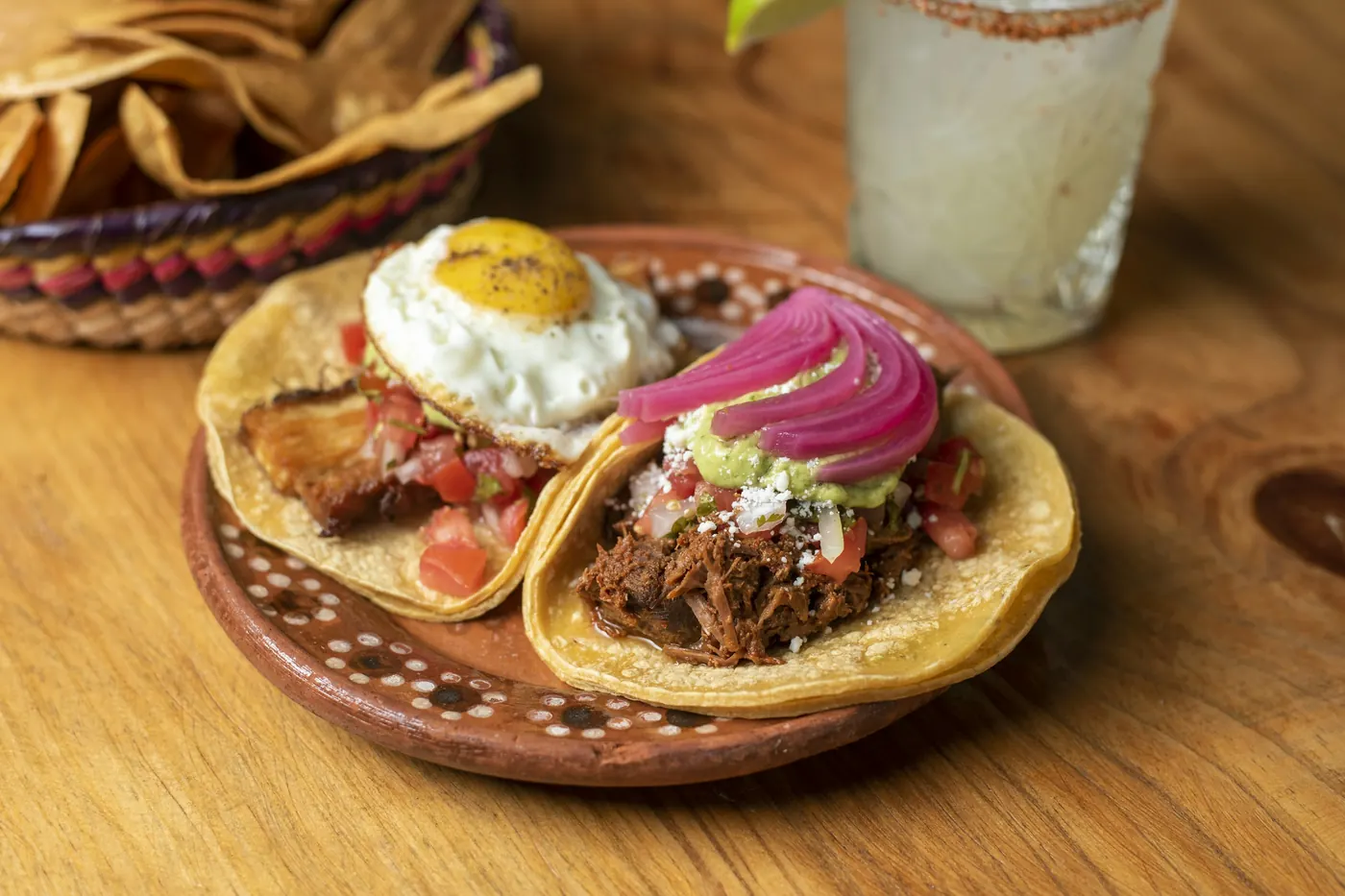
As tacos, on corn tortillas, with the onion on top. This is the most common form and the one sold from stalls.
In a torta, on bread, which is the Yucatecan street-lunch version.
On a plate, as a main, with rice, beans and tortillas alongside — the restaurant format, and the one you will meet in Texas.
It is also traditionally a weekend and celebration dish rather than an everyday one, because a pit takes a day and a whole pig is a lot of pork.
On Julia’s menu
Cochinita pibil is among the house specialties on Julia’s menu, and the description is precise: Yucatán style, oven roasted achiote marinated pork wrapped in banana leaves, served with Mexican rice, pico with avocado, frijoles de la olla and tortillas.
Three things in that are worth noticing. Wrapped in banana leaves is the real method, not a shortcut. Oven roasted is honest about the pit being replaced. And frijoles de la olla rather than refried is the Yucatecan choice — whole beans in their broth, which our beans guide covers.
It is genuinely unusual on a Texas menu. The ingredients are harder to source, the cook is long, and it is not a dish most Tex-Mex kitchens attempt — which is part of why our regional guide treats it as the clearest Yucatecan marker on the menu.
It also comes as a family pack for four, which suits a dish that emerges from the oven whole and gets pulled apart.
Why sour orange, specifically
The marinade is achiote and citrus, and the citrus is not lime. That distinction does real work.
Naranja agria — sour or Seville orange — is more floral and less sharply acidic than lime, with a bitterness from the peel. Over a long marinade it tenderizes without turning the surface of the meat mealy, which strong lime juice will do.
It is also hard to find outside the Yucatán and Florida, so kitchens elsewhere blend orange juice with lime and sometimes grapefruit to approximate it. That substitution is standard rather than a compromise, and most cooks outside Mexico are using some version of it.
The same fruit shows up twice on the plate, incidentally: in the marinade, and in the liquid the pink onions pickle in.
Frequently asked questions
What is cochinita pibil?
Pork marinated in achiote and sour orange, wrapped in banana leaves and cooked slowly in a pit or oven until it shreds. From the Yucatán.
Is cochinita pibil spicy?
No. The marinade is earthy and citrusy rather than hot. Heat comes from habanero salsa served on the side.
What does pibil mean?
It comes from piib, the Yucatec Maya word for a cooking pit. Cochinita is archaic Spanish for suckling pig.
Why is it orange?
Achiote, the annatto seed. It contributes an earthy flavor and a strong orange color, and it is not chile.
What is the pink onion served with it?
Red onion pickled in sour orange and salt. The color is a natural reaction between the acid and the onion pigment.
The short version
Spanish pig, Spanish orange, indigenous seed, Maya pit. Slow-cooked until it falls apart, stained orange, and served with sharp pink onion against it.
Julia’s serves it wrapped in banana leaves among the house specialties on the menu.