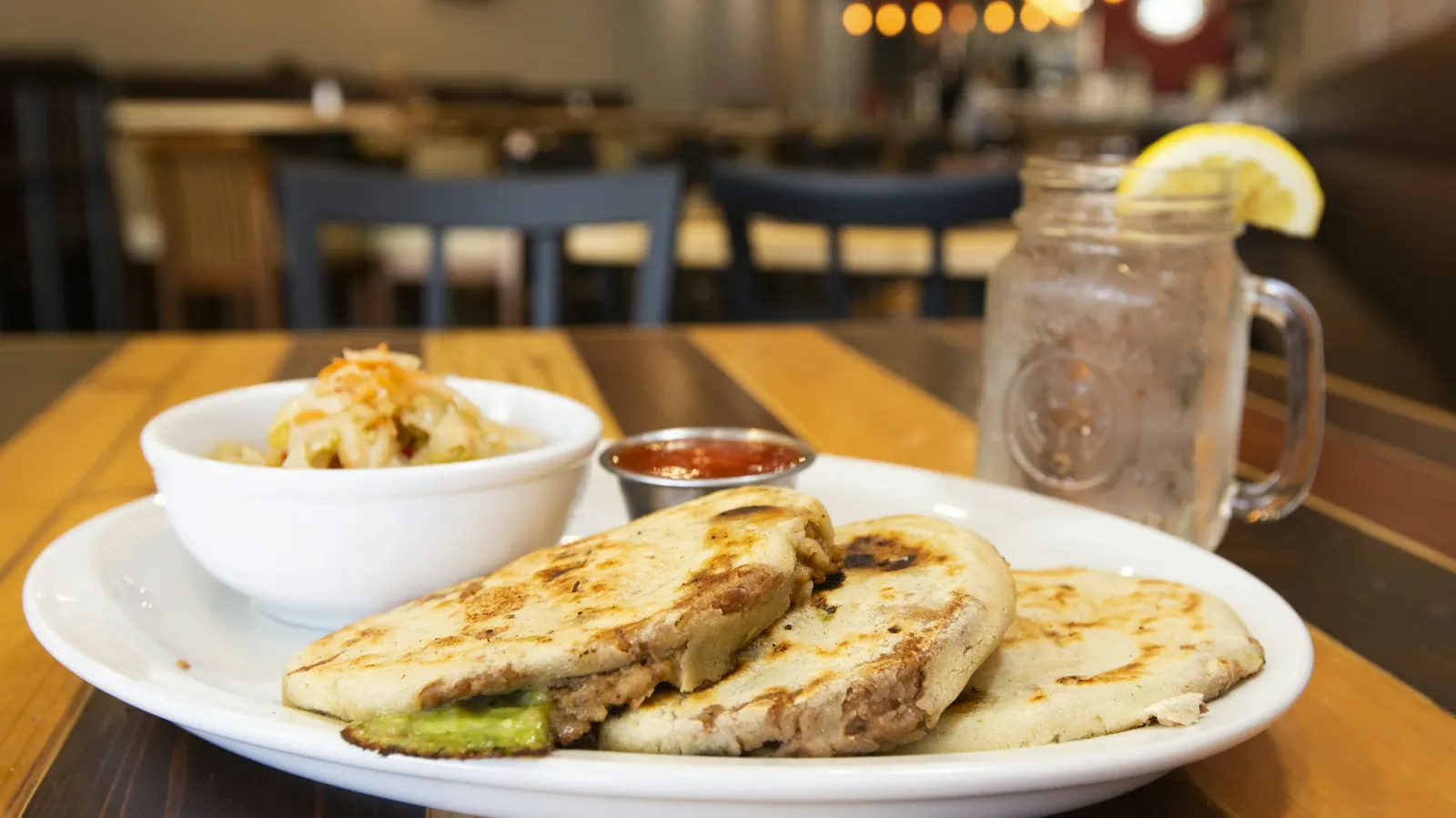
Pupusas come from El Salvador, not Mexico. They are thick corn cakes sealed around a filling of cheese, beans or pork before they ever touch the griddle, and El Salvador made them its national dish in 2005. Honduras shares a long history with them too. The dough, though, is the same nixtamalized corn masa that Mexican kitchens use for tortillas, and in the United States most home cooks make it from a bag of masa harina.
That makes the flour the one ingredient you cannot fudge. A pupusa dough has to be soft enough to wrap around a filling and seal without cracking, then hold together on a hot griddle. This guide names the masa harinas that suit that job, explains what to look for on the bag, and covers how to mix the dough so it behaves.
Julia’s earns a commission on purchases made through links on this page, at no cost to you. Recommendations are based on what a restaurant kitchen looks for, product specifications and verified buyer reports.
Quick verdict: which masa harina to buy for pupusas
The best masa harina for pupusas for most kitchens is Bob’s Red Mill Organic Masa Harina: a fine-ground organic flour made from corn and lime, with pupusas named on the listing. For a plain, everyday white corn flour in a bigger bag, choose Masa Brosa Instant Corn Masa. Feeding a crowd on a pupusa night? Minsa’s three 4-pound bags lists pupusas among its uses and gives you plenty of dough to practice with.
Below: the five standout bags side by side, then all seven picks in full, with what each bag actually states about its corn and ingredients.
Five pupusa flours side by side
Our five standout picks, one for each kind of pupusa maker, with the details each maker, listing or the retailer named states. All seven picks are reviewed in full below.
| Masa harina | Best for | Corn & size | Ingredients (as stated) | Buy on Amazon |
|---|---|---|---|---|

Bob’s Red Mill Organic Masa Harina, 24 ozBest overall
|
Small, organic batches | Organic corn, fine grind; 24 oz | Organic corn, hydrated lime | View on Amazon |

Masa Brosa Instant Corn Masa, 4 lbEveryday white corn
|
Weekly pupusas, plain white dough | White corn; one 4 lb bag | White cooked corn, water, lime (retailer) | View on Amazon |

Minsa Instant Corn Masa Flour, 3 x 4 lbBest for a pupusa night
|
Big batches and practice | Corn type not stated; three 4 lb bags | Not listed on Amazon; check the bag | View on Amazon |

Chef Mex Organic Corn Masa Flour, 2.2 lbCertified gluten-free
|
Gluten-free households | Organic white corn; 2.2 lb | Organic white corn, water, lime, folic acid | View on Amazon |
| Recipes written for Maseca | Yellow corn; 2 x 2.2 lb per title | Corn treated with hydrated lime (retailers) | View on Amazon |
Product images from Amazon. Ingredients and claims are as stated by each maker, listing or the retailer named; recipes change, so read the bag before you mix.
Our picks for the best masa harina for pupusas
All seven flours below are masa harina: corn cooked and soaked with lime, then dried and ground. That is the only kind of corn flour that makes a pupusa dough. Each pick says what the bag states about its corn, grind and ingredients, who it suits, and one honest reason to pass on it.
1. Bob’s Red Mill Organic Masa Harina, 24 oz – Organic Corn, Finely Ground
Bob’s Red Mill names pupusas outright on this listing, along with tortillas, tamales and sopes. The flour is made from organic corn that has been cooked, soaked in limewater and finely ground, which is the traditional method in plain words, and Bob’s lists the ingredients as organic corn and hydrated lime.
The fine grind and what the listing calls a “springy texture” are what you want for pupusas. The dough needs enough stretch to close over a spoonful of cheese and beans without tearing. Bob’s directions are simple: mix the flour with water and salt into a smooth, pliable dough.
The certifications are clear. The listing says it is USDA certified organic and Non-GMO Project Approved, and Bob’s own product page shows a kosher pareve mark. What neither the listing nor Bob’s page states is gluten-free, so if that matters, choose Chef Mex below. At 24 ounces it suits small batches; you will likely need a second bag for a large pupusa night.
Why we like it
- Pupusas listed by name among its uses
- Cooked, soaked in limewater and finely ground
- USDA organic and Non-GMO Project Approved
- Two ingredients: organic corn, hydrated lime
Key specifications
| Size | 24 oz |
|---|---|
| Count | 1 bag |
| Corn type | Organic corn (golden, per retailers) |
| Grind | Finely ground |
| Main ingredients | Organic corn, hydrated lime |
| Allergens/diet | USDA organic, non-GMO, kosher pareve; gluten-free not stated |
| Shelf storage | Not stated |
| Made in | Not stated |
Why we recommend it
Choose it if organic matters to you, or you want a flour that is easy to find again and names pupusas on the bag. It is a good size for trying pupusas for the first time.
Skip it if you need a certified gluten-free flour or want white corn specifically; retailers describe this one as golden corn.
Pros and cons
Pros
- Organic and non-GMO certified
- Fine grind, springy dough
- Two-ingredient list
Cons
- Not labeled gluten-free
- Small 24 oz bag
- Golden corn, not white
2. Masa Brosa Instant Corn Masa, 4 lb – Plain White Corn in a Big Bag
Masa Brosa is a grocery-shelf instant corn masa sold in a 4-pound bag, the size that suits a household that makes pupusas or tortillas most weeks. It is not a tamal mix: this is the brand’s regular instant corn masa, which is the one you want for a soft dough.
The Amazon listing gives only the name and size, so we went to grocery retailers for the rest. ShopRite lists the ingredients of Masa Brosa instant corn masa as white cooked corn, water and lime, with no preservatives added. That is about as plain as masa harina gets: white corn gives the pale, creamy-colored pupusa many people picture, and there are no gums or oils in the list to change how the dough handles.
Because the listing itself says so little, read the bag when it arrives to confirm the ingredients match, and keep it sealed in a dry cupboard once open. Mix it with warm water and a pinch of salt, as you would any masa harina, and adjust the water until a small ball pressed flat shows no cracks at the edge.
Why we like it
- White corn, the pale dough many pupusa cooks look for
- Short ingredient list (white cooked corn, water, lime) per ShopRite
- No preservatives added, per the same retailer
- 4 lb bag for regular cooking
Key specifications
| Size | 4 lb |
|---|---|
| Count | 1 bag |
| Corn type | White corn |
| Grind | Not stated |
| Main ingredients | White cooked corn, water, lime (ShopRite listing) |
| Allergens/diet | Not stated |
| Shelf storage | Not stated |
| Made in | Not stated |
Why we recommend it
Choose it if you want a straightforward white corn masa harina in a bag big enough for a family dinner, without paying for heirloom corn. It is the closest thing on this list to the everyday flour many home cooks keep by the stove.
Skip it if you want the maker’s own word on ingredients and storage before you buy. The Amazon listing is bare, and our ingredient list comes from a grocery retailer.
Pros and cons
Pros
- White corn, plain ingredient list
- No preservatives, per ShopRite
- Generous 4 lb bag
Cons
- Amazon listing gives no details
- Grind and gluten-free status not stated
3. Minsa Instant Corn Masa Flour, 3 x 4 lb – Enough Dough for a Crowd
Pupusas are best eaten hot off the griddle, which makes them a natural food for a crowd, and a crowd needs a lot of dough. Minsa’s three 4-pound bags, labeled “harina de maíz nixtamalizado”, give you 12 pounds of masa flour, and the listing names pupusas among its uses along with tortillas, tamales, gorditas and atole.
The flour comes from the Minsa brand; Bunge bought Grupo Minsa’s US corn milling business, with mills in Red Oak, Iowa and Muleshoe, Texas, in 2018. The listing states 0% trans fat, no preservatives, cholesterol free and enriched with folic acid. Folic acid in corn masa flour is voluntary in the US, and the FDA allows it to help reduce neural tube birth defects.
What the listing does not give is an ingredient list. A reseller’s copy of the bag lists additions such as vegetable oil, salt and gums, which we could not confirm with Minsa, so read the bag before you mix. If those extras are in your bag, the dough may handle a little differently from a two-ingredient flour; add water gradually until it stops cracking.
Why we like it
- 12 lb in three bags, so you open one at a time
- Pupusas named among its uses
- No preservatives and 0% trans fat, per the listing
- Enriched with folic acid
Key specifications
| Size | 4 lb per bag |
|---|---|
| Count | 3 bags |
| Corn type | Not stated |
| Grind | Not stated |
| Main ingredients | Not listed on Amazon (enriched with folic acid) |
| Allergens/diet | Not stated |
| Shelf storage | Not stated |
| Made in | Not stated |
Why we recommend it
Choose it for pupusa nights, family gatherings or simply learning: the first few pupusas often leak cheese or crack, and a big supply lets you practice without rationing flour.
Skip it if you want a full ingredient list before you buy; the Amazon listing does not give one.
Pros and cons
Pros
- Most flour on this list
- Three sealed bags
- No preservatives, per the listing
Cons
- No ingredient list on Amazon
- Corn type and grind not stated
4. Chef Mex Organic Corn Masa Flour, 2.2 lb – Certified Gluten-Free White Corn
Corn is naturally free of gluten, but a flour milled near wheat can pick up traces of it. Chef Mex is the one pick here whose listing says the flour is certified gluten free, which makes it the safer choice for a household that needs that assurance.
The listing gives a full ingredient list: organic white corn, water, lime and folic acid. It is USDA Organic and Non-GMO Project Verified, made in small batches, and names pupusas among its uses with tortillas, tamales and sopes. White corn gives a pale dough, and the listing describes a traditional taste and texture.
The folic acid needs a word. Chef Mex explains it is added in trace amounts and does not affect flavor or texture, and that USDA rules allow added nutrient vitamins in organic food. The FDA approved voluntary folic acid fortification of corn masa flour in 2016. The listing’s wording that it is “required by law” overstates things for most of the country, so read it as the maker’s own explanation. Chef Mex is a little-known brand; we found little about the company beyond its trademark.
Why we like it
- Certified gluten free, per the listing
- Organic white corn, water, lime, folic acid
- USDA Organic and Non-GMO Project Verified
- Pupusas listed among its uses
Key specifications
| Size | 2.2 lb |
|---|---|
| Count | 1 bag (about 33 servings, per the listing) |
| Corn type | Organic white corn |
| Grind | Not stated |
| Main ingredients | Organic white corn, water, lime, folic acid |
| Allergens/diet | Certified gluten free; USDA organic; non-GMO |
| Shelf storage | Not stated |
| Made in | Not stated |
Why we recommend it
Choose it if anyone at your table avoids gluten strictly and you want white corn pupusas from an organic flour with every ingredient spelled out.
Skip it if you prefer a long-established brand; Chef Mex publishes little about itself beyond the listing.
Pros and cons
Pros
- Certified gluten free
- Full ingredient list on the listing
- Organic white corn
Cons
- Little-known brand
- Single 2.2 lb bag
- Grind not stated
5. Maseca Instant Yellow Corn Masa Flour, 2 x 2.2 lb – The Familiar Brand in Yellow

Maseca is the masa harina most US recipes have in mind. America’s Test Kitchen calls it the most widely available masa harina in the United States, and many pupusa recipes written for home cooks use it by name. The classic white Maseca was not reliably in stock on Amazon when we checked, so this is the yellow corn version.
Grocery retailers list one ingredient, corn treated with hydrated lime, and describe it as gluten-free and kosher. ATK found Maseca soft and fine-textured with a subtle corn flavor, which is what makes it forgiving for beginners: the dough comes together quickly and presses smoothly. Yellow corn gives a golden pupusa with a slightly stronger corn taste than white.
One listing quirk: the title says two 2.2-pound bags, while the size field says 17.6 ounces per pack. Check what arrives. Our comparison of masa harina and Maseca explains how Maseca differs from smaller heirloom brands.
Why we like it
- The brand most US recipes are written around
- One ingredient: corn treated with hydrated lime (retailers)
- Gluten-free and kosher, per retailers
- Fine, soft texture, per ATK
Key specifications
| Size | 2.2 lb per bag (title); size field says 17.6 oz |
|---|---|
| Count | 2 bags |
| Corn type | Yellow corn |
| Grind | Fine (per ATK’s description of Maseca) |
| Main ingredients | Corn treated with hydrated lime (retailers) |
| Allergens/diet | Gluten-free, kosher (retailers) |
| Shelf storage | Not stated |
| Made in | Not stated |
Why we recommend it
Choose it if you are following a recipe written for Maseca, or you like a golden pupusa and a dough that comes together easily.
Skip it if you want white corn or a more pronounced corn flavor; choose Masa Brosa instead.
Pros and cons
Pros
- Familiar, forgiving dough
- Single-ingredient list
- Gluten-free, per retailers
Cons
- Yellow, not the classic white
- Listing size details conflict
- Subtle corn flavor
6. Goya Masarica Instant Corn Masa Flour, 4 lb – A Grocery Masa With Pupusas on the List

Goya sells Masarica as an instant corn flour that it calls essential in Mexico and Central America, and pupusas are one of the three dishes it names for it, along with tortillas and tamales. It is a sensible choice if Goya is the brand your local store already stocks.
Goya’s product page lists a single ingredient, white corn, and a grocery listing for the same 4-pound bag gives white corn with traces of lime. The Amazon listing calls it instant corn masa flour and says it is kosher and gluten free. The flour mixes like any other masa harina: add warm water gradually and stop when the dough is soft and smooth, not sticky.
Do not confuse Masarica with Goya’s Masarepa, a precooked corn meal sold for arepas; for pupusas you want the masa flour. Goya does not describe the grind, and it advises checking the package for current ingredients.
Why we like it
- White corn only, per Goya
- Pupusas named among its uses
- A 4 lb bag for a crowd
Key specifications
| Size | 4 lb (64 oz) |
|---|---|
| Count | 1 bag |
| Corn type | White corn |
| Grind | Not stated |
| Main ingredients | White corn (Goya); white corn, traces of lime (grocery listing) |
| Allergens/diet | Kosher, gluten free (Amazon listing) |
| Shelf storage | Not stated |
| Made in | Not stated |
Why we recommend it
Choose it if you want a big bag of plain white-corn masa flour from a brand most grocery stores carry.
Skip it if you want a stated grind or an explicit nixtamalization statement on the package; Goya’s own page lists only white corn.
Pros and cons
Pros
- Large 4 lb bag
- Single-ingredient list
- Gluten free per the listing
Cons
- Grind not stated
- Easy to confuse with Goya Masarepa
7. Maseca Antojitos Instant Corn Masa Flour, 2 lb (3-pack) – A Masa Named for Snacks

Antojitos is the Spanish word for the small corn snacks of the Mexican street, sopes and gorditas among them, and a pupusa is a close cousin: a thick, soft corn cake. This is Maseca’s instant corn masa flour under that name, sold as three 2-pound bags, so you can open one at a time.
The listing itself says almost nothing. It gives the name, the 2-pound size and the 3-pack, and it comes from a reseller rather than from Maseca. It prints no ingredient list, no corn color and no directions, so read the bag when it arrives and follow the water amount printed there.
Buy it for the name behind it, since Maseca is the most familiar masa brand on this page. If you want a listing that tells you more, the other Maseca bag on this list or the Bob’s Red Mill does.
Why we like it
- Maseca instant corn masa flour
- Three separate 2-pound bags
- Six pounds in all
Key specifications
| Size | 2 lb per bag |
|---|---|
| Count | 3 bags |
| Corn type | Not stated |
| Grind | Not stated |
| Main ingredients | Not stated on the listing; check the bag |
| Allergens/diet | Not stated |
| Shelf storage | Not stated |
| Made in | Not stated |
Why we recommend it
Choose it if you want a familiar brand and enough flour for several pupusa nights, in bags you open one at a time.
Skip it if you need to know the corn color or diet details before you buy; this listing does not give them.
Pros and cons
Pros
- Well-known masa brand
- Three separate bags
- Plenty of flour
Cons
- Very thin listing
- Sold by a reseller
- Corn color not stated
How to choose a masa harina for pupusas
Five things decide whether a bag suits pupusas. Brand loyalty matters less than you might think; what is in the bag matters more.
1. It must say masa harina or nixtamalized corn
Masa harina is corn cooked and soaked in lime (nixtamalized), then dried and ground. America’s Test Kitchen is clear that cornmeal is not lime-treated, and that masarepa, the precooked corn flour sold for arepas, is not nixtamalized either. Neither will hold a pupusa together. Look for “masa harina”, “instant corn masa flour” or “harina de maíz nixtamalizado” on the bag. If you want the background, our guide to nixtamalization explains what the lime does.
2. White or yellow corn
White corn gives the pale, creamy pupusa most people picture; yellow corn gives a golden one with a slightly stronger corn flavor. Both work. Masa Brosa and Chef Mex are white; Maseca’s yellow and Bob’s Red Mill are golden.
3. A fine grind
A fine grind presses into a smooth disc that seals cleanly around the filling. The coarser flours sold for tamales, such as Maseca Tamal, are milled for the texture of tamales and are not what you want here. Our masa harina for tamales guide covers those.
4. A short ingredient list
The simplest flours list corn and lime and nothing else. Some instant flours add folic acid, which does not change how the dough behaves, and a few may carry oil or gums; read the bag if you want plain corn.
5. How many pupusas you make
A 2-pound bag makes a family dinner; a pupusa night for a crowd calls for a 4-pound bag or more. Minsa’s three 4-pound bags are the biggest supply here, and Masa Brosa and Goya Masarica each come in a single 4-pound bag.
How we picked these seven flours
We started from what a pupusa asks of its dough: it must be true nixtamalized masa harina, smooth enough to seal around a filling, and easy to find again. We narrowed the field to masa harinas sold on Amazon in the United States and checked every pick was in stock through Amazon’s product data. We then confirmed ingredients and claims from the makers’ own pages where they publish them (Masienda, Bob’s Red Mill) and otherwise from the brand’s Amazon listing or named grocery retailers such as ShopRite, H-E-B and Kroger-family stores; each review says which. For flavor and texture we relied on America’s Test Kitchen’s masa harina tasting, and for dough method on published recipes from America’s Test Kitchen and King Arthur Baking. We left out masarepa and arepa flours (not nixtamalized), a Goya instant flour whose maker lists only white corn as its ingredient, bulk 50-pound sacks, reseller bundles and anything not in stock. We have not made pupusas with every flour listed here; where we describe how a flour behaves, we say whose findings those are.
Mixing pupusa dough that seals without cracking
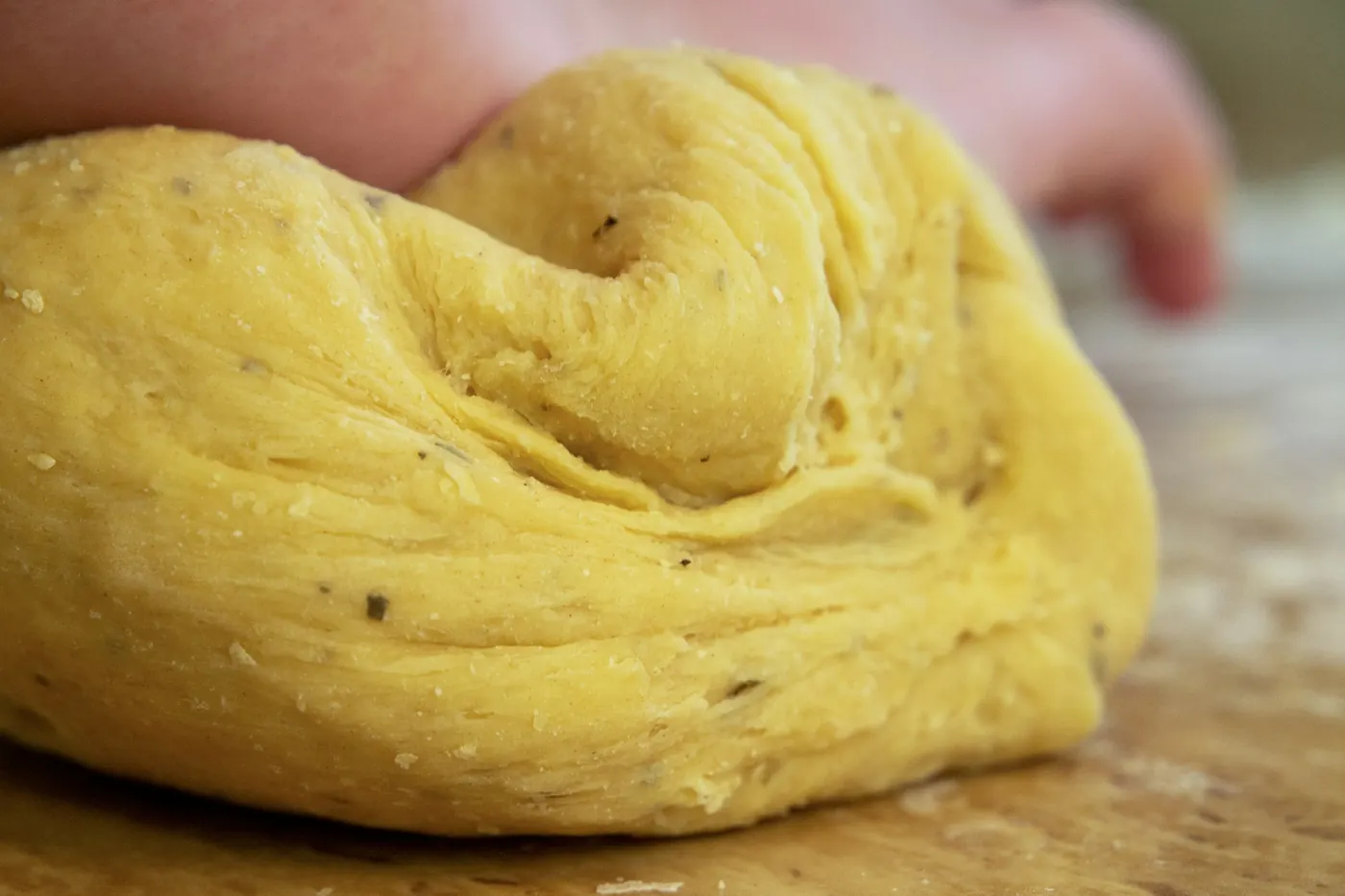
Pupusa dough is wetter and softer than tortilla dough, because it has to stretch around a filling. Published recipes show how much water that takes. America’s Test Kitchen mixes equal volumes, 2 cups of masa harina to 2 cups of boiling water, and found hot water let the starches absorb it faster and more completely, giving a dough that was easy to handle and did not dry out. King Arthur Baking uses about 462 grams of masa harina to 756 grams of warm water, roughly 100°F.
- Mix and rest. Stir the masa harina and salt together, add the water and work it for a few minutes until smooth. Let it rest so the flour finishes absorbing the water.
- Test a piece. King Arthur’s check: roll a small ball and press it flat. If the edges crack, add water a little at a time; if it sticks to your hands, add a spoonful of flour.
- Wet your hands. King Arthur keeps a bowl of water with a little oil beside the work surface so the dough does not stick to your palms.
- Fill and seal. Make a cup of dough in your palm, add the filling, close the edges over it and pat it into a thick disc. ATK presses the stuffed ball between plastic to a 4-inch disc for even thickness, and a tortilla press lined with plastic does the same job gently.
- Cook on a dry, medium-hot surface. ATK cooks four at a time in a 12-inch skillet for 2 to 4 minutes a side until spotty brown; King Arthur gives 4 to 6 minutes a side on a griddle at 350°F. A comal is ideal.
For fillings, ATK uses Monterey Jack with cotija and says quesillo can replace both; King Arthur adds refried black beans. Serve them with curtido, the vinegary cabbage slaw that is the standard partner, and a thin tomato salsa. King Arthur’s curtido keeps in the refrigerator for up to a week.
Pupusa flour questions, answered
Are pupusas Mexican?
No. Pupusas are Salvadoran, made El Salvador’s national dish in 2005, and Honduras shares their history. Mexico’s closest relative is the gordita, which is cooked first and then split and filled; our guide to masa antojitos covers the Mexican family of masa snacks. What pupusas share with Mexican cooking is the dough: nixtamalized corn masa.
Can I use Maseca for pupusas?
Yes. Maseca is masa harina, and many home recipes use it by name. Use the regular instant corn masa flour, not Maseca Tamal, which is coarser and meant for tamales.
Is masa harina the same as corn flour or cornmeal?
No. Cornmeal and plain corn flour are ground dried corn that has not been cooked in lime, and King Arthur Baking warns they are not good substitutes. Without nixtamalization the dough will not hold together around a filling.
Can I use masarepa or P.A.N. for pupusas?
Not for a traditional pupusa. Masarepa is precooked corn flour made for arepas and is not nixtamalized, according to America’s Test Kitchen, so it gives a different flavor and texture. Some Salvadoran cooks make pupusas from rice flour instead, but that is a separate style with its own dough.
Why does my pupusa dough crack?
Almost always because it is too dry. Add warm water a spoonful at a time and knead until a pressed ball has smooth edges. Covering the dough with a damp towel while you work stops it drying out between pupusas.
Are pupusas gluten-free?
Corn masa contains no gluten, but flour can pick up traces in a mill that handles wheat. If it matters, buy a flour labeled gluten-free: Chef Mex states it is certified gluten free, and Maseca is described as gluten-free by retailers.
Our final pick for pupusas
Buy Bob’s Red Mill Organic if you want a fine, plain, two-ingredient flour with pupusas named on the listing. Choose Masa Brosa for a plain white corn flour in a bigger bag, Chef Mex if you need certified gluten-free, and Minsa when a crowd is coming. Whichever you choose, mix it a little wetter than tortilla dough and keep your hands damp.
Pupusas are one use for a bag of masa harina. Our guide to the best masa harina for champurrado covers the thick chocolate drink made from the same flour, and the best masa harina for tortillas covers everyday tortillas.
And if you would rather someone else did the cooking tonight, see the menu or call to order.