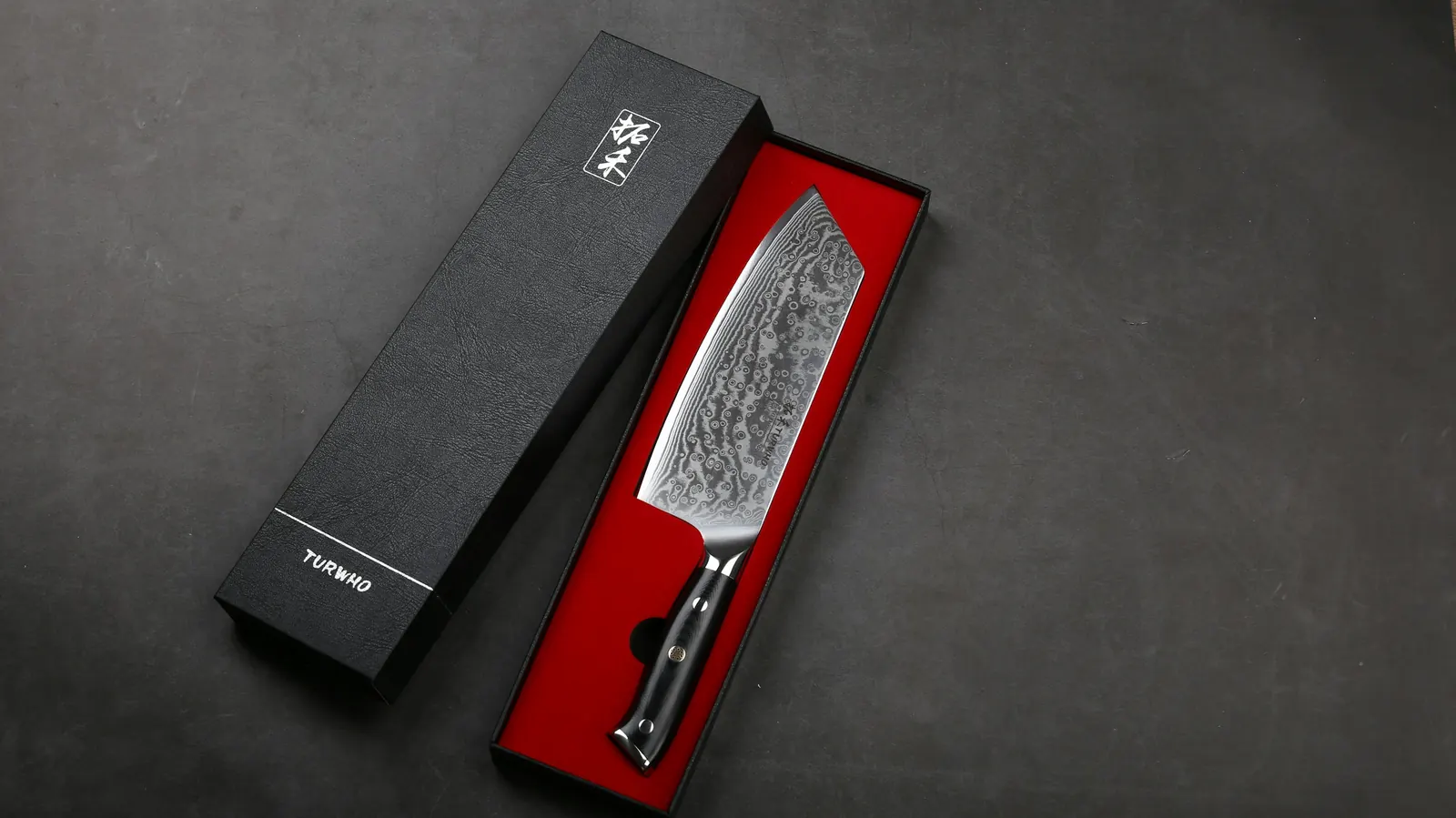
A honing rod is the long tool that lives next to the knife block and gets a few quick strokes before the onions. Most are either steel or ceramic, and they look alike enough that people buy whichever is on the shelf. They don’t do quite the same job, and the knives you own should decide which one belongs in your drawer.
On a busy prep line, cooks pick up the rod many times a shift, so the choice matters there more than anywhere. This guide compares a steel honing rod and a ceramic rod on hardness, how much metal they take off, which knives they suit, how they break, and how to care for them, using what the makers and a named knife shop say. Then it names one rod for each side.
Julia’s earns a commission on purchases made through links on this page, at no cost to you. Recommendations are based on what a restaurant kitchen looks for, product specifications and verified buyer reports.
Quick verdict: steel rod or ceramic rod?
If your knives are German or other Western-style blades, which is what most home kitchens own, a fine-cut steel is the better buy: it straightens the edge with little or no metal removed and it won’t shatter if it hits the floor. Choose a ceramic rod if you own hard Japanese knives, or a mix that includes them. Ceramic is far harder than knife steel, so it can work any edge, but the German maker F. Dick calls it very hard and brittle, so a drop can break it.
The table sums up the differences. The sections after it explain each one.
Honing steel vs ceramic rod, side by side
| Steel rod | Ceramic rod | |
|---|---|---|
| Main job | Straightens a rolled edge | Straightens and lightly smooths the edge |
| Hardness | Must be harder than the knife (F. Dick); our pick is 65 HRC | About four times harder than most knife steels (Knifewear) |
| Metal removed | None to high, depending on the cut (F. Dick) | Little; Mac sells its black ceramic as “hones only” |
| Best knives | Softer Western knives, around 56 to 58 HRC | Hard Japanese knives, and any knife |
| Breakage | Tough; survives a drop | Very hard but brittle (F. Dick) |
| Rust | Rinse after salt or spices (F. Dick) | Does not rust (Mac) |
| Angle and pressure | 15 to 20 degrees, light pressure, same strokes each side (F. Dick) | |
What a honing rod actually does
A sharp edge is very thin, and in use it bends over to one side. Shun describes honing as realigning that edge, and says plainly that honing does not create a new edge. Sharpening is different: it removes a small amount of metal to make a fresh edge, which Shun says should be done only when the knife truly needs it. If honing stops bringing a knife back, it is time to sharpen; our knife sharpener vs whetstone comparison covers that step.
Both steel and ceramic rods do the realigning. Where they differ is in what else they do along the way, and in which edges they can handle without harm.
Hardness: the rule that decides most of it
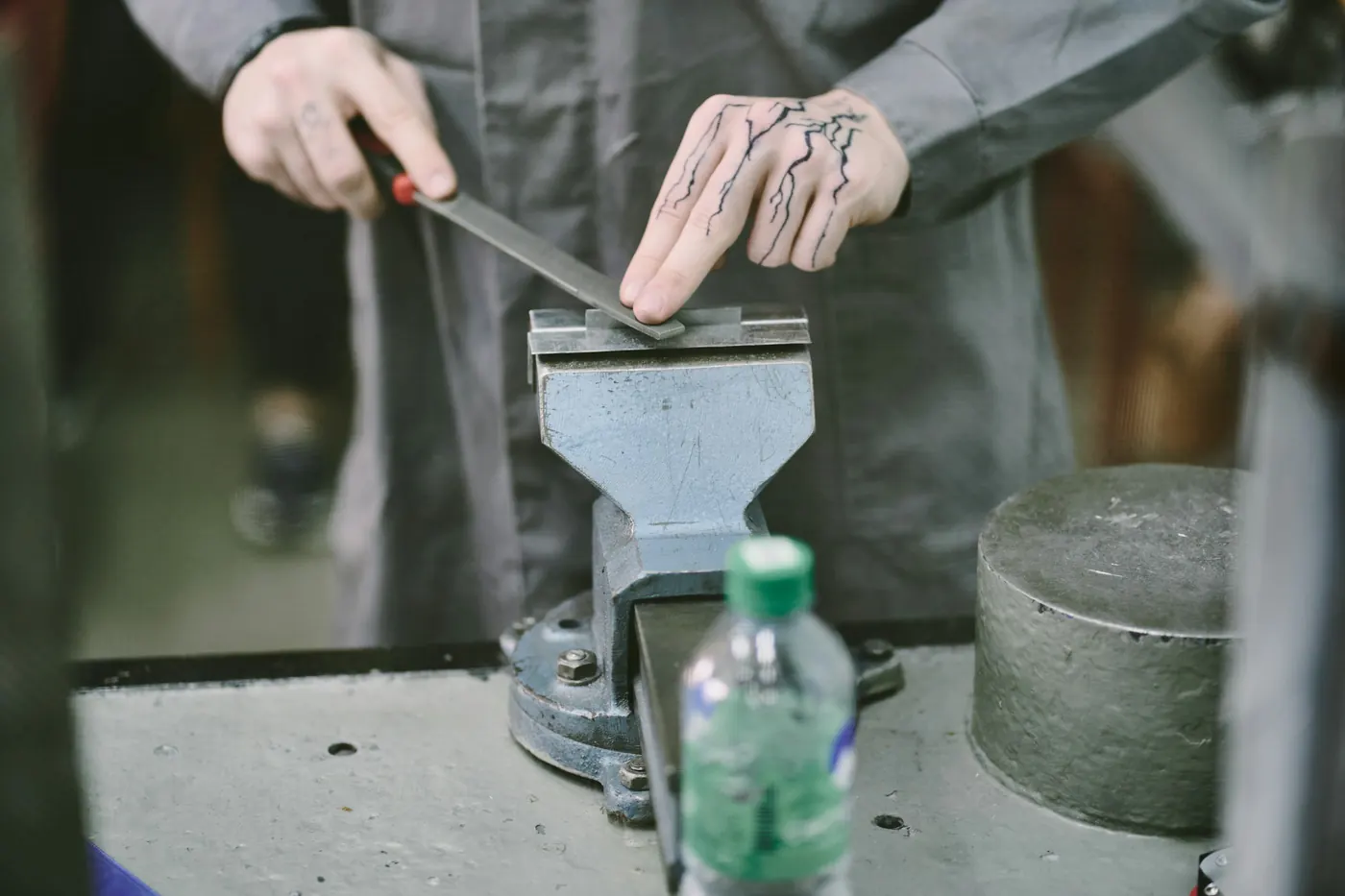
F. Dick, a German maker of sharpening steels, gives the rule in its sharpening-steel manual: the sharpening steel should always be harder than the knife being sharpened. Knife hardness is measured on the Rockwell C scale (HRC). F. Dick lists most of its own knife series at about 56 HRC and two harder series at about 61. Wüsthof’s listing says its forged knife steel is tempered to 58 HRC. Japanese knives often go higher.
A good steel rod is hardened for this job. The F. Dick Dickoron Classic in this guide is listed at 65 HRC, comfortably above a 56 to 58 HRC German knife. Ceramic goes much further. Chris Lord of the knife shop Knifewear writes that ceramic is about four times harder than most knife steels, which is why a ceramic rod takes the guesswork out of honing any knife. He also writes that metal rods often aren’t hard enough for Japanese knives.
So the honest summary is this. A hard steel rod covers the knives most American kitchens own. A ceramic rod covers everything, including the hard Japanese blades a steel may not suit. Our best honing steel for Japanese knives guide goes further into that case.
How much metal each one takes off
Not all steels are the same. F. Dick sorts its steel surfaces by how much they abrade. A polished steel does no abrading at all and only straightens and polishes the edge. A fine cut has low abrasion and mainly straightens. A standard cut has high abrasion, and diamond and rough cuts take off still more. The grooves on a steel rod are what bite into the metal; the finer or smoother the surface, the gentler the rod.
Ceramic sits at the gentle end, but makers word it differently. Mac’s listing for its black ceramic rod says it hones only. Wüsthof, on the other hand, sells its ceramic rod as a sharpening rod. As general kitchen sense, a ceramic rod has a grit, like a very fine stone, so firm strokes can take off a trace of metal; on a white rod that shows up as gray streaks. Knifewear’s Chris Lord warns that rods meant to remove steel can quickly pull too much away and shorten a knife’s life, and he prefers whetstones when steel needs removing.
For daily use, then, the gentlest choices are a fine or polished steel, or a fine ceramic. Coarse grooved and diamond rods belong to occasional touch-ups, not every-day strokes.
Breakage and durability
This is ceramic’s real weakness. F. Dick describes ceramic as especially suitable for hard knives but calls it a very hard but brittle material. As general kitchen sense, a ceramic rod that falls onto a tile floor or gets knocked around in a crowded drawer can chip or snap, while a steel rod just clatters. Hang a ceramic rod on a hook, or keep it in its own slot, and hone with the tip resting on a folded towel.
Steel has the opposite weakness: it can corrode. F. Dick tells owners to rinse a steel quickly after contact with spices or cooking salt, which in a kitchen full of lime and chile is good advice. Mac says its black ceramic does not rust.
Using either one: angle, pressure and how often
The technique is the same. F. Dick says to set the blade at 15 to 20 degrees on the steel, alternate sides with the same number of strokes, and use a wide arc with light pressure so you don’t raise a burr on one side. Shun puts its own knives at 16 degrees and also asks for light pressure and a smooth, controlled motion. With a ceramic rod, light pressure matters even more, because the harder surface works the edge faster.
On frequency, F. Dick recommends frequent, short honing before or after each use. Shun says some cooks hone once a week and others every day, depending on how much the knife works. As general kitchen sense, a home cook who preps dinner every night does well with a few strokes each time.
Cleaning and care
F. Dick’s care advice for a steel is to wash it with a mild, chlorine-free detergent, never an acidic cleaner, rinse it well, dry it with a soft lint-free cloth and never use a metal brush on it. Mac says its ceramic rod should be washed by hand and is not dishwasher safe. Neither rod belongs in the dishwasher, and both should be dried before they go back on the hook. As general kitchen sense, wipe the knife after honing either way, to remove any fine metal dust before the blade goes back to the food.
Choose a steel rod if… / Choose a ceramic rod if…
Choose a steel rod if…
- Your knives are German or other Western-style blades.
- You want daily straightening with little or no metal removed.
- The rod may get dropped or banged around in a busy kitchen.
- You want a long rod for chef’s and slicing knives.
Choose a ceramic rod if…
- You own Japanese knives, or a mix that includes hard blades.
- You want one rod that suits every knife in the block.
- You can hang it up and handle it with care.
- You like the slightly refined edge a fine surface leaves.
One rod for each side of the honing steel vs ceramic rod question
Both picks were in stock with a new lead offer when we checked, and neither listing appears on our other pages. The steel is a fine-cut, very hard German rod suited to everyday honing. The ceramic is Mac’s black ceramic rod; a shorter Mac white ceramic rod is on our Japanese-knife honing page, and this one is here because it is a different, finer ceramic at a length that covers a 10-inch chef’s knife. For a wider range of rods, see our best honing steel guide, and for lower-cost options our best cheap honing steel guide.
1. F. Dick Dickoron Classic Sharpening Steel, 11.8-inch – Hard, Fine Steel for Daily Honing
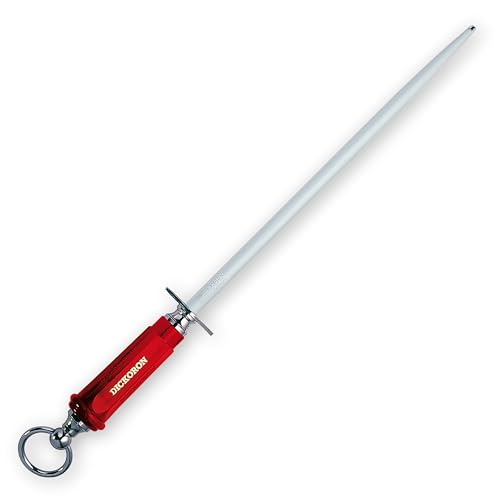
F. Dick is a German maker of knives and sharpening steels, and Dickoron is its steel line. The listing describes this one as an oval rod with F. Dick’s sapphire cut, a 30-centimeter (11.8-inch) blade and a hardness of 65 HRC. F. Dick’s own Dickoron page says the sapphire cut allows a velvety-soft honing, and that the rod comes in round and oval shapes.
Those details line up with the comparison above. At 65 HRC it is harder than the 56 to 58 HRC German knives most kitchens own, which is F. Dick’s own rule for a steel. A fine cut straightens rather than grinds, so it suits the every-day strokes before prep. The oval shape, the listing says, gives the knife a wider surface to bear on, and the 11.8-inch length is long enough for a chef’s knife or a brisket slicer.
The listing calls out a nonslip synthetic handle with a guard for finger protection, NSF certification and German manufacture. Care follows F. Dick’s manual: mild detergent, rinse, dry, no metal brushes, and a quick rinse after salt or spices. The lead offer was New, sold by F. Dick, when we checked.
Why we like it
- Listed at 65 HRC, harder than typical German knives
- Fine sapphire cut for gentle daily honing
- Oval rod with a wide bearing surface (listing)
- NSF certified and made in Germany (listing)
Key specifications
| Model | 75981300 |
|---|---|
| Rod material | Steel |
| Stated hardness | 65 HRC |
| Surface | Sapphire cut (fine) |
| Rod length | 11.8 inches (30 cm) |
| Shape | Oval |
| Made in | Germany |
| Care | Mild detergent, rinse, dry (F. Dick) |
Why we recommend it
It suits a cook with German or Western-style knives who hones every day and wants a tough, long rod that straightens without wearing the edge down.
Skip it if your knives are hard Japanese blades above about 61 HRC; a ceramic rod is the safer match.
Pros and cons
Pros
- Hard, fine surface for daily use
- Long enough for big knives
- Won’t shatter if dropped
Cons
- Not the best match for very hard knives
- Needs rinsing after salt or spices
- Weight not stated
2. Mac Black Ceramic Honing Rod, 10.5-inch – Hones Hard Knives Without Rust
Mac is a Japanese knife maker, and this is its black ceramic honing rod, model SRB-104. The listing says the rod hones only, that black ceramic is harder than both white ceramic and steel, and that it does not rust. It is made in Japan and is 10-1/2 inches long, which covers a 10-inch chef’s knife.
That makes it the safe single rod for a block that includes hard Japanese knives. Knifewear’s Chris Lord suggests the black ceramic rod for people who hone every day, describing it as the finer choice, and says ceramic’s hardness takes the guesswork out of honing any knife. It works just as well on a softer German blade.
The care is simple but strict: hand-wash, not the dishwasher, according to the listing. Like any ceramic, it is brittle, so hang it or store it on its own and don’t let it fall. The listing gives a lifetime warranty to the original owner, which does not cover normal wear or abuse; Mac says damaged rods can be replaced for a fee. The lead offer was New, from a third-party seller, MVTRADINGONLINE (USA), rather than Amazon, when we checked.
Why we like it
- Harder than steel, so suits hard knives (listing)
- Sold as “hones only”, not a sharpener
- Does not rust (listing)
- Lifetime warranty to the original owner (listing)
Key specifications
| Model | SRB-104 |
|---|---|
| Rod material | Black ceramic |
| Stated hardness | Harder than white ceramic and steel (no HRC given) |
| Surface | Fine ceramic; hones only |
| Rod length | 10-1/2 inches |
| Shape | Not stated |
| Made in | Japan |
| Care | Hand wash; not dishwasher safe |
Why we recommend it
It suits a cook with Japanese knives, or a mixed block, who wants one rod that is harder than every blade in the kitchen and can keep it hanging out of harm’s way.
Skip it if your rod lives in a crowded drawer or gets dropped often; ceramic is brittle and a steel rod will last longer there.
Pros and cons
Pros
- Works on hard and soft knives alike
- Gentle, fine surface
- Won’t rust
Cons
- Brittle; can break if dropped
- Shorter than the steel pick
- Sold by a third-party seller
Steel and ceramic rod questions, answered
Is a ceramic rod better than a honing steel?
Not for everyone. Ceramic is harder, so it suits hard Japanese knives and any other knife. A fine steel is tougher and does the daily job just as well on the softer German knives most kitchens own. If you only own Western knives, a steel is the easier rod to live with.
Can I use a steel honing rod on Japanese knives?
F. Dick says a steel should always be harder than the knife, and Knifewear says metal rods often aren’t hard enough for Japanese knives. A very hard steel can work on mid-hard blades, but for hard Japanese steel a ceramic rod is the safer choice. See our best Japanese knife guide for the knives themselves.
Does a ceramic rod sharpen a knife?
Only very lightly, if at all. Mac sells its black ceramic as hones only, while Wüsthof calls its ceramic rod a sharpening rod. For a truly dull knife, use a whetstone or sharpener; our best whetstone guide covers stones.
Why did my ceramic rod turn gray?
As general kitchen sense, the gray streaks are fine metal from the knife on the rod’s surface. Wash it by hand as the maker says; Mac’s rod is not dishwasher safe.
What angle should I hold?
F. Dick gives 15 to 20 degrees; Shun gives 16 degrees for its knives. Match the angle your knife was sharpened at, and keep the pressure light.
Our take: a fine steel for most, ceramic for hard knives
Most home kitchens with German-style knives will do best with a hard, fine-cut steel: it straightens the edge, takes off little metal and can survive a knock. If your block includes Japanese knives, buy a ceramic rod instead, hang it up and treat it gently. Whichever you choose, keep the strokes light and hone often, and the knife will need the stone far less. For the knives to go with it, see our best chef knife guide. And when you’d rather someone else did the chopping, see the menu or call to order.