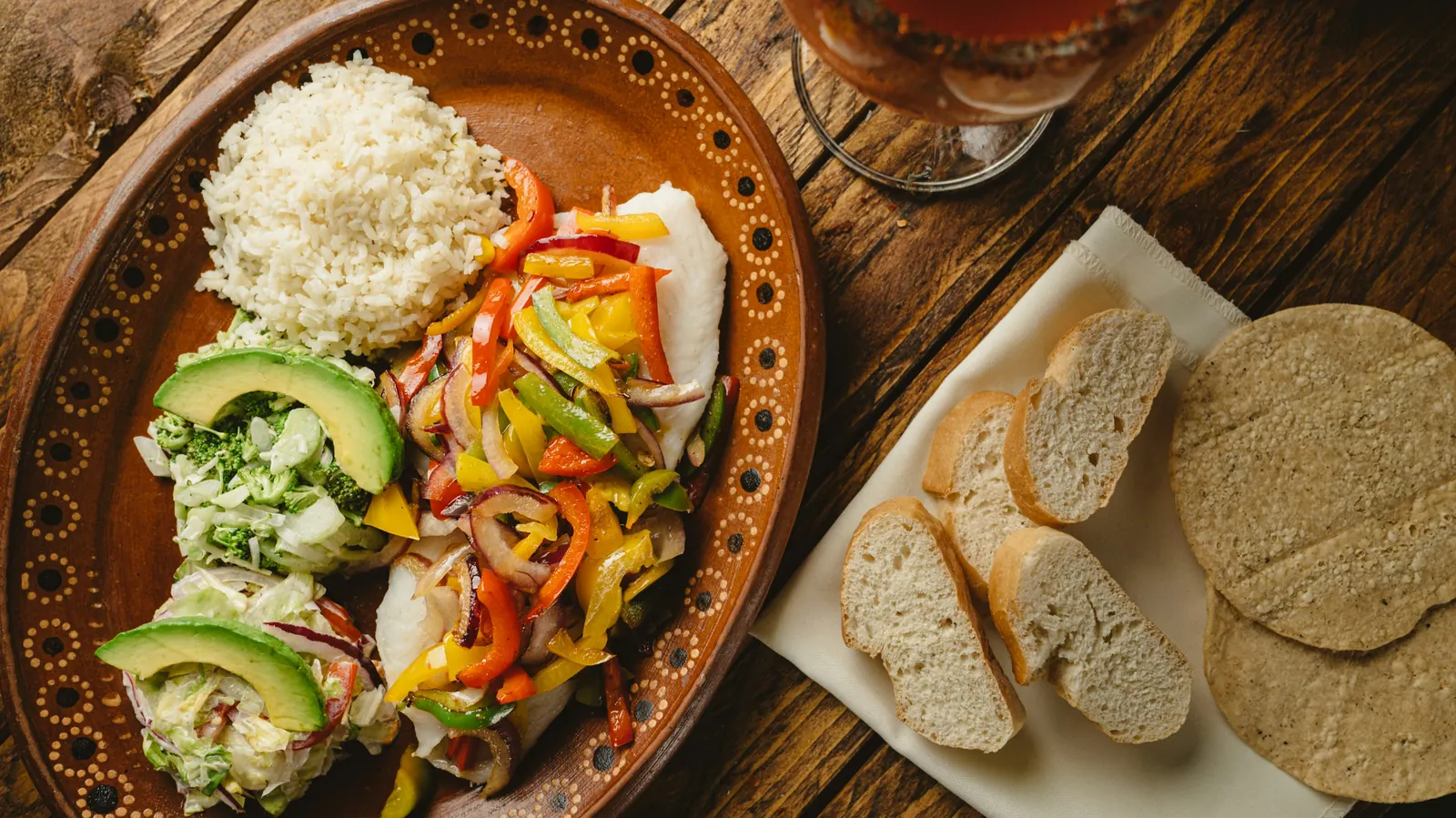
Mexican cooking is built on corn, beans, squash, chiles and cheese. On paper it should be one of the easiest cuisines to eat meat-free in.
In practice there are three traps, and two of them are on the part of the plate you would never think to check.
The short answer
Order vegetable or spinach enchiladas, a cheese quesadilla, guacamole, or a chile con queso made with roasted poblano. The two things to ask about are the beans, which are traditionally cooked with lard or pork, and the rice, which is often made with chicken broth. Do not assume a chile relleno is meat-free — many are stuffed with picadillo.
The part that is genuinely easy
Most of what makes Mexican food taste like Mexican food contains no meat at all.
Corn tortillas are corn, water and lime. Salsas are chiles, tomato or tomatillo, onion and herbs. Guacamole is avocado. The chile pastes that give red sauces and moles their depth are dried fruit-forward chiles, not meat stock. Cheese is everywhere — Oaxaca, queso fresco, cotija — and it is doing much of the work.
So the base layer of the cuisine is already there. What you are navigating is a handful of specific dishes and, more often, the sides that arrive with them.
Trap one: the beans
This is the one that catches almost everyone, because beans look like the safe order.
Traditional refried beans are cooked in manteca — pork lard. As Cooks Without Borders notes in its frijoles refritos recipe, lard is the traditional fat, and it is a large part of why restaurant refried beans taste the way they do. Some kitchens use oil instead. You cannot tell by looking.
Charro beans are more clear-cut: the dish is defined partly by the bacon, ham or chorizo simmered into it. If a menu says charro or borracho beans, assume pork is in there unless the kitchen says otherwise.
Black beans, served whole rather than refried, are usually the safest of the three — but that is a tendency, not a rule, and it is still worth one question.
Trap two: the rice
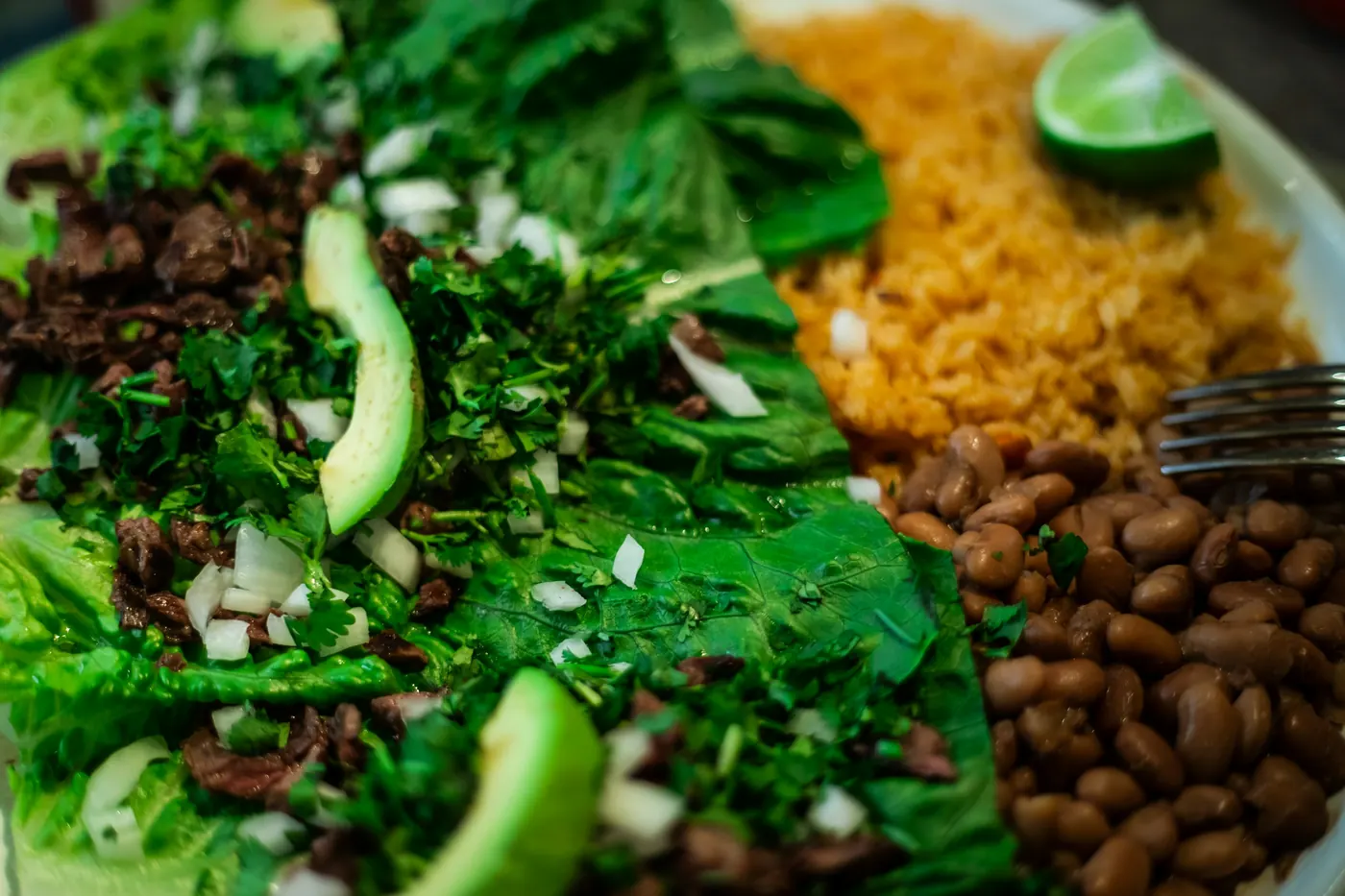
Mexican rice gets its color from tomato and its flavor from stock, and that stock is frequently chicken.
This one is easy to miss because rice is a garnish in most people’s heads, not a dish. If you eat no meat at all, it is worth asking about the rice on the same breath as the beans. Plain white rice is more often made with water.
Trap three: the chile relleno
Nearly every online list of vegetarian options at a Mexican restaurant includes chile rellenos, on the reasonable logic that a chile stuffed with cheese contains no meat.
Plenty of them are stuffed with picadillo — seasoned ground beef — instead of, or alongside, the cheese. The menu will usually say so if you read the full description rather than the dish name. This is the single most common way a vegetarian order goes wrong at a Tex-Mex restaurant.
The reliable orders
These hold up on most Mexican and Tex-Mex menus.
| Dish | Usually meat-free? | What to check |
|---|---|---|
| Vegetable enchiladas | Yes | The rice and beans alongside |
| Spinach enchiladas | Yes | The rice and beans alongside |
| Cheese quesadilla | Yes | Nothing — it is cheese and tortilla |
| Guacamole | Yes | Nothing |
| Chile con queso | Usually | Whether picadillo is mixed in or optional |
| Chile relleno | Often not | Whether it is stuffed with picadillo |
| Sopes and gorditas | Often not | The topping, which is usually meat |
| Refried beans | Often not | Whether they are cooked in lard |
The pattern is consistent: what is built to be meat-free usually is, and what is adapted usually is not.
How to ask without making it awkward
One question covers most of it: “Are the beans and rice made with meat?”
That single sentence catches the lard, the pork in the charro beans and the chicken stock in one go, and it is a question servers at Mexican restaurants field constantly. If the answer is yes on both, ask whether black beans and plain rice are available instead — most kitchens carry them.
The second question, only if it applies: whether the cheese sauce or the stuffed pepper has meat in it. Everything else on the vegetarian side of the menu is usually what it says it is.
How this reads on Julia’s menu
Julia’s is a useful example because the descriptions are specific enough to check.
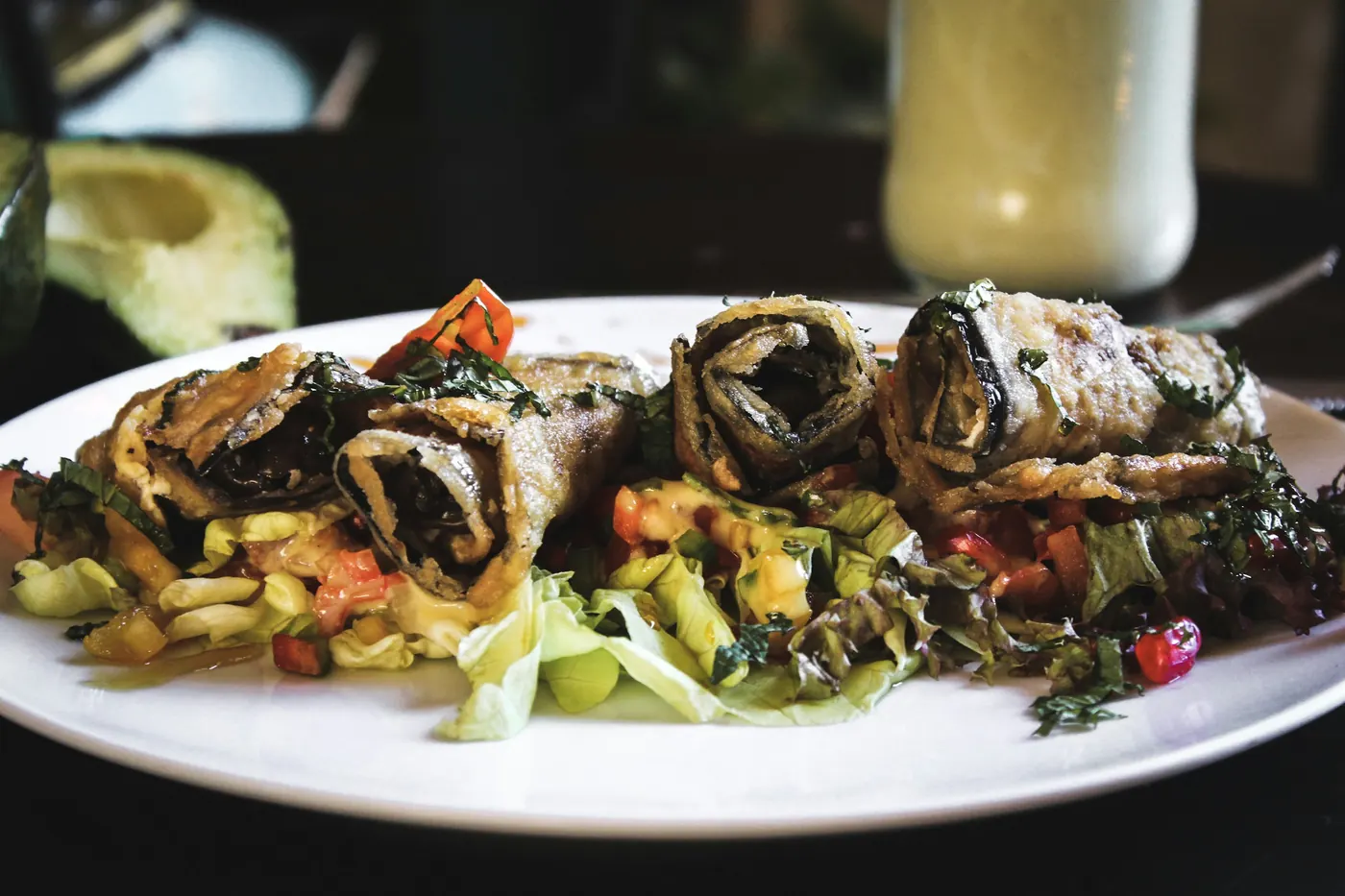
Two mains are built without meat. The spinach enchiladas are spinach, mushroom, red onion and red bell pepper under a cream poblano sauce with Oaxaca cheese. The veggie enchiladas are stuffed with zucchini, roasted corn, poblano, carrots and red onion under a roasted tomato-habanero sauce. Both come with black beans rather than charro — which happens to be the more useful side of that choice.
Among the starters, the chile con queso is a blend of creamy cheeses with rajas and onions, and picadillo is listed as an optional addition rather than part of the dish. The queso fundido is mushrooms, poblano, onion and garlic under Oaxaca cheese. The guacamole is avocado, tomato and onion. The quesadillas list cheese and spinach as two of the fillings alongside the meat options.
The dish to skip is the chile relleno, which is stuffed with picadillo and Oaxaca cheese. The sopes come topped with picadillo or carne guisada. Neither is a hidden ingredient — both are printed in the description — but they are exactly the two dishes a general vegetarian guide would tell you to order.
The beans and rice question still applies here as anywhere: the charro beans and Mexican rice that come with most plates are worth asking about directly.
Building a full meal
To start: guacamole with chips, or a cheese dip made with roasted poblano. Both are substantial and neither needs modification.
Main: vegetable or spinach enchiladas. If the sides are a problem, ask for black beans and plain rice.
Alongside: warm corn tortillas. Corn tortillas are made from masa and are the safer of the two, because some flour tortillas are made with lard — our tortilla guide explains why. That same masa is what puts corn tortillas at the center of eating wheat-free at a Mexican restaurant.
To finish: flan or tres leches, both of which are dairy and egg rather than anything else.
Frequently asked questions
Are refried beans vegetarian?
Often not. Traditional refried beans are cooked in pork lard, though many restaurants now use vegetable oil. It is always worth asking, because you cannot tell from the plate.
Is Mexican rice vegetarian?
Frequently not — chicken broth is a common base. Plain white rice is more likely to be made with water. Ask, and ask about the beans at the same time.
What is the safest thing to order?
Vegetable or spinach enchiladas, or a cheese quesadilla. All three are built without meat rather than adapted, so nothing needs to be left out.
Is guacamole always vegetarian?
Yes, in any standard preparation — avocado, lime, onion, tomato and cilantro. It is the most reliable order on the menu.
Can I eat vegan at a Mexican restaurant?
It is harder, because cheese and crema are in most of the meat-free dishes. Guacamole, salsa, corn tortillas and whole black beans are the usual starting points, and the same questions about lard and stock apply.
The short version
The mains are easier than you expect and the sides are harder. Ask one question about the beans and rice, read the chile relleno description before ordering it, and the rest of the menu opens up.
The full food menu lists the ingredients for every dish, which makes it straightforward to scan. If heat is also a consideration, our guide to mild Mexican dishes covers which chiles actually signal spice.