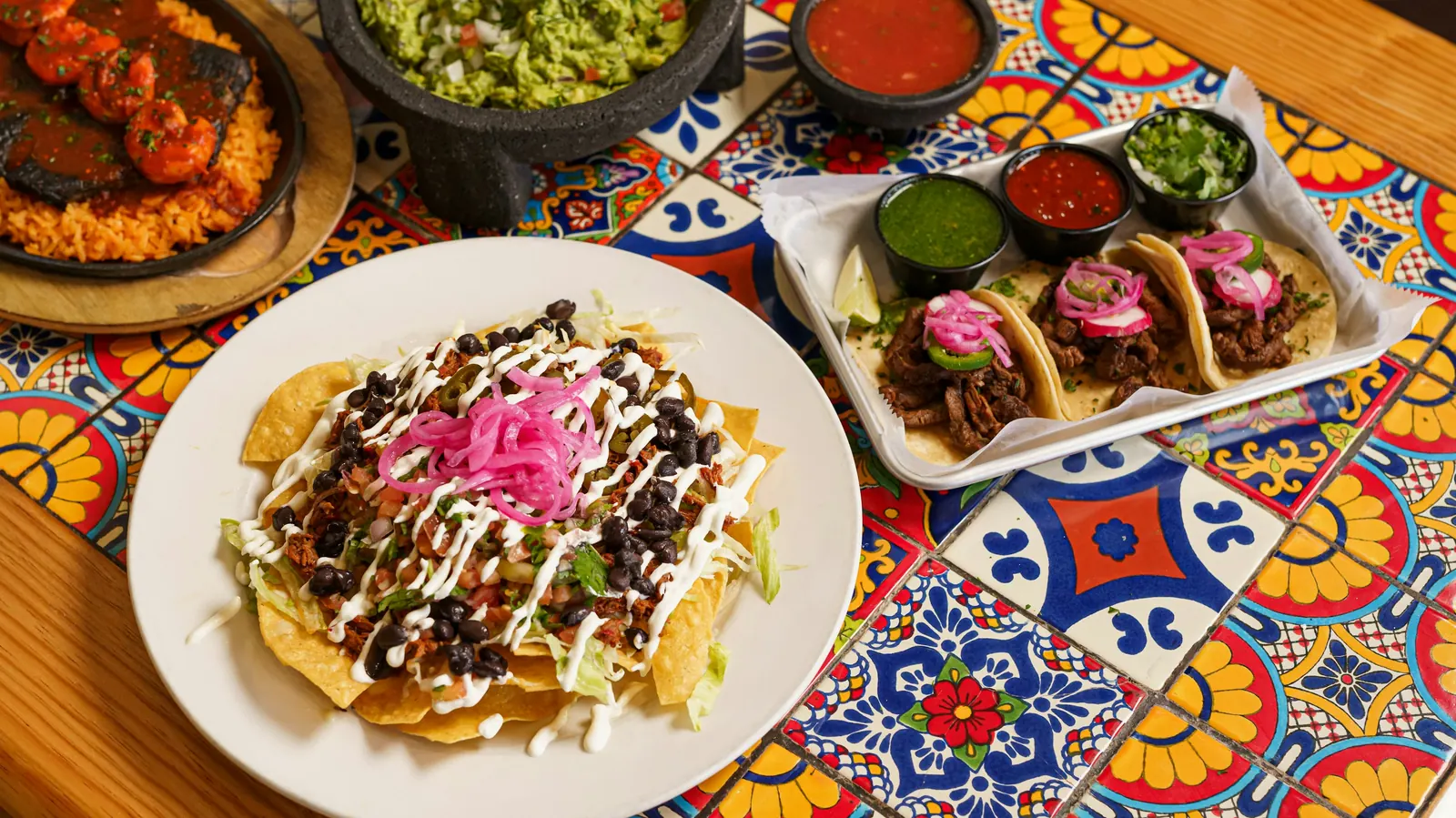
Most of what people confidently believe about Mexican food describes one narrow slice of it — usually the version they met first, in a chain restaurant, in another country.
Here are the assumptions worth dropping, and what is actually true instead.
The short answer
Mexican food is not mostly spicy: chiles are used for depth far more than heat. Mole is not a chocolate sauce. Burritos and hard-shell tacos are not staples in Mexico. Tex-Mex is a real cuisine rather than a failed imitation. And the repertoire runs to hundreds of regional dishes, not the five that reach most menus abroad.
| The belief | What is actually true |
|---|---|
| It is all spicy | Most chiles are used for depth, not heat |
| Mole is chocolate sauce | Most moles contain none at all |
| It is five dishes | Hundreds, divided by region |
| Tex-Mex is fake | A real cuisine with its own history |
| Authentic means better | It describes tradition, not quality |
| It should be cheap | Much of it is a day of labor |
| Everything has a tortilla | Soups, moles and stews do not |
| Chips and salsa are traditional | An American restaurant convention |
Myth 1: it is all spicy
The most persistent one, and the most wrong.
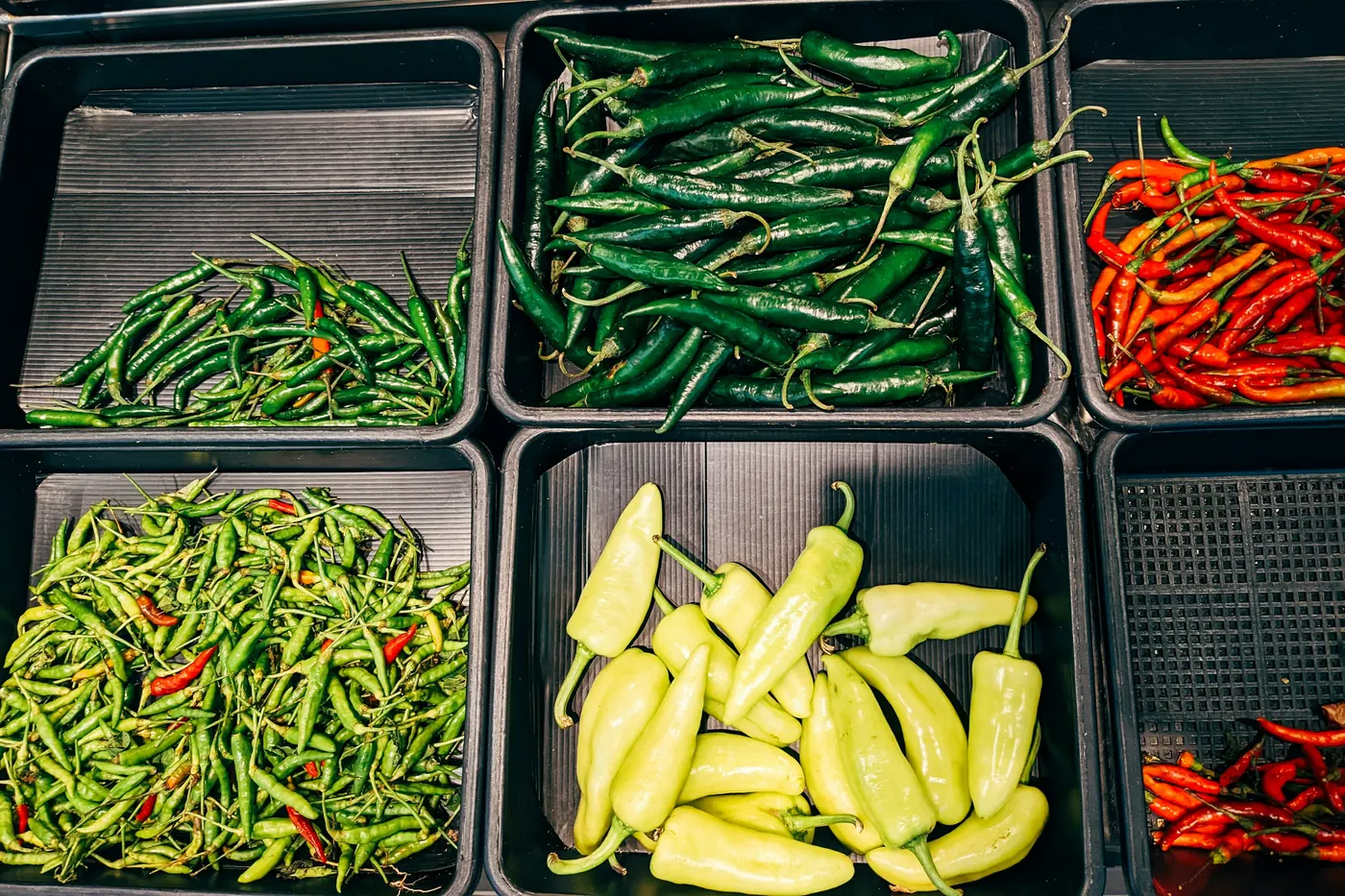
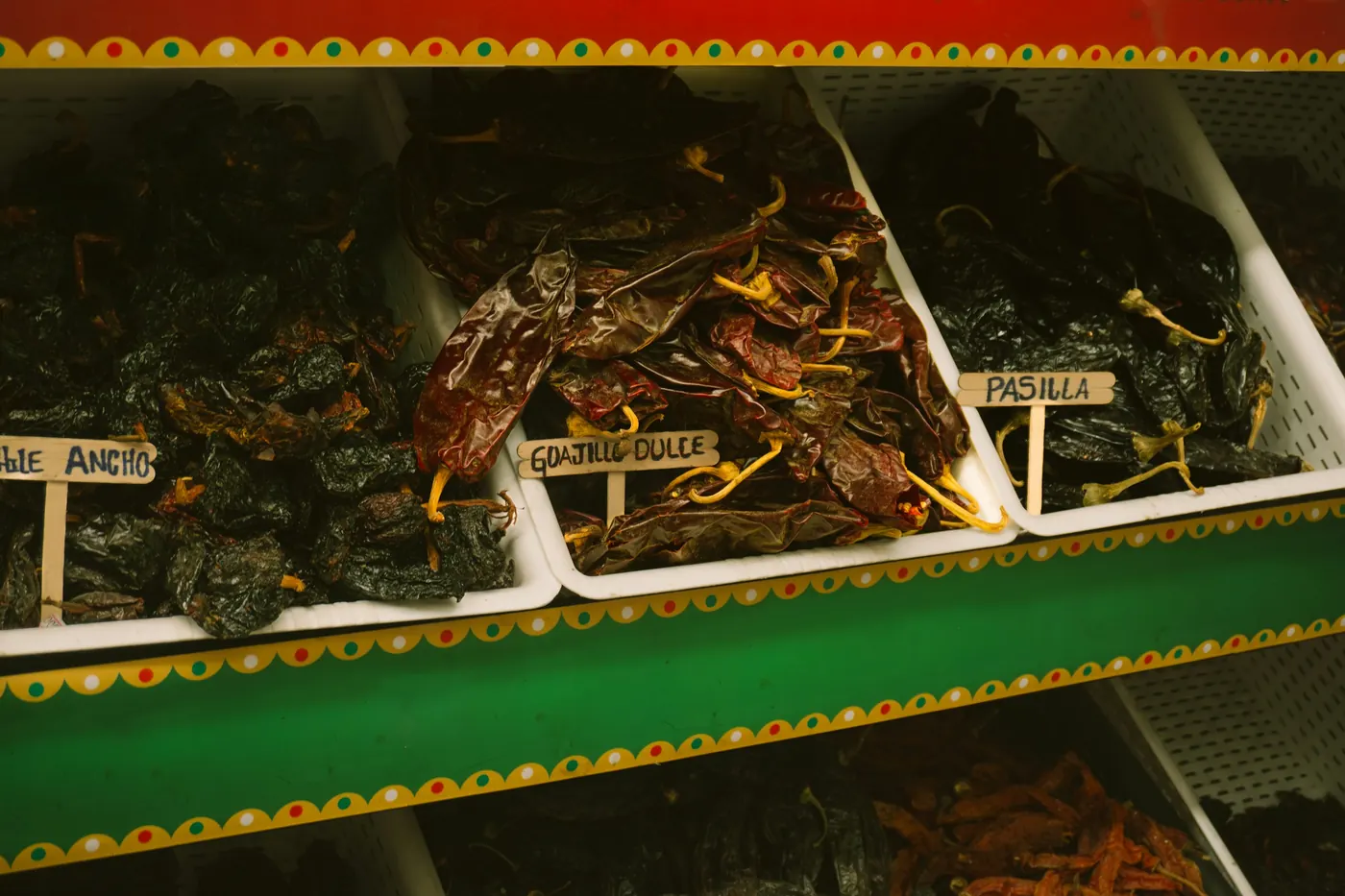
Chiles do two separate jobs, and only one of them is heat. Dried guajillo, ancho and pasilla — the backbone of red sauces, moles and braises — taste of raisin, dried fruit and tobacco, with very little capsaicin. A dish can be built almost entirely on chiles and be mild.
HuffPost, collecting myths Mexican chefs would like people to stop repeating, puts this one first: chiles are used for complexity, and plenty of dishes carry no heat at all.
Where heat does appear, it is usually named — habanero, serrano, chile de árbol — or it arrives separately in a salsa you control. Our guide to mild dishes covers which words on a menu actually warn you.
Myth 2: mole is a chocolate sauce
Most moles contain no chocolate whatsoever.
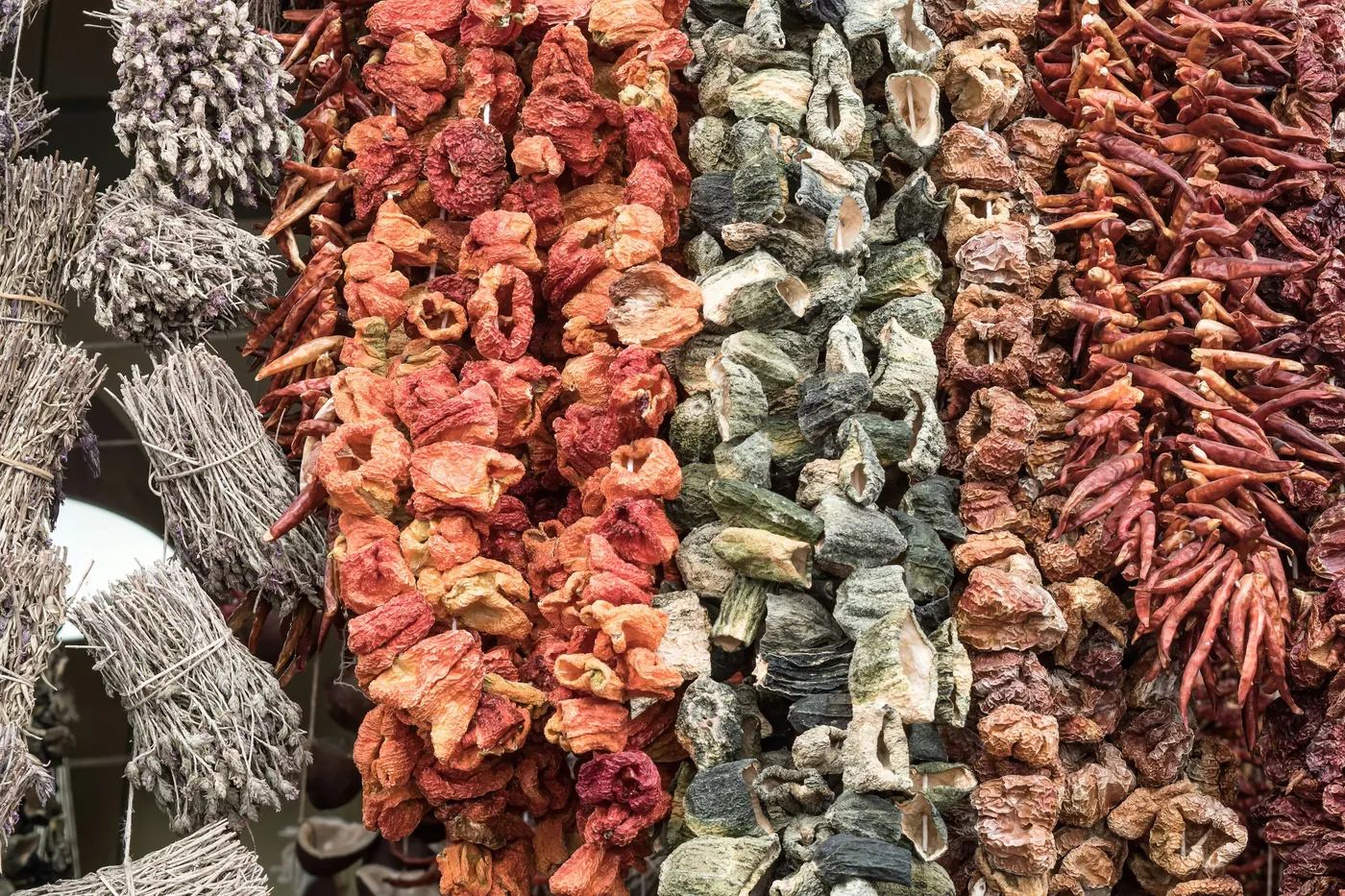
Mole is a family of sauces built on dried chiles, nuts, seeds and spices, thickened with the ground nuts rather than with flour or cream. Where chocolate does appear — principally in mole poblano and mole negro — it is a small amount of unsweetened chocolate used for bitterness and body, behaving more like the cocoa in a chili than like a dessert ingredient.
Our guide to mole works through the varieties. If you have avoided it because you did not want chocolate on your chicken, you have been avoiding a dish that mostly does not exist.
Myth 3: the cuisine is five dishes
Tacos, burritos, enchiladas, nachos, quesadillas. That list is a description of what exported well, not of what Mexico eats.
Two of those — burritos and nachos — are barely present in most of Mexico. Meanwhile the country’s regional kitchens produce dishes that never traveled at all: tlayudas, cochinita pibil, chiles en nogada, romeritos, aporreadillo, pozole in three colors. Oaxaca alone is credited with seven distinct moles.
Our regional guide maps the main divisions. The short version is that the cooking of the Yucatán and the cooking of Sonora have about as much in common as Sicilian and Norwegian food.
Myth 4: Tex-Mex is fake Mexican food
Tex-Mex is a regional cuisine with its own history, developed by Tejano communities over generations. It is not a failed attempt at something else.
It has documented origins, identifiable markers — yellow cheese, cumin, beef, wheat tortillas — and dishes with named inventors. Nachos have a person, a place and a year. Fajitas came out of South Texas ranch work.
Our comparison of the two makes the fuller case. The useful framing is that Tex-Mex is a border regional cuisine that happens to sit on the northern side of a political line, and “authentic” is not a measure of whether food is good.
Myth 5: authenticity predicts quality
It does not, and treating it as a proxy leads people to bad meals.
A well-made plate of cheese enchiladas under chili gravy is better food than a badly made mole. A taquería is not more legitimate than a dining room; Mexico has both and always has. Our taquería comparison covers that one directly.
Better signals exist. Does the menu carry dishes that take a day to make? Does it name its chiles and cheeses? Is the rice fluffy? Our guide to judging a Mexican restaurant collects them.
Myth 6: it is peasant food, so it should be cheap
Some of it is fast and inexpensive. Much of it is neither.
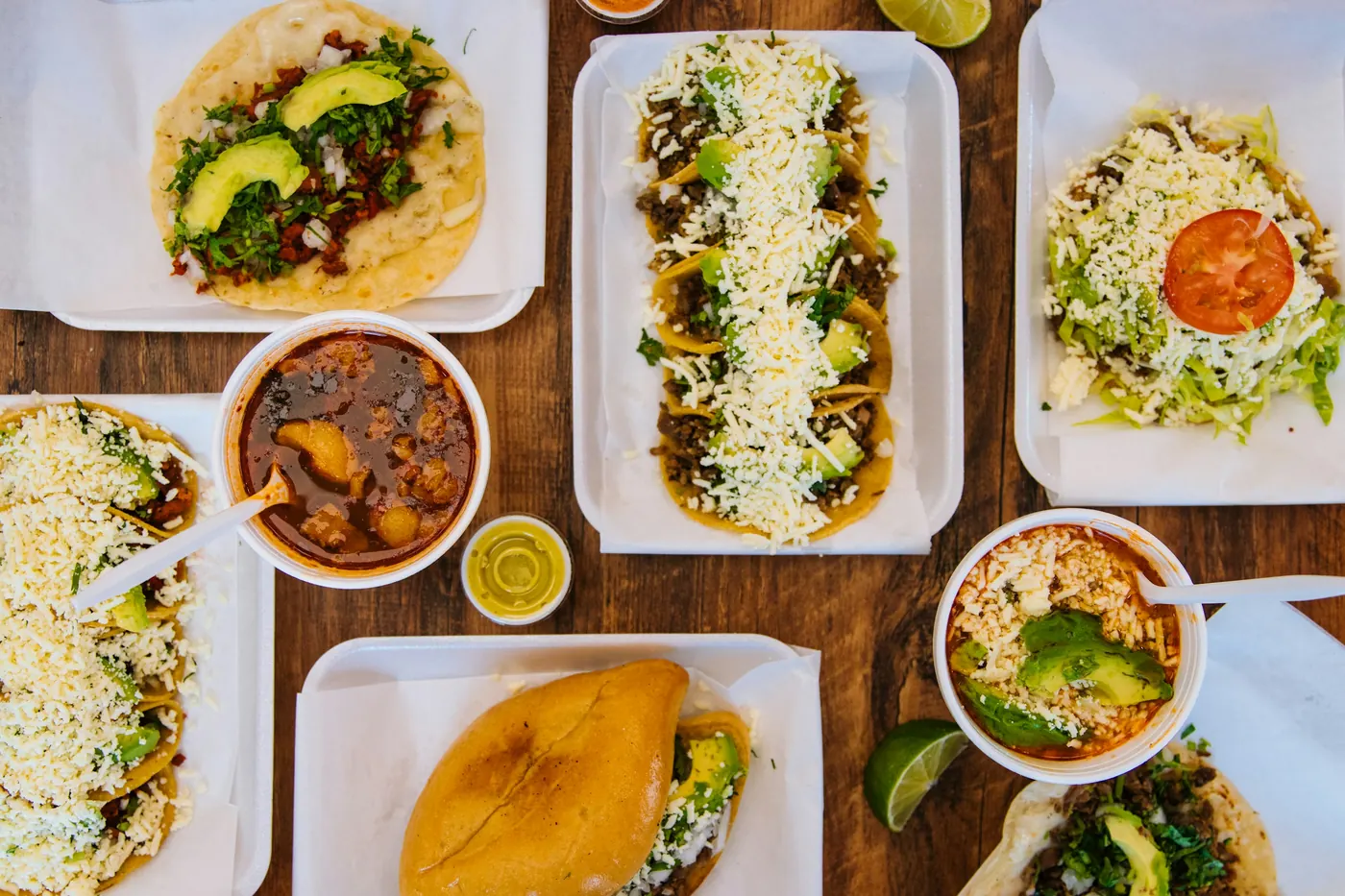
A mole negro is thirty ingredients toasted separately and cooked down over a day. Barbacoa is an overnight cook. Tamales are assembled by hand, one at a time, by the hundred. These are labor-intensive dishes, and the labor is the cost.
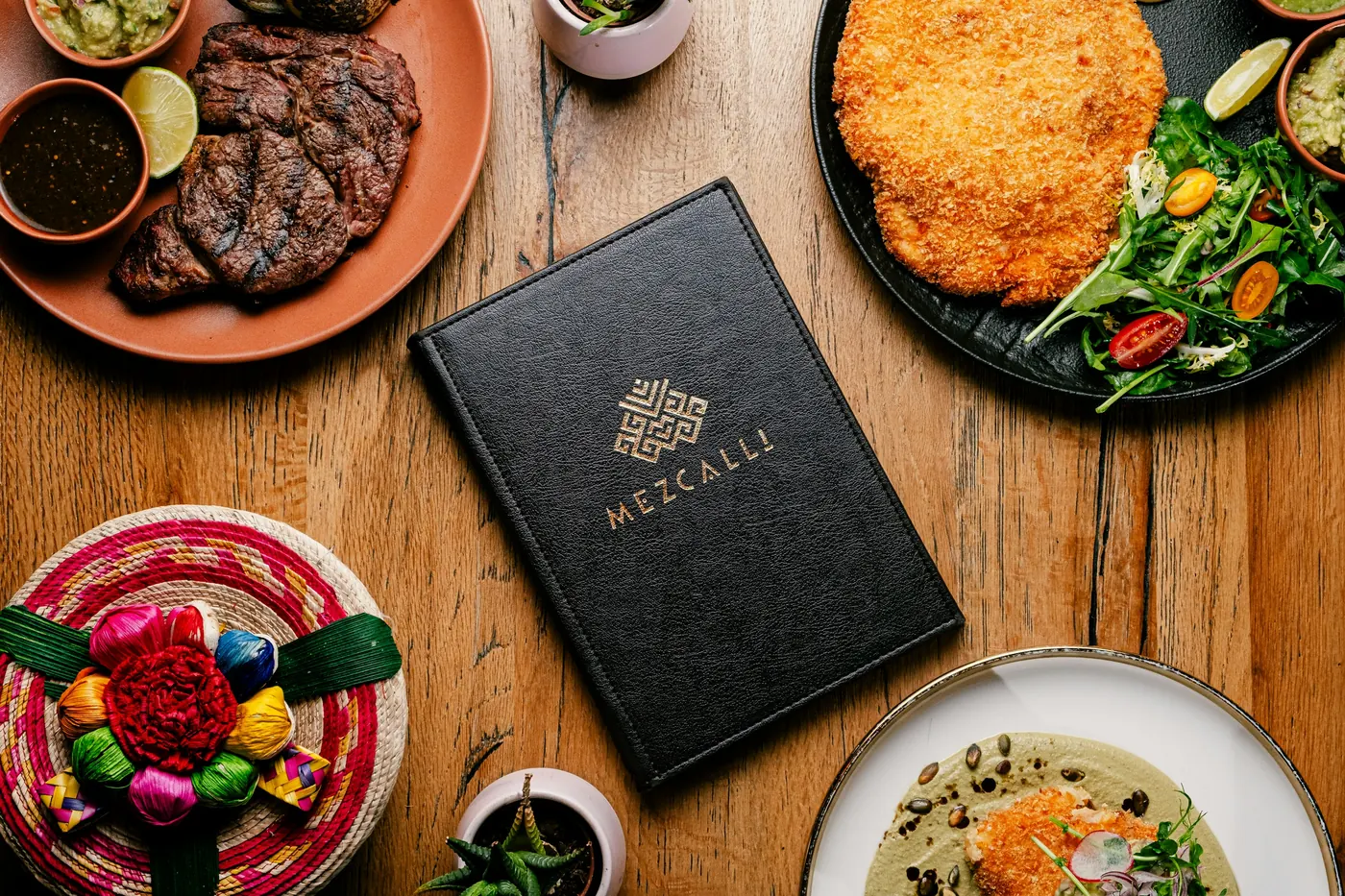
Mexico also has a fine-dining tradition that most people outside the country never encounter, working with the same regional ingredients at restaurant-kitchen scale.
Myth 7: everything comes wrapped in a tortilla
Plenty does. Plenty does not.
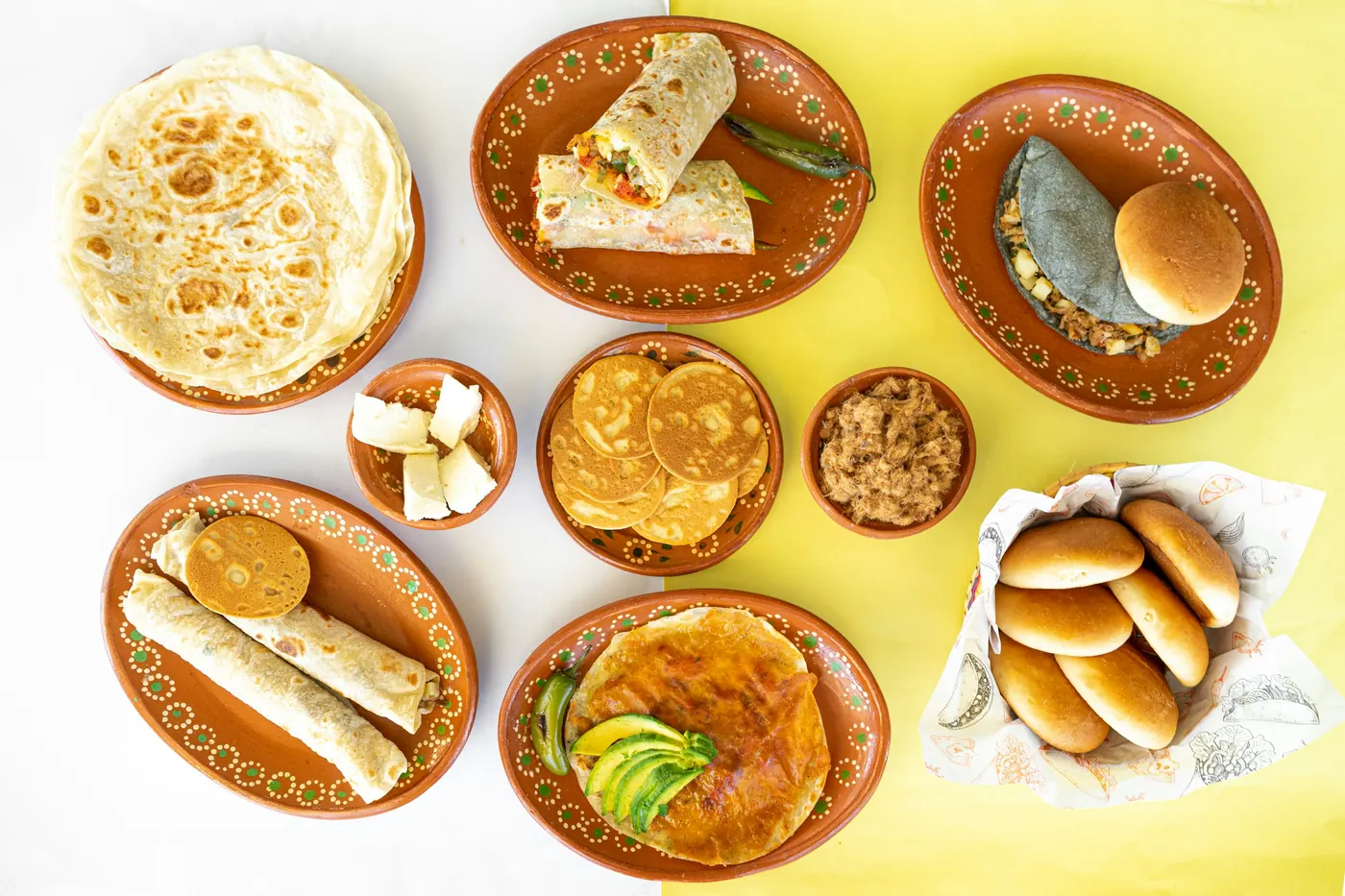
Soups — pozole, menudo, caldos — are a whole category. So are moles served over meat with rice, grilled dishes, stews, seafood cooked in citrus, and the entire dessert and bakery repertoire. The tortilla is often alongside rather than around.
And where corn appears, it is frequently not as a tortilla at all: hominy in pozole, masa in tamales, thick masa bases in the antojitos covered by our sopes and gorditas guide.
Myth 8: chips and salsa are a Mexican tradition
The basket of tortilla chips that lands on the table before you order is an American restaurant convention, not a Mexican one.
Tortilla chips themselves are real — totopos, fried from stale tortillas, are old and useful. What is not traditional is the free basket as a standard opening course, which developed in the United States alongside mass-produced chips in the mid-twentieth century.
Nachos have a similar shape: invented on the border, in Mexico, for American customers, and then developed further in Texas. Our account of that invention covers it.
What a Houston menu shows
A menu is the fastest way to see most of this at once.
Julia’s menu carries regional dishes from four areas alongside Tex-Mex standards — cochinita pibil from the Yucatán next to Nachos Tejanos, pollo en mole next to charbroiled fajitas. Both traditions, labeled, on one page.
It also names its chiles in almost every description — poblano, habanero, chipotle, jalapeño, rajas — which is what makes the heat readable before you order rather than a gamble. And the cheeses are named too: Oaxaca where something needs to melt, queso fresco where it needs to crumble, cheddar in the one dish called Tejanos.
None of that requires taking anyone’s word for it. It is printed on the menu.
Frequently asked questions
Is all Mexican food spicy?
No. Most of a standard menu is mild. Chiles are used for depth and color far more often than for heat, and the genuinely hot items are usually named as such.
Does mole contain chocolate?
Most moles do not. Where it appears it is a small amount of unsweetened chocolate used for bitterness, not sweetness.
Are burritos Mexican?
They exist in northern Mexico but are far more prominent in the United States. They are not a staple across most of the country.
Is Tex-Mex real Mexican food?
It is a real cuisine with Mexican roots, developed in Texas. It is not the same as Mexico’s regional cooking, and it does not claim to be.
Do Mexicans really eat insects?
In some regions, yes — chapulines are ordinary in Oaxaca and predate the Spanish arrival. They are regional rather than national.
The short version
Not mostly spicy. Mole is not chocolate. The repertoire is hundreds of dishes, not five. Tex-Mex is its own cuisine. And “authentic” tells you about tradition, not about whether the food is any good.
Almost all of it can be checked against a menu before you order anything.