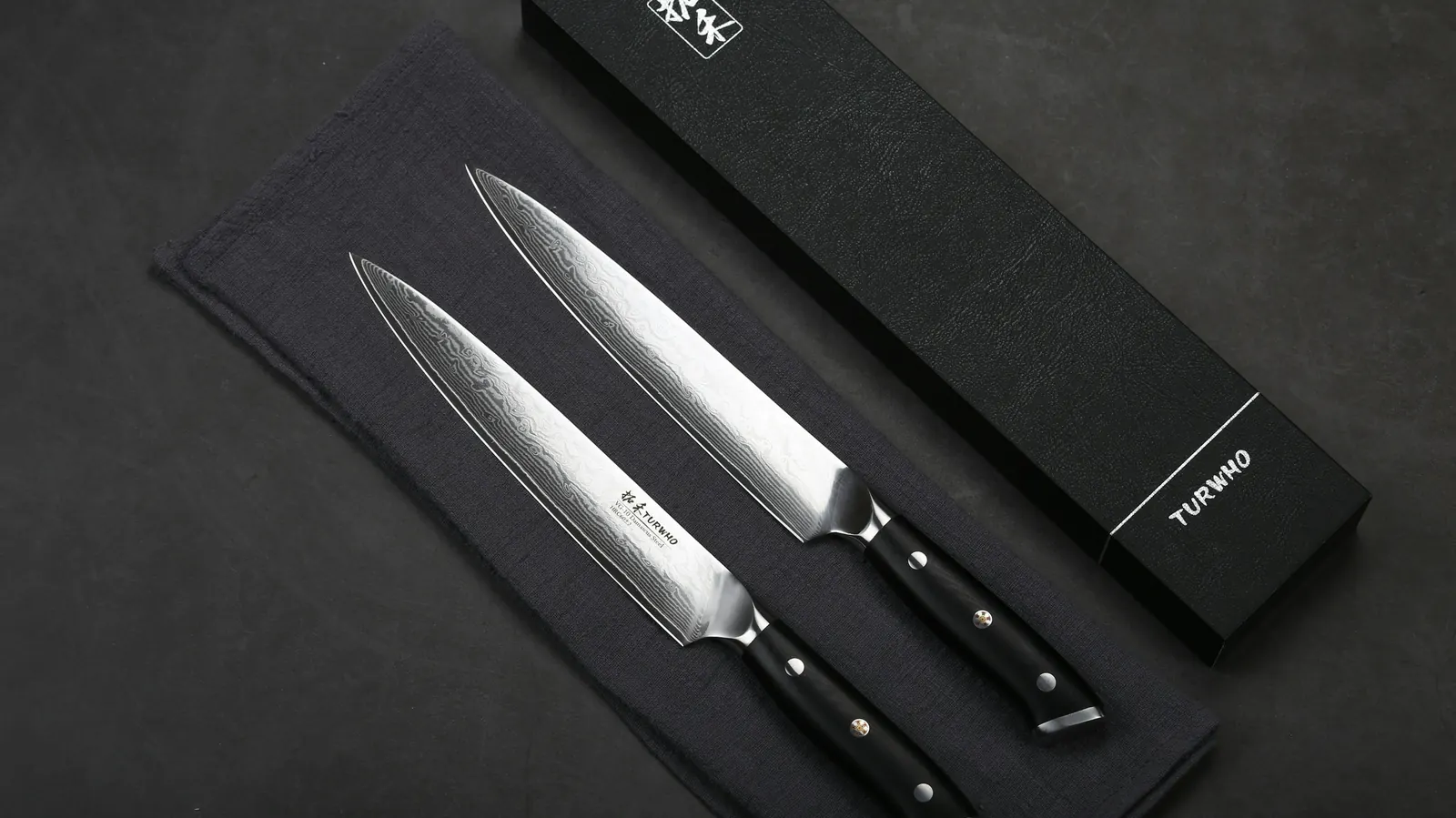
Japanese knives are thinner and harder than most Western kitchen knives, and most leave the factory with an edge around 15 or 16 degrees a side. That is why they slice so cleanly, and it is also why a sharpener set for a 20-degree German edge does them no favours. The right sharpener keeps that fine angle and copes with hard steel without chipping it.
This guide narrows our main knife sharpener and whetstone guides to Japanese knives only: Japanese stones by grit, 15-degree pull-through and wheel sharpeners, a guided system, and one sharpener that handles single-bevel knives. None of these products appears on those parent pages.
Julia’s earns a commission on purchases made through links on this page, at no cost to you. Recommendations are based on what a restaurant kitchen looks for, product specifications and verified buyer reports.
Quick verdict: the best Japanese knife sharpener for most cooks
For most Japanese knives, the best Japanese knife sharpener is a pair of whetstones: the Naniwa Goken Shine Twin 400 and 1000 set sharpens at any angle you hold, including 15 degrees and single-bevel edges. If you own a deba or yanagiba and want something quicker, choose the Suehiro Triple Sharpener Pro; for a fast, fixed 15-degree edge on double-bevel knives, the Chef’sChoice Pronto 15-degree manual sharpener.
Below, five picks side by side, then all eight in detail, and then what single-bevel and double-bevel mean for the sharpener you buy.
Five Japanese knife sharpeners compared
Our five standout picks, one for each kind of cook, with the specifications each maker or listing states. All eight sharpeners are reviewed in full below.
| Sharpener | Best for | Type and abrasive | Angle (stated) | Buy on Amazon |
|---|---|---|---|---|
| Learning to sharpen properly | Two whetstones, #400 and #1000 | You hold it | View on Amazon | |

Suehiro Triple Sharpener Pro Water Wheel SharpenerBest for single-bevel knives
|
Deba and yanagiba knives | Water-wheel, ceramic rollers | 15 degrees | View on Amazon |

Chef’sChoice Pronto 15-Degree Manual SharpenerBest 15-degree pull-through
|
Fast edges on double-bevel knives | Pull-through, diamond | 15 degrees | View on Amazon |

Work Sharp Professional Precision Adjust SharpenerBest guided system
|
Exact, repeatable bevels | Guided clamp, diamond to strop | 15 to 30 degrees | View on Amazon |

King Pro Standard 800 Grit WhetstoneBudget pick
|
A first stone on a budget | Soaking whetstone, #800 | You hold it | View on Amazon |
Product images from Amazon. Angles and grits are as stated on each listing; “you hold it” means a freehand stone.
Our picks for the best Japanese knife sharpener
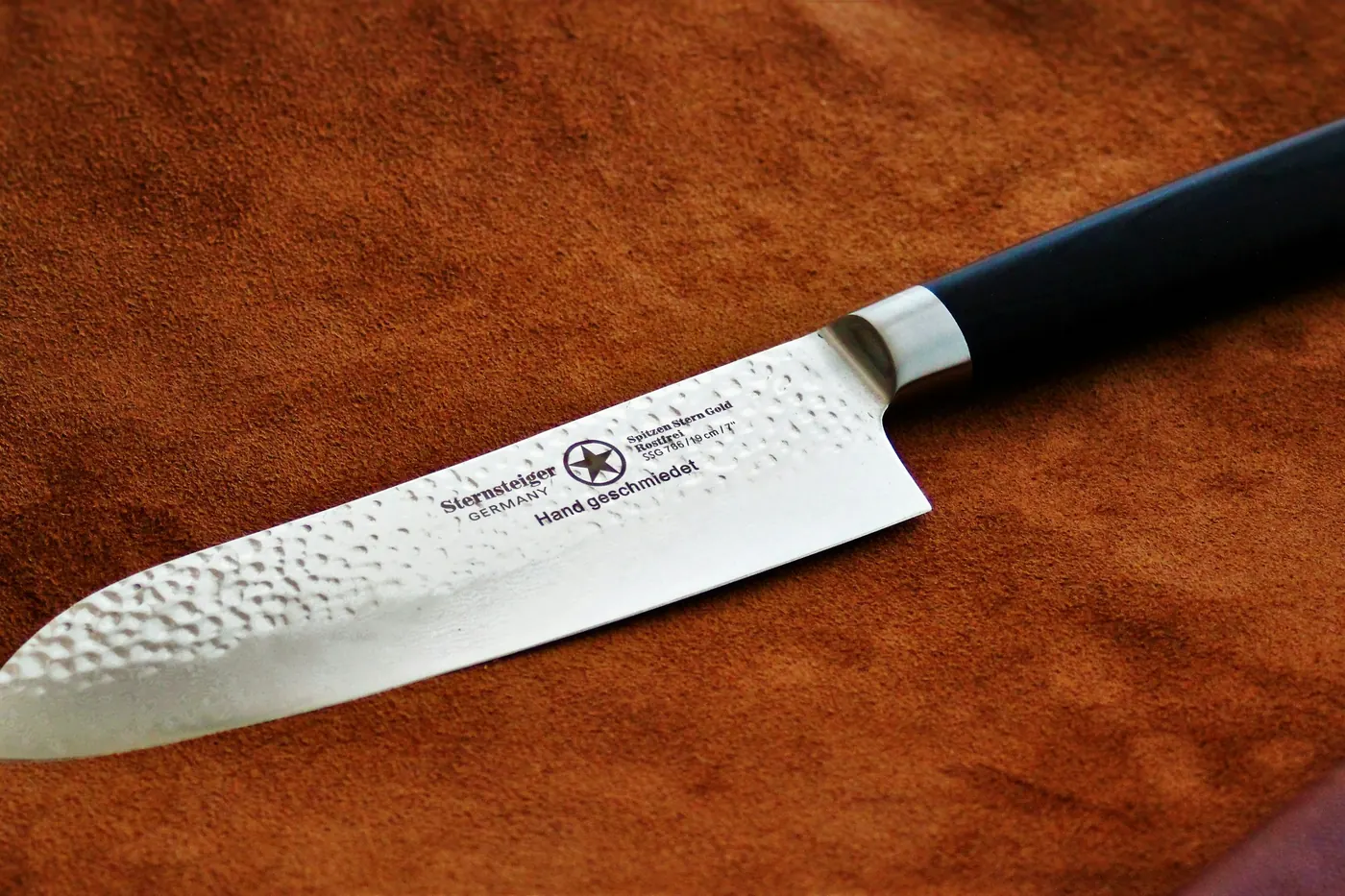
Eight sharpeners, from freehand stones to a guided clamp. Stones come first because they suit every Japanese knife, single-bevel included; the pull-through and wheel sharpeners trade some control for speed. Each pick says which knives it suits and one honest reason to skip it.
1. Naniwa Goken Shine Twin 400 and 1000 Whetstone Set – Coarse and Medium Stones in One Box

A Japanese knife is made to be sharpened on stones, and this pair from Naniwa, a Japanese stone maker, covers the two jobs most home cooks actually need. The 400 stone sets a new edge on a knife that has gone properly dull or picked up a small nick; the 1000 stone is the everyday sharpening grit that takes the scratches from the 400 and leaves a clean, keen edge.
Each stone measures 210 by 70 mm, the standard Japanese bench-stone size, which gives room for a full stroke with a 210 mm gyuto or a santoku. They are 10 mm thick, thinner than a classic soaking stone, and Naniwa ships them with a storage case. Because you hold the angle yourself, the pair works for a 15-degree double-bevel chef’s knife, a Shun at 16 degrees or the bevel side of a single-bevel deba.
The listing does not say whether these stones need soaking, so follow the instructions in the box. Whatever the stone, keep the surface wet while you work and rinse it when you finish. Freehand sharpening takes a few sessions to learn; a felt-tip line along the bevel shows you whether you are hitting the edge.
Why we like it
- Two grits that cover repair and everyday sharpening (listing)
- Standard 210 x 70 mm Japanese stone size (listing)
- Storage case included (listing)
- You set the angle, so it suits 15-degree, 16-degree and single-bevel edges
Key specifications
| Model | NW-0410 |
|---|---|
| Type | Two bench whetstones |
| Abrasive and grit | #400 and #1000 |
| Angle | Freehand (you hold it) |
| Single-bevel knives | Yes, freehand |
| Water | Not stated on listing |
| Size | 210 x 70 x 10 mm each |
| Made in | Not stated |
Why we recommend it
This is the set for anyone who owns one or two good Japanese knives and wants to look after them the way they were designed to be sharpened. Learn the 1000 first; reach for the 400 only when the 1000 is too slow.
Skip it if you want an edge in thirty seconds with no practice: a guided or pull-through sharpener further down is quicker to learn.
Pros and cons
Pros
- Covers dull knives and small chips
- Works at any angle you choose
- Compact case for a drawer
Cons
- Freehand technique takes practice
- No finishing grit; add a 3000 for a finer edge
- Soaking instructions not on the listing
2. Suehiro Triple Sharpener Pro Water Wheel Sharpener – Slots for Deba and Yanagiba
Most pull-through sharpeners are made only for double-bevel knives. Suehiro, a Japanese whetstone maker, built the KC-303 with separate settings for broad-bladed deba knives and narrow-bladed yanagiba slicers as well as ordinary steel and stainless knives, which is why it earns a place here.
It is a handheld water-wheel sharpener: the listing calls it a 15-degree sharpener and describes grit 600 ceramic whetstone rollers for the deba and yanagiba settings, mounted on a patented suspension that Suehiro says keeps pressure even along the blade. The handle is large and the unit is made in Japan.
A roller sharpener is a maintenance tool. It will bring back a working edge on a single-bevel knife between proper stone sessions, but it will not flatten the back of a yanagiba or polish a mirror bevel. For a cook who owns one single-bevel knife for slicing fish or thin-slicing raw beef for carne asada, that trade is often worth it.
Why we like it
- Separate settings for deba and yanagiba (listing)
- 15-degree angle stated in the title
- Ceramic rollers on a suspension for even pressure (listing)
- Made in Japan by Suehiro (listing)
Key specifications
| Model | KC-303 |
|---|---|
| Type | Handheld water-wheel sharpener |
| Abrasive and grit | Ceramic rollers, grit 600 for deba and yanagiba |
| Angle | 15 degrees (stated) |
| Single-bevel knives | Yes: deba and yanagiba settings |
| Water | Water wheel |
| Size | Not stated |
| Made in | Japan |
Why we recommend it
Choose it if you own a single-bevel Japanese knife and do not want to learn stones just for that one blade, or want a quick touch-up between stone sessions.
Skip it if you want to refine an edge past a medium grit: only the 600 grit is stated, and a 1000 or 3000 stone goes further.
Pros and cons
Pros
- Handles single-bevel and double-bevel knives
- Angle is set for you
- Small enough for a drawer
Cons
- Only one grit is stated on the listing
- Not a substitute for stones on a damaged edge
- Size not stated
3. Chef’sChoice Pronto 15-Degree Manual Sharpener – Diamond Stages Set at 15 Degrees
This is the Chef’sChoice manual sharpener made only for 15-degree edges, the angle on most Japanese-style chef’s knives and santokus. It has two stages, a sharpening stage and a honing and polishing stage, and Chef’sChoice uses 100 percent diamond abrasives in both, which matters with hard Japanese steel that wears ordinary abrasives quickly.
The listing says it creates an arch-shaped edge that is stronger and more durable, and that its CrissCross pattern leaves an edge with bite. It sharpens both straight-edged and serrated knives. Chef’sChoice backs it with a one-year limited household warranty.
It is a different tool from the Chef’sChoice ProntoPro on our beginner sharpener page, which switches between 15 and 20 degrees. This one is fixed at 15, so there is no setting to get wrong when your knives are all Japanese.
Why we like it
- Fixed 15-degree angle for Asian-style knives (listing)
- 100 percent diamond abrasives in both stages (listing)
- Handles straight and serrated edges (listing)
- One-year limited household warranty (listing)
Key specifications
| Model | 4630100 |
|---|---|
| Type | Manual pull-through, 2 stages |
| Abrasive and grit | 100% diamond |
| Angle | 15 degrees |
| Single-bevel knives | Not stated |
| Water | None (dry) |
| Size | Not stated |
| Made in | Not stated |
Why we recommend it
A good fit for a kitchen with a drawer of double-bevel Japanese knives and a cook who wants a fast, repeatable edge without learning stones.
Skip it if you own single-bevel knives, which the listing does not mention, or knives sharpened at 20 degrees.
Pros and cons
Pros
- Quick, no setup
- Diamond copes with hard steel
- Also sharpens serrated knives
Cons
- Fixed angle only suits 15-degree knives
- Single-bevel use not stated
- Removes more metal than a fine stone
4. Work Sharp Professional Precision Adjust Sharpener – Exact Angles From 15 to 30 Degrees
A guided system gives you the result of good stone work without having to hold the angle by hand. Work Sharp’s Professional Precision Adjust clamps the knife in a V-block and swings the abrasive on an arm, and a digital angle indicator sets the angle anywhere from 15 to 30 degrees, accurate to within a quarter of a degree according to the listing.
The kit runs from 220 through 320, 400, 600 and 800 grit diamond plates, then a fine ceramic and a leather strop. That sequence repairs a chipped Japanese edge and refines it in one setup. A rigid metal frame and a weighted 7.5 lb base keep it steady, and it takes blades up to a quarter inch thick and 15 inches long.
It is not the Precision Adjust Elite that appears on our main knife sharpener guide; the Professional is a separate kit built around its digital angle indicator and weighted base, which is why we pick it for exact 15-degree work.
Why we like it
- Digital angle indicator, 15 to 30 degrees (listing)
- Seven abrasives from 220 diamond to leather strop (listing)
- Weighted 7.5 lb base (listing)
- Blades up to 15 inches long (listing)
Key specifications
| Model | WSBCHPAJ-PRO |
|---|---|
| Type | Clamp-and-arm guided system |
| Abrasive and grit | Diamond 220–800, fine ceramic, leather strop |
| Angle | 15 to 30 degrees, set digitally |
| Single-bevel knives | Not stated |
| Water | None (dry) |
| Size | Blades up to 1/4 in thick, 15 in long |
| Made in | Not stated |
Why we recommend it
For the cook who wants a precise, repeatable 15-degree bevel on expensive knives and is happy to spend a few minutes clamping each one.
Skip it if you sharpen several knives every week and want speed: clamping and swapping plates takes longer than a pull-through.
Pros and cons
Pros
- Very repeatable angles
- Repairs and polishes in one kit
- Handles long slicers
Cons
- Bulky for a small kitchen
- Slower than a pull-through
- Single-bevel use not stated
5. King Pro Standard 800 Grit Whetstone – A Thick, Simple Soaking Stone
King is one of the oldest Japanese whetstone brands, and this plain 800 grit stone is a low-cost way to start. The grit sits between coarse and medium, so the listing describes it for dull and damaged blades; on a Japanese knife it sets an edge quickly and leaves it ready for a finer stone.
It is a soaking stone: King says it must be submerged in water before use. At 8-1/8 by 2-3/4 inches and a full 1-1/4 inches thick, it gives a long working life, and honing instructions with diagrams come in the box.
Our whetstone guide picks the King Deluxe 1200 as its classic soaking stone. We chose the coarser 800 here on purpose: hard Japanese steel is slow to cut on a medium stone, and the 800 pairs well with a 3000 finisher for a simple two-stone kit.
Why we like it
- Long-established Japanese stone brand
- 800 grit for dull and damaged edges (listing)
- 1-1/4 inches thick for a long life (listing)
- Instructions and diagrams included (listing)
Key specifications
| Model | 800 |
|---|---|
| Type | Single bench whetstone |
| Abrasive and grit | #800 |
| Angle | Freehand (you hold it) |
| Single-bevel knives | Yes, freehand |
| Water | Soak before use |
| Size | 8-1/8 x 2-3/4 x 1-1/4 in |
| Made in | Not stated |
Why we recommend it
The cheapest way to learn freehand sharpening on a Japanese knife, and a sensible first stone to pair with the Naniwa 3000 below.
Skip it if you want one stone that gives a refined edge on its own; at 800 grit it needs a finer stone after it.
Pros and cons
Pros
- Low cost
- Thick, durable stone
- Fast on dull edges
Cons
- Must be soaked first
- Leaves a coarser edge than a 1000
- No base or holder stated
6. Naniwa Goken 3000 Finishing Whetstone – Refines a Hard Japanese Edge

A 3000 grit stone is where a Japanese knife starts to feel like it did out of the box: it removes the scratches a 1000 or 800 stone leaves and gives a smoother edge that glides through tomatoes and slices onions cleanly.
Naniwa makes this one at the standard 210 by 70 mm size and 15 mm thick, and lists it for kitchen knives, stainless steel blades and other precision tools. It is a single grit, so it follows a coarser stone rather than replacing it.
Pair it with the King 800 or the Naniwa 1000 above and you have a two-stone kit that covers most home kitchens. A very fine stone in the 6000 to 8000 range can follow, but for a working knife that cuts chiles and limes all week, 3000 is a practical place to stop.
Why we like it
- 3000 grit for a refined edge (listing)
- Standard 210 x 70 mm size (listing)
- 15 mm thick (listing)
- Listed for stainless kitchen knives
Key specifications
| Model | NA-0300 |
|---|---|
| Type | Single bench whetstone |
| Abrasive and grit | #3000 |
| Angle | Freehand (you hold it) |
| Single-bevel knives | Yes, freehand |
| Water | Not stated on listing |
| Size | 210 x 70 x 15 mm |
| Made in | Not stated |
Why we recommend it
The second stone to buy once you can hold an angle on a medium stone, for an edge that lasts and cuts cleanly.
Skip it if this is your only stone: it is too fine to sharpen a dull knife on its own.
Pros and cons
Pros
- Smooth, refined edge
- Same size as the Naniwa pair
- Good partner for an 800 or 1000
Cons
- Not for dull or chipped knives
- Soaking instructions not on the listing
- No base included
7. Kai Seki Magoroku Diamond and Ceramic Sharpener – Made in Japan, Fits in a Drawer

Kai, the Japanese company that also makes Shun, makes this small three-stage sharpener in Japan. It uses two diamond stages and one ceramic stage, and Kai says you do not need to adjust the angle yourself.
It is compact at 141 by 51 by 55 mm and weighs 96 g, so it fits in a knife drawer or under the sink. The body is ABS resin with a transparent cover. Kai notes it is for double-edged knives only.
Kai does not state the angle on this listing. Shun, Kai’s premium line, sharpens its double-bevel knives at 16 degrees, close to the 15 degrees of most Japanese-style knives. Treat this as a quick touch-up tool for santokus and gyutos rather than a way to restore a badly worn edge.
Why we like it
- Two diamond stages plus ceramic (listing)
- Made in Japan (listing)
- 96 g and drawer-sized (listing)
- No angle to set (listing)
Key specifications
| Model | AP-0308 |
|---|---|
| Type | Manual pull-through, 3 stages |
| Abrasive and grit | 2 diamond stages, 1 ceramic |
| Angle | Preset, not stated |
| Single-bevel knives | No (double-edged only) |
| Water | None (dry) |
| Size | 141 x 51 x 55 mm, 96 g |
| Made in | Japan |
Why we recommend it
Handy for a quick edge on a Japanese santoku or gyuto when a stone session is not going to happen this week.
Skip it if you own single-bevel knives, which Kai says it is not for, or want to know the exact angle.
Pros and cons
Pros
- Very small and light
- Diamond copes with hard steel
- Made in Japan
Cons
- Angle not stated
- Double-bevel only
- Not for repairing chips
8. MinoSharp 3 Ceramic Wheel Water Sharpener – Three Wheels in a Water Bath

MinoSharp’s three-wheel handheld sharpener is designed for Global knives, according to the listing, which adds that it works on most other knife brands too. A water reservoir serves the ceramic wheels as you draw the knife through, and three color-coded wheels run from rough through medium to super-fine.
It needs no batteries or electricity, and the listing says no experience is necessary because the design sharpens at the correct angle. Global states a 15-degree edge for its own knives on its set listings, which is why owners of Global knives may want a sharpener built around them.
The listing does not give grit numbers or the angle, and it does not address single-bevel knives. Treat it like the other pull-through tools here and keep deba and yanagiba knives away from it. That is less precise than the Chef’sChoice or the Work Sharp, and we would choose it mainly for Global knives.
Why we like it
- Three color-coded ceramic wheels
- Water reservoir (listing)
- Designed for Global knives (listing)
- No batteries or power needed
Key specifications
| Model | ASYD101 |
|---|---|
| Type | Handheld water-wheel sharpener |
| Abrasive and grit | Ceramic wheels: rough, medium, super-fine; grit not stated |
| Angle | Not stated |
| Single-bevel knives | Not stated; we would not use it on them |
| Water | Water reservoir |
| Size | Not stated |
| Made in | Not stated |
Why we recommend it
The natural choice if your knives are Global and you want a simple maintenance sharpener designed around them.
Skip it if you want stated grit numbers and angles; the listing gives neither.
Pros and cons
Pros
- Simple to use
- Three stages
- Designed for Global knives
Cons
- Grit and angle not stated
- Not for single-bevel knives
- Needs filling and draining
Single-bevel or double-bevel: check your knife first
Most Japanese knives sold in the United States, such as the gyuto, santoku and nakiri, are double-bevel: both sides of the edge are ground, usually to about 15 or 16 degrees. Shun, for example, says to sharpen its double-bevel knives at 16 degrees, and Global states a 15-degree edge on its set listings. Any sharpener on this page works on them.
Traditional single-bevel knives, such as the deba, yanagiba and usuba, are ground on one side only, with a flat or slightly hollow back. You sharpen the bevel side and only lightly remove the burr from the back. Pull-through sharpeners that grind both sides at once will spoil that geometry, and several makers say so: Kai’s AP-0308 is for double-edged knives only, and the listing for Global’s MinoSharp 220 water sharpener excludes knives sharpened on one side. For single-bevel knives use whetstones, or a sharpener built for them such as the Suehiro KC-303.
How to choose a sharpener for Japanese knives
Angle. Match the sharpener to the edge on your knife. Most Japanese knives sit at 15 to 16 degrees; a sharpener fixed at 20 degrees will slowly turn them into thicker Western edges. Freehand stones and guided systems let you choose; pull-throughs are fixed, so check the stated angle.
Abrasive. Hard Japanese steel cuts slowly on soft abrasives. Diamond and good ceramic or synthetic whetstones work well; carbide scrapers can be harsh on a thin, hard edge.
Grit. A 1000 stone does most of the work. Go coarser, 400 to 800, for a dull or chipped knife, and finer, around 3000, to refine the edge. For a kitchen knife that cuts produce and meat, there is rarely a need to go past 6000.
Single-bevel support. If you own a deba or yanagiba, you need stones or a sharpener that says it handles single-bevel knives.
Time and skill. Stones give the best edge but take practice. Guided systems are precise but slow to set up. Pull-throughs are quick and forgiving, at the cost of some control and a little more steel removed.
Between sharpenings, a light pass on a ceramic rod keeps the edge straight; our guide to honing steels for Japanese knives covers the options, and knife sharpener vs whetstone compares the two approaches in more depth.
How we chose these eight sharpeners
We started from what a Japanese knife needs: a fine angle, an abrasive that copes with hard steel, and, for some knives, single-bevel support. We looked at Japanese stone makers (Naniwa, King, Suehiro), Japanese knife makers’ own sharpeners (Kai and Global), and Chef’sChoice and Work Sharp models that state a 15-degree setting. Every product had to be sold on Amazon in the United States and in stock when we checked it with Amazon’s product data, and we left out anything already picked on our main sharpener, whetstone, whetstone-kit, electric, beginner and honing-steel guides, which is why the Chef’sChoice Trizor XV and 315XV electric models are not repeated here; see our electric sharpener guide for those. Several Shapton, Suehiro and Naniwa stones were down to their last units when we checked, so we left them out. Grits, angles and sizes come from each Amazon listing, and we write “not stated” where a listing is silent. We did not use these sharpeners for this guide.
Japanese knife sharpening questions, answered
What is the best knife sharpener for Japanese knives?
Whetstones, because they work at any angle and on single-bevel knives. The Naniwa 400 and 1000 pair is our pick. For a quicker option on double-bevel knives, a 15-degree pull-through such as the Chef’sChoice Pronto works well.
Can I use a regular knife sharpener on Japanese knives?
Only if it sharpens at or near the knife’s own angle. Many Western sharpeners are set to 20 degrees, which thickens a 15-degree Japanese edge over time. Check the stated angle before you buy.
What grit whetstone should I use for Japanese knives?
Start with a 1000 for regular sharpening, add a 400 or 800 for dull or chipped edges, and a 3000 to refine. That covers most home kitchens.
How do I sharpen a single-bevel Japanese knife?
On whetstones, sharpen the bevel side at its existing angle until you raise a burr, then lay the flat back on the stone and remove the burr with light strokes. Do not use a pull-through that grinds both sides unless it says it handles single-bevel knives, as the Suehiro KC-303 does.
How often should I sharpen a Japanese knife?
It depends on use. Hone lightly on a ceramic rod when the knife starts to skid on tomato skins, and sharpen when honing no longer brings the edge back. For a home cook that is often every few months.
Which sharpener to start with
Buy the Naniwa 400 and 1000 pair if you want to sharpen Japanese knives the way they were made to be sharpened, and add the Naniwa 3000 later. Choose the Suehiro KC-303 for single-bevel knives, the Chef’sChoice Pronto for quick 15-degree edges, the Work Sharp Professional Precision Adjust for exact angles, and the King 800 if you want to try stones for very little.
Related guide: Best whetstone for japanese knives.
For the knives themselves, see our best Japanese knife picks, and for a full set of stones and accessories, the whetstone kit guide. If you would rather leave the knife work to us tonight, see the menu or call to order.